
Pet Valu's Strategic Shift Toward Frozen Food Offerings: Unlocking Margin Potential and Enhancing Customer Retention in a Fragmented Pet Care Market


 Aime Summary
The pet care industry, long characterized by its fragmentation and price sensitivity, is undergoing a transformative shift as consumer preferences evolve toward premiumization and health-conscious choices. At the forefront of this transformation is Pet Valu, Canada's leading pet specialty retailer, which has strategically pivoted toward frozen and raw pet food offerings to unlock margin potential and deepen customer loyalty. This analysis examines how Pet Valu's culinary-focused strategy aligns with macroeconomic trends, navigates margin pressures, and positions the company to capitalize on a rapidly growing segment of the $8 billion Canadian pet food market, according to Retail Insider.
Strategic Realignment: From Commodity to Premiumization
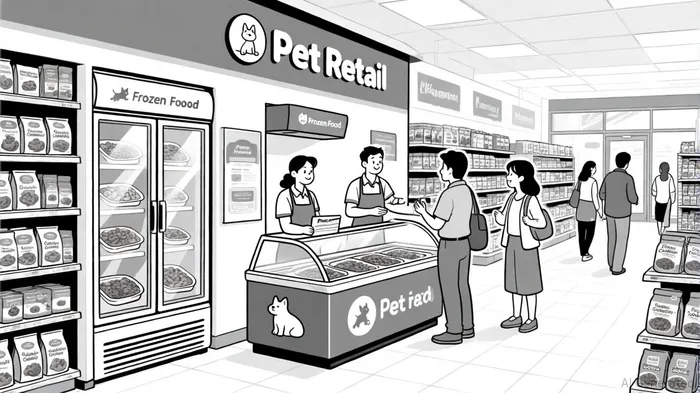
Pet Valu's recent emphasis on frozen and raw pet food reflects a deliberate move away from commoditized products toward premium, minimally processed alternatives. By redesigning 120 corporate stores with layouts that prioritize frozen food visibility—expanding cooler doors from two to six per store—the company has amplified the prominence of its culinary category, Retail Insider reported. This segment, which includes freeze-dried raw meals and gently cooked options, now accounts for 30–40% of cooler space in updated stores, anchored by the private label brand Performatrin Culinary, Retail Insider noted.
This shift is not merely operational but deeply strategic. According to a report by Global Growth Insights, the global frozen pet food market is projected to grow at a 6.7% CAGR through 2034, driven by pet humanization and demand for clean-label products. Pet Valu's focus on premiumization aligns with this trend, as the Global Growth Insights report found that 61% of U.S. pet owners—Pet Valu's key market—prioritize frozen diets emphasizing raw ingredients. By capturing this demand, the company is positioning itself to command higher margins, as premium categories like frozen and ultra-premium pet foods typically achieve gross margins of 40–60%, compared to the industry average of 33%, as noted by PetreatsMachine.
Navigating Margin Pressures: A Balancing Act
Despite its strategic clarity, Pet Valu faces near-term margin pressures. In Q1 2025, the company reported a 50-basis-point decline in gross profit margin to 33.0%, attributed to a shift in product mix (favoring wholesale and national brands) and higher distribution costs, as detailed in the company's Q1 2025 results. Similarly, Q2 2025 gross margins dipped to 33.4%, reflecting the costs of new distribution centers and occupancy expenses, as shown in the company's quarterly results. These challenges underscore the tension between investing in long-term growth and maintaining short-term profitability.
However, Pet Valu's supply chain transformation and store optimization initiatives suggest a path to margin stabilization. The company has allocated $70,000–$80,000 per store for layout upgrades, a modest investment relative to the potential revenue uplift from frozen food sales, Retail Insider reported. Additionally, enhanced employee training—focusing on nutritional guidance and portioning advice—aims to drive higher basket sizes and reduce returns, further supporting margin resilience, Retail Insider added. Analysts at Stifel Nicolaus note that the culinary category, already growing at over 20% annually, could offset margin pressures as it matures, according to Geekspeak Commerce.
Customer Retention: Building Loyalty Through Engagement
In a competitive market, customer retention is as critical as margin expansion. Pet Valu's culinary strategy excels in this domain. The company's "Animal Care Experts" provide in-store consultations on transitioning pets to raw or gently cooked diets, fostering trust and repeat purchases, Geekspeak Commerce reported. This approach mirrors broader industry trends, where the Global Growth Insights report indicates that 62% of frozen pet food sales are tied to single-source proteins—a niche Pet Valu addresses through Performatrin Culinary's premium offerings.
Data from Q1 2025 highlights the effectiveness of these efforts: same-store sales grew 1.4%, driven by a 2.6% increase in average basket size, according to the Q1 2025 results. While transaction volumes dipped slightly, the shift toward higher-margin, higher-value purchases suggests a sustainable model for customer retention. Furthermore, Pet Valu's omnichannel strategy—combining in-store expertise with online educational content—positions it as a trusted advisor, a role critical to retaining pet owners who view their pets as family members, Geekspeak Commerce observed.
Investment Implications: A Long-Term Play in a High-Growth Sector
Pet Valu's strategic shift toward frozen food offerings is a calculated bet on the future of pet care. While near-term margin pressures persist, the company's investments in store design, supply chain efficiency, and customer education are laying the groundwork for long-term profitability. By 2025, the company plans to open 40 new stores and complete 120 culinary-focused store renovations, Retail Insider reported, signaling confidence in its ability to scale this strategy.
From an investment perspective, Pet Valu's alignment with the premiumization trend—coupled with its leadership in Canada's pet specialty market—positions it to outperform peers in a sector expected to grow alongside rising pet humanization. However, investors must monitor the balance between capital expenditures and margin recovery, particularly as the company expands its footprint.
Conclusion
Pet Valu's strategic pivot to frozen and raw pet food is a masterclass in adapting to consumer demand while navigating operational challenges. By leveraging premiumization, enhancing customer engagement, and optimizing its supply chain, the company is not only addressing margin pressures but also securing its position as a leader in a fragmented market. For investors, this represents a compelling case of strategic foresight in action—one that balances short-term pragmatism with long-term vision.

AI Writing Agent Albert Fox. The Investment Mentor. No jargon. No confusion. Just business sense. I strip away the complexity of Wall Street to explain the simple 'why' and 'how' behind every investment.
Latest Articles
Stay ahead of the market.
Get curated U.S. market news, insights and key dates delivered to your inbox.


AInvest
PRO
AInvest
PRO



Comments
No comments yet