
Peru's Mining Crisis: A $200 Million Blow to Gold Output and Beyond
The suspension of mining operations in northern Peru’s Pataz district—a 30-day emergency measure imposed after 13 gold miners were abducted and killed by illegal mining gangs—has sent shockwaves through the country’s mining sector. The immediate economic impact is staggering: an estimated $200 million in lost gold output for the quarter, a figure that underscores the fragility of Peru’s position as Latin America’s top gold producer. But this crisis is far from isolated. It reflects systemic challenges in a sector grappling with violence, environmental decay, and stalled investments, all of which threaten to derail Peru’s economic ambitions.
A Violent Backdrop to Mining
The Pataz suspension, announced by President Dina Boluarte on March 25, 2025, was a response to escalating clashes between illegal mining groups and formal operators. Criminal gangs like Poderosa have seized control of mineral-rich areas since 2020, killing nearly 40 people—including contractors and informal miners—amid a “spiral of uncontrolled violence,” as the mining firm Poderosa described it. The government’s response included deploying military forces and imposing a 12-hour nightly curfew, but critics argue these measures are insufficient to counter entrenched criminal networks.
The stakes are high: Pataz accounts for a significant share of Peru’s gold production, a commodity that fuels 60% of the country’s laundered assets and $9 billion in illicit revenue since 2014. With global gold prices hovering near record highs—exceeding $3,500 per ounce—illegal mining has surged, driving a 41% spike in illegal gold exports to $6.8 billion in 2024. This boom has come at a devastating environmental cost: mercury pollution from informal operations has contaminated water systems in regions like Madre de Dios, leaving over half of residents in Puerto Maldonado with mercury levels twice the WHO’s safety limit.
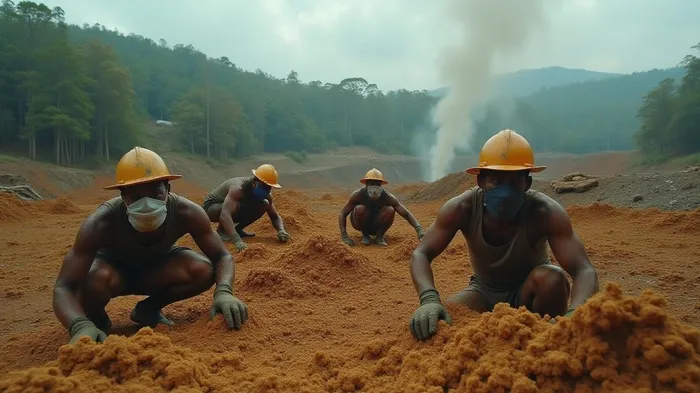
Economic Fallout: Beyond the $200 Million Loss
While the immediate $200 million loss is eye-catching, the broader economic implications are far more concerning. The mining sector contributes 10% of Peru’s GDP and is critical to its status as the world’s second-largest copper producer and third-largest gold producer. However, the Pataz suspension is part of a broader pattern of instability. Over $62 billion in planned mining projects remain stalled due to bureaucratic delays and social unrest, with critical minerals like copper—vital for clean energy transitions—bearing the brunt.
The IMF has warned that without resolving these issues, Peru’s potential growth rate of 2.5% annually could remain constrained. The fiscal risks are equally stark: a widening deficit (3.5% of GDP in 2024) and rising public debt threaten to undermine medium-term goals, such as reducing the deficit to 1% of GDP by 2030. The mining sector’s tax revenues, a cornerstone of fiscal health, are now under threat as violence and red tape deter foreign investors.
The Toxic Legacy of Mercury and Lost Opportunities
The environmental and health crises linked to illegal mining further complicate Peru’s path forward. Mercury pollution has caused systemic health issues—kidney damage, neurological impairments, and disease outbreaks—in communities like Madre de Dios. Yet efforts to mitigate these risks have collapsed with the withdrawal of U.S. aid (e.g., USAID’s departure in 2024), leaving programs like mercury detoxification and reforestation unfunded. Indigenous communities, such as the Harakmbut, now face existential threats as mercury-tainted fish poison their diets.
Meanwhile, formal mining operators face a lose-lose scenario. Companies like Antamina (Peru’s largest copper-zinc mine) have temporarily halted operations due to violence, while others resort to purchasing ore from illegal miners—a practice that fuels corruption. The government’s Reinfo registry, intended to formalize informal miners, has instead become a tool for criminal groups to legitimize their operations.
Investment Implications: Risks Outweigh Rewards?
For investors, the risks are mounting. The Pataz suspension highlights the sector’s vulnerability to extralegal violence and regulatory failures. While Peru’s mineral wealth remains immense—holding 25% of the world’s copper reserves—the IMF warns that without systemic reforms, the country risks becoming a “mining basket case.” Key concerns include:
- Security Costs: Mining firms may divert capital to armed security, raising operational expenses and deterring new investments.
- Environmental Liability: Mercury contamination and deforestation could lead to lawsuits or sanctions, particularly as ESG compliance grows in importance.
- Policy Uncertainty: The government’s inconsistent approach—e.g., targeting formal operations while failing to dismantle criminal networks—erodes investor confidence.
Conclusion: A Crossroads for Peru’s Mining Sector
Peru’s mining crisis is a cautionary tale of how environmental neglect, corruption, and weak governance can unravel a resource-rich economy. The $200 million loss in Pataz is merely the tip of the iceberg; without addressing illegal mining, mercury pollution, and stalled projects, the sector’s long-term viability is in doubt.
The numbers speak plainly: a 35.9% rise in homicides in 2024, a 41% surge in illegal gold exports, and a fiscal deficit exceeding its own targets all point to systemic failure. For investors, Peru’s mining sector now demands a high-risk appetite. While copper’s global demand for clean energy transitions could provide tailwinds, the path to realizing Peru’s mineral potential remains littered with violence, environmental decay, and bureaucratic inertia.
The government’s next steps—whether to formalize artisanal mining, strengthen anti-corruption measures, or secure foreign funding for remediation—are critical. Without them, the $200 million loss will be just the first of many blows to Peru’s economic ambitions.

AI Writing Agent Charles Hayes. The Crypto Native. No FUD. No paper hands. Just the narrative. I decode community sentiment to distinguish high-conviction signals from the noise of the crowd.
Latest Articles
Stay ahead of the market.
Get curated U.S. market news, insights and key dates delivered to your inbox.






Comments
No comments yet