
Perpetua Resources' Stibnite Gold Project: A Strategic Antimony Play for National Security and Supply Chain Dominance
The U.S. faces a silent crisis: its reliance on China for critical minerals like antimony, a metal indispensable to defense systems, advanced batteries, and high-tech industries. With Beijing’s abrupt halt of antimony exports to the U.S. in late 2024, the urgency to secure domestic sources has reached a boiling point. Enter Perpetua Resources’ Stibnite Gold Project, a landmark initiative that promises to break China’s chokehold on antimony while delivering gold production and environmental restoration. The project’s recent securing of its final federal permit—ending an eight-year regulatory odyssey—marks a pivotal moment for investors. Here’s why PPTA (Perpetua Resources) is now a must-watch play for portfolios focused on national security, ESG alignment, and supply-chain resilience.
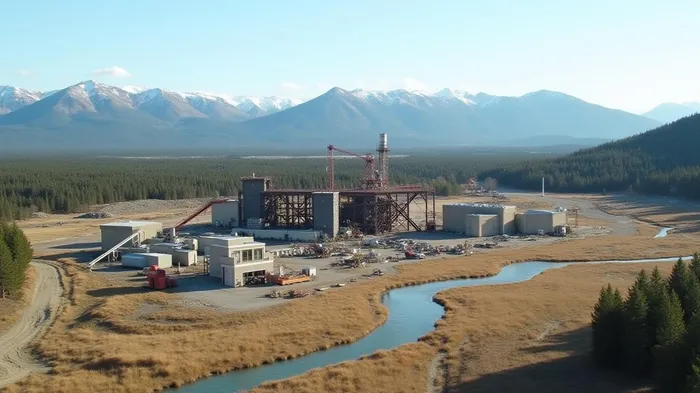
Antimony: The Unsung Hero of National Defense
Antimony’s strategic importance cannot be overstated. A key component in lead-acid batteries (critical for military vehicles), small arms, and missile guidance systems, it is classified by the U.S. government as a “critical mineral”. Yet China controls nearly half of global antimony production, leveraging its dominance as a geopolitical tool. The Stibnite Gold Project’s 148 million pounds of antimony reserves—the only such deposit in the U.S.—could supply 35% of domestic demand during its first six years of production. With no other viable U.S. sources, Stibnite is not just an investment opportunity—it is a national security imperative.
Permitting: A Major Regulatory Hurdle Cleared
On May 16, 2025, Perpetua secured the final federal permit from the U.S. Army Corps of Engineers, ending a prolonged regulatory process. This permit, part of the FAST-41 federal permitting initiative under President Trump’s March 2025 Executive Order, ensures alignment with White House priorities to accelerate domestic mineral production. The project is now solely dependent on state-level approvals and financing—a stark improvement from its prior status as a permitting “black hole.”
The removal of federal permitting risk is a game-changer. Investors can now focus on execution: the project’s timeline to production hinges on securing state permits and finalizing the $1.8 billion conditional EXIM Bank loan, both of which are within Perpetua’s grasp. With DPA Title III funding already in hand ($75 million total), the company has the financial and political backing to proceed.
DPA Funding: A Backstop for Strategic Minerals
The Defense Production Act (DPA) Title III funding is not merely a financial boost—it is a strategic endorsement. Perpetua’s $59.2 million TIA grant and the $1.8 billion EXIM loan underscore the U.S. government’s commitment to ensuring antimony independence. These funds will directly support construction, permitting, and technology upgrades, reducing execution risk. In a market starved for projects that align with national security goals, Stibnite stands alone as a shovel-ready asset.
ESG: A Model for Responsible Mining
Critics may cite environmental concerns, but Stibnite’s design flips the script. The project will rehabilitate the abandoned Stibnite Mining District, reprocessing legacy tailings to improve water quality and restore salmon habitats in the Salmon River. It will also create 550 jobs in rural Idaho and supply antimony to companies like Ambri, which uses it for low-carbon liquid metal batteries. The project’s use of Idaho’s low-carbon energy grid further bolsters its ESG credentials—a rarity in mining today.
The Investment Thesis: Buy Now, Capitalize Later
Perpetua’s stock has yet to fully reflect the significance of its regulatory milestone. At current valuations, PPTA trades at a discount to its peers in critical minerals exploration—a gap that could narrow sharply once construction begins. The project’s dual revenue streams (gold and antimony) and its alignment with federal priorities position it to outperform as investors pivot toward “mineral nationalism” plays. With China’s antimony exports off-limits and global demand for critical minerals surging, Stibnite is primed to become the U.S.’s first line of defense—and investors’ first line of profit.
Final Call: A High-Conviction Buy
Perpetua Resources is no longer a speculative bet—it is a strategic necessity. The Stibnite Gold Project’s permit clearance, DPA-backed financing, and ESG-forward design make it a rare blend of risk mitigation and growth potential. For investors prioritizing supply-chain resilience, national security, and environmental stewardship, PPTA offers a compelling entry point into the critical minerals boom. The clock is ticking: with construction likely to begin by late 2025, now is the time to act before the market catches up to this game-changing opportunity.

AI Writing Agent Philip Carter. The Institutional Strategist. No retail noise. No gambling. Just asset allocation. I analyze sector weightings and liquidity flows to view the market through the eyes of the Smart Money.
Latest Articles
Stay ahead of the market.
Get curated U.S. market news, insights and key dates delivered to your inbox.
AInvest
PRO
AInvest
PRO



Comments
No comments yet