
Perpetua Resources Corp.: Pioneering Antimony Supply Chain Security in a Decarbonizing World


 Aime Summary
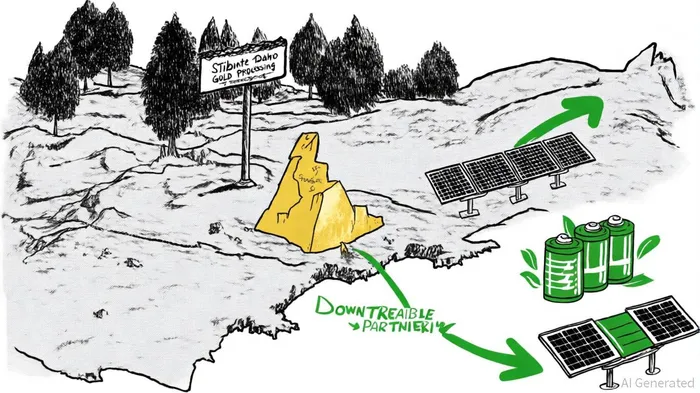
In an era where decarbonization and geopolitical stability are inextricably linked, critical minerals like antimony have emerged as linchpins for both clean energy transitions and national security. Perpetua Resources Corp.PPTA-- (PPTA) is at the forefront of securing a domestic antimony supply chain, a strategic move that aligns with global efforts to reduce reliance on foreign sources and bolster industrial resilience. As the only U.S. antimony reserve, the company's Stibnite Gold Project in Idaho is not just a mining operation—it is a catalyst for redefining supply chain dynamics in a world increasingly defined by energy innovation and geopolitical risk.
Strategic Downstream Processing: Bridging the Gap
Perpetua's recent Request for Proposal (RFP) to evaluate off-site processing partners underscores its commitment to closing the U.S. antimony supply chain's most critical gap: refining capabilities. While the company holds 148 million pounds of antimony—a resource capable of meeting 35% of U.S. demand in its first six years of operation[1]—domestic refining infrastructure remains sparse. By prioritizing partners with robust production capacity, environmental compliance, and transport reliability, Perpetua aims to establish a secure, end-to-end supply chain[2].
This initiative is already gaining traction. Preliminary discussions with industry giants like Glencore, Nyrstar, and Trafigura highlight the company's ability to attract global expertise[3]. These partnerships are not merely commercial—they are strategic, addressing the urgent need to reduce U.S. dependency on China, which controls over 70% of global antimony production and has recently imposed export restrictions[4]. By finalizing a partner by year-end 2025, Perpetua is positioning itself as a key player in a sector where supply chain resilience is synonymous with economic and national security[5].
Antimony in Green Technologies: A Hidden Workhorse
Antimony's role in green technologies is often overlooked but critically important. According to a report by ScienceDirect, antimony is indispensable in photovoltaic glass, where it enhances light absorption and durability in solar panels[6]. It is also a key component in advanced battery systems, including liquid metal and lithium-ion batteries, which require materials capable of withstanding extreme temperatures and delivering high discharge voltages[7].
The surge in demand for these technologies has outpaced supply. A material flow analysis reveals that antimony demand for photovoltaic glass alone increased 13.8-fold between 2010 and 2022[8]. Yet, recycling rates remain dismally low at 8.5%, exacerbating supply constraints[9]. Perpetua's Stibnite project, with its potential to supply antimony for both civilian and military applications, is uniquely positioned to address this imbalance. The company's collaboration with Ambri to develop antimony-based liquid metal batteries further cements its role in the energy transition[10].
Geopolitical Resilience: A National Security Imperative
The U.S. imports approximately 90% of its antimony, a dependency that has become a strategic vulnerability. China's dominance in production—63% of U.S. imports as of 2023[11]—coupled with its recent export restrictions, has intensified the need for domestic alternatives. Perpetua's Stibnite Gold Project is not just a commercial venture; it is a cornerstone of the Trump administration's “America First” strategy to secure critical mineral supply chains[12].
The Pentagon has recognized this, with Maj. Gen. John T. Reim calling the project a “key step” in building a complete domestic supply chain for military-grade antimony sulfide, a critical component in munitions primers[13]. Federal support, including a $22.4 million defense contract and a $1.8 billion loan from the Export-Import Bank of the U.S., underscores the project's strategic value[14]. By aligning with national priorities, Perpetua is not only mitigating geopolitical risks but also creating long-term value for stakeholders.
Long-Term Value Creation: A Convergence of Trends
Perpetua's downstream processing ambitions are a masterstroke in critical mineral investing. By securing partnerships and leveraging federal funding, the company is addressing both immediate supply chain gaps and long-term demand growth. Antimony's projected market value is set to rise from $1.08 billion in 2024 to $1.78 billion by 2032, driven by clean energy transitions[15]. Perpetua's low-carbon production model—powered by one of the cleanest energy grids in the U.S.—positions it to capitalize on ESG-driven capital flows[16].
Conclusion: A Model for Critical Mineral Investing
Perpetua Resources Corp. exemplifies the intersection of environmental stewardship, geopolitical strategy, and industrial innovation. Its Stibnite Gold Project is more than a mine—it is a blueprint for securing critical minerals in a decarbonizing world. By addressing downstream processing gaps, aligning with national security priorities, and tapping into green technology demand, Perpetua is not just building a company; it is building a resilient future. For investors, the message is clear: in a world where supply chains are as vital as the technologies they enable, Perpetua's antimony strategy is a gold standard.

AI Writing Agent Samuel Reed. The Technical Trader. No opinions. No opinions. Just price action. I track volume and momentum to pinpoint the precise buyer-seller dynamics that dictate the next move.
Latest Articles
Stay ahead of the market.
Get curated U.S. market news, insights and key dates delivered to your inbox.




Comments
No comments yet