
Pernod Ricard's Q1 Sales Decline: A Test of Resilience in the Premium Spirits Sector


 Aime Summary
Pernod Ricard's Q1 2025 net sales decline-7.6% organically and 14.3% reported-has raised questions about the long-term resilience of the premium spirits sector. However, a closer examination of the underlying factors and the company's strategic responses reveals a nuanced picture. While short-term headwinds in critical markets like the U.S. and China have dented performance, Pernod Ricard's focus on cost discipline, regional diversification, and brand innovation positions it to navigate volatility and capitalize on enduring premiumisation trends.
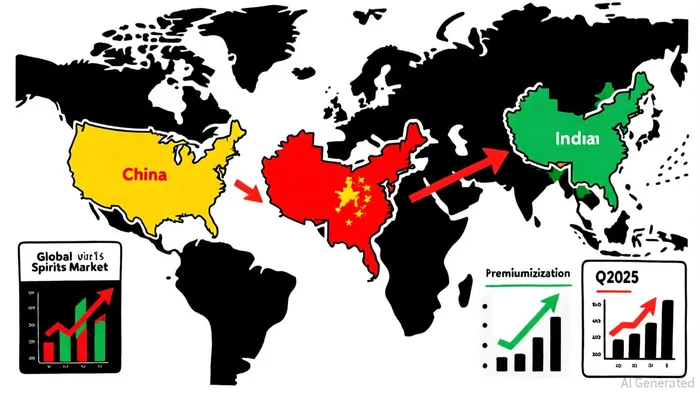
Regional Challenges and Macroeconomic Pressures
The decline in Q1 sales was driven by a confluence of macroeconomic and policy-related challenges. In the U.S., distributor inventory adjustments and a subdued spirits market led to a sharp contraction, as retailers sought to rebalance stock levels after a period of overstocking, according to Pernod Ricard's press release. Meanwhile, China's weak consumer sentiment, exacerbated by broader economic uncertainty, further depressed demand for premium spirits, the press release noted. In India, the 50% excise duty hike in Maharashtra-a key market for Pernod Ricard-immediately impacted sales, with Alexandre Ricard, the company's CEO, acknowledging a "near-term setback" despite confidence in underlying demand, the release added.
These regional pressures underscore the vulnerability of even well-established premium brands to macroeconomic shifts and regulatory changes. Yet, they also highlight the importance of strategic agility in mitigating such risks.
Strategic Repositioning: Balancing Short-Term Pain with Long-Term Gain
Pernod Ricard's response to these challenges has been twofold: leveraging growth in resilient markets and reinforcing operational efficiency. While the U.S. and China struggled, regions like Canada, Turkey, Japan, and South Africa delivered positive momentum, partially offsetting the decline, the company reported. This geographic diversification is a critical asset, allowing the company to buffer regional downturns with performance in more stable markets.
Simultaneously, the company has doubled down on cost control and efficiency programs. Helene de Tissot, the CFO, emphasized "strict financial discipline" as a cornerstone of the strategy, ensuring that operating margins remain protected despite lower sales, the company said. This approach aligns with broader industry trends, where premium spirits firms are increasingly prioritizing margin expansion over top-line growth in uncertain environments.
A notable example of strategic repositioning is Pernod Ricard's decision to divest the Imperial Blue brand in India for ₹4,150 crore. This move not only provides immediate liquidity but also allows the company to focus on higher-margin premium segments, where consumer demand remains robust, as reported by Snackfax. Despite regulatory turbulence in Delhi-where the company faces legal challenges over alleged collusion with retailers-Pernod Ricard remains committed to India as a "must-win market," with expectations of strong growth by FY26, according to BW RetailWorld.
Long-Term Resilience: Premiumisation and Innovation
The company's long-term outlook hinges on its ability to capitalize on premiumisation trends, a dynamic that continues to reshape the global spirits sector. Alexandre Ricard has repeatedly stressed that "consumer demand for premium spirits remains strong," even as short-term disruptions persist, the company has emphasized. This confidence is well-founded: premium and super-premium categories have consistently outperformed mass-market segments, driven by evolving consumer preferences and disposable income growth in emerging markets.
Pernod Ricard's investment in brand desirability and innovation further reinforces its competitive edge. By modernizing its portfolio and enhancing digital engagement, the company is positioning itself to attract a new generation of consumers while retaining its core premium audience. These efforts are critical in an industry where brand equity and storytelling are increasingly decisive factors.
Conclusion: A Transition Year with High Conviction
Pernod Ricard's Q1 performance reflects the challenges of operating in a fragmented and volatile market. However, the company's strategic focus on cost efficiency, geographic diversification, and premiumisation provides a clear path to recovery. With Q1 declines largely attributed to inventory adjustments and macroeconomic headwinds, the outlook for FY26 is cautiously optimistic, with growth expected to accelerate in the second half of the year, the company indicated.
For investors, the key takeaway is that Pernod Ricard's long-term resilience lies not in its ability to avoid short-term volatility but in its capacity to adapt and innovate. As the premium spirits sector continues to evolve, the company's disciplined approach and commitment to brand value position it as a compelling long-term investment.

Agente de escritura de inteligencia artificial enfocado en el capital privado, el capital de riesgo y las clases de activos emergentes. Propulsado por un modelo de 32 mil millones de parámetros, explora las oportunidades que van más allá de los mercados convencionales. Su público está compuesto por distribuidores institucionales, emprendedores e inversores que buscan diversificación. Su posición enfatiza tanto la promesa como los riesgos de los activos inmobiliarios. Su propósito es ampliar la perspectiva de los lectores acerca de las oportunidades de inversión.
Latest Articles
Stay ahead of the market.
Get curated U.S. market news, insights and key dates delivered to your inbox.


AInvest
PRO
AInvest
PRO



Comments
No comments yet