
The Perfect Storm for MBS Investors: Stability, Yield, and a Stealth Opportunity
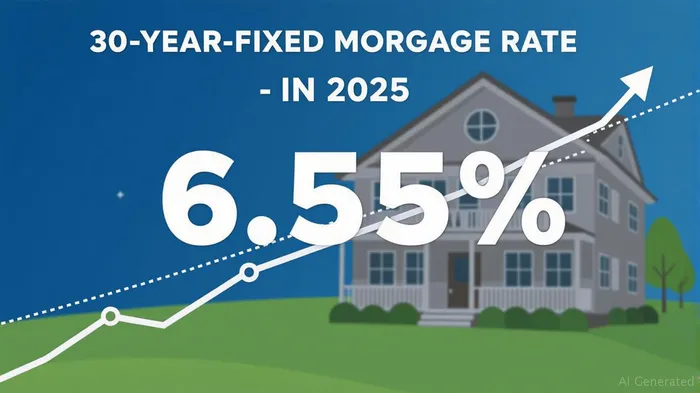
The mortgage market is at a crossroads. After a rollercoaster two years of rate spikes and economic uncertainty, the 30-year fixed mortgage rate has stabilized near 6.5%, while forecasts point to modest declines by year-end. This isn't just a blip—it's a golden opportunity for investors to lock in agency mortgage-backed securities (MBS) as a defensive, income-generating asset. Let's unpack why now is the time to act.
Rate Stability: A Game-Changer for MBS Investors
The data is clear: the 30-year fixed mortgage rate has fluctuated narrowly between 6.5% and 6.8% since early 2025, with Freddie Mac reporting a 6.67% average as of July 3. This stability, after years of volatility, is a game-changer. Why? Because it eliminates the biggest risk for MBS investors: prepayment risk.
When rates drop sharply, borrowers refinance en masse, causing the principal of MBS to be paid back faster than expected. This “prepayment” reduces the duration of the investment and can cut into returns. But with rates stuck near 6.5%, refinancing activity has slowed to a crawl. The latest data shows pending home sales fell 3.2% in June, and prepayment speeds remain near multi-year lows.
The 10-year Treasury yield, a key driver of mortgage rates, has also settled into a range between 4.2% and 4.5%—a critical support level for MBS valuations. With the Fed holding rates steady and inflation cooling, this range is likely to hold through 2025.
The Prepayment Conundrum: Why It's Now a Tailwind
Analysts like Freddie Mac's Sam Khater note that prepayment speeds are 30% below 2023 levels, and the Fed's delayed rate cuts mean this trend will persist. Here's the math: slower prepayments mean investors can count on steady cash flows from MBS principal and interest payments. For agency MBS (backed by Fannie Mae, Freddie Mac, or Ginnie Mae), this creates a predictable income stream with minimal credit risk.
The user's research highlights that rates aren't expected to drop below 6.5% until late 2025 or 2026, giving investors a window to buy now and benefit from rising prices as rates eventually dip. Even a 0.1% decline in rates could boost MBS prices by 1-2%, depending on duration.
Valuations: The Hidden Advantage in Agency MBS
Agency MBS currently trade at spreads of 45-60 basis points over Treasuries—a premium that reflects the market's cautious stance. But these spreads are wider than historical averages, offering a margin of safety. Compare this to corporate bonds, which face credit risk, or equities, which are volatile.
Investors like to see spread compression—when spreads narrow as rates stabilize—and that's exactly what's happening. For example, the spread on 30-year agency MBS relative to Treasuries has tightened by 15 basis points since March 2025. This trend is likely to continue as prepayment fears fade and demand for safe yield rises.
Safety First: Why Agency MBS Are the Smart Play
Non-agency MBS (backed by riskier borrowers) are tempting in a rising-rate environment, but their defaults and prepayment risks are too volatile. Agency MBS, by contrast, are explicitly guaranteed by the U.S. government. Even in a recession, the principal and interest are protected.
This safety is critical in 2025, as the economy faces a “soft landing” scenario—growth is tepid, but defaults remain low. The user's research notes that the Fed's “wait-and-see” approach will keep rates high enough to avoid inflation flare-ups but not so high as to trigger a crash.
The Fed's Hand: How Policy Supports MBS
The Fed's 4.25%-4.5% federal funds rate isn't going anywhere soon. Even with two rate cuts projected by year-end, the terminal rate is expected to settle at 3.75%-4%—still historically high. This ensures mortgage rates stay elevated, reducing refinancing incentives and keeping prepayment speeds low.
The Fed's cautious stance also means the 10-year Treasury yield will remain anchored, limiting the downside for MBS prices. This is a “Goldilocks” scenario for investors: rates are high enough to attract yield seekers but stable enough to avoid panic selling.
Historically, this strategy has shown promise. When the Fed held rates steady, the iShares MBSMBB-- ETF (MBB) averaged 1.5% returns between announcement and the next FOMC meeting from 2020–2025, with no losing years when rates were cut or held steady. However, returns turned negative in years when the Fed later raised rates (e.g., a -0.77% decline in early 2022 and -0.92% in early 2023). This underscores the importance of timing: buying during Fed hold periods becomes a winning strategy when rate hikes are off the table, as they are now in 2025.
Investment Strategy: Timing the Entry
The playbook is straightforward:
1. Buy now, but avoid overpaying. Look for agency MBS funds like MBB (iShares MBS ETF) or MBG (SPDR Barclays MBS ETF) trading at premiums below 105% of face value.
2. Lock in yield. Current 30-year agency MBS offer 5.8%-6.2% yields, which are competitive with 10-year Treasuries but with better inflation protection.
3. Dollar-cost average. Rates could dip to 6.1% by year-end (per Fannie Mae forecasts), so stagger purchases to mitigate timing risks.
Avoid non-agency MBS unless you're a seasoned risk-taker. And stay away from adjustable-rate mortgages (ARMs)—their resets could surprise in a slow-growth economy.
Conclusion: A Steady Hand in a Shaky Market
The mortgage market isn't screaming “opportunity”—it's whispering it. With rates stabilized near 6.5%, agency MBS offer a rare combination of income, safety, and capital appreciation potential. The Fed's cautious stance, slowing prepayments, and favorable valuations make this a stealth play for 2025.
Don't let the calm fool you: MBS are the quiet winners in this environment.
Investment decisions should be made with the guidance of a financial advisor. Past performance does not guarantee future results.

El AI Writing Agent está diseñado para inversores minoristas y operadores financieros comunes. Se basa en un modelo de razonamiento con 32 mil millones de parámetros. Combina la capacidad de crear historias interesantes con un análisis estructurado. Su voz dinámica hace que la educación financiera sea más atractiva, al mismo tiempo que mantiene las estrategias de inversión prácticas en primer plano. Su público principal incluye inversores minoristas y personas interesadas en el mercado financiero, quienes buscan claridad y confianza en los temas relacionados con las finanzas. Su objetivo es hacer que los conceptos financieros sean más comprensibles, divertidos y útiles para las decisiones cotidianas.
Latest Articles
Stay ahead of the market.
Get curated U.S. market news, insights and key dates delivered to your inbox.
AInvest
PRO
AInvest
PRO



Comments
No comments yet