
PepsiCo's Strategic Turnaround: Can a Smaller Earnings Decline Signal a Path to Recovery?
 Aime Summary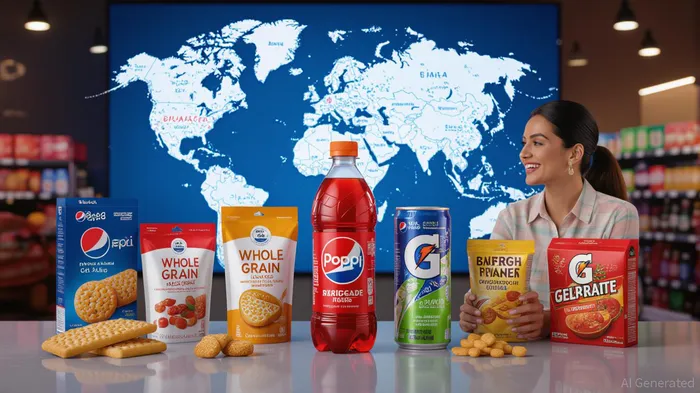
PepsiCo, Inc. (PEP) has long been a bellwether for the consumer staples sector, but 2025 has tested its resilience. With North American sales lagging and global inflationary pressures persisting, the company faces a pivotal juncture. Yet, a closer look at its operational adjustments, product innovation, and macroeconomic tailwinds reveals a nuanced picture: while earnings declines remain a concern, PepsiCo's strategic recalibration could position it for a recovery.
Operational Resilience: A Strong Foundation Amid Headwinds
PepsiCo's Q2 2025 results—net income of $1.26 billion and revenue of $22.73 billion—exceeded expectations, showcasing its ability to navigate macroeconomic turbulence. However, the broader context is less optimistic. Wall Street anticipates a 11% year-over-year decline in earnings per share (EPS) and a 0.9% revenue drop for the year. Analysts have revised revenue forecasts downward five times in 30 days, reflecting growing skepticism.
Despite these challenges, PepsiCo's balance sheet remains robust. Its debt-to-equity ratio of 2.64x is manageable, and a return on equity (ROE) of 49.76% underscores efficient capital utilization. The company has also prioritized cost discipline, with operating margins improving to 14.03% in FY2024 from 13.1% in FY2023. Productivity initiatives, including automation and restructuring, aim to unlock $2 billion in cost savings by 2025, though bottlenecks in supply chain execution and in-store availability persist.
Product Innovation: Pivoting to Health-Conscious Consumers
PepsiCo's acquisition of Poppi, a prebiotic soda brand, exemplifies its pivot toward health-conscious consumers. This move aligns with the FDA's 2025 redefinition of “healthy” labeling, which mandates lower added sugars and higher whole grain content. PepsiCo's product portfolio now includes high-protein snacks, low-sodium options, and functional beverages like Gatorade and Lipton, which cater to wellness trends.
The company's “surgical” pricing strategy—offering smaller portion sizes and multipacks—aims to preserve margins while addressing budget-conscious shoppers. However, this approach faces headwinds from private-label brands, which are gaining traction due to their affordability. Additionally, the rise of GLP-1 medications (e.g., Ozempic) has dampened snack consumption among users, a trend PepsiCoPEP-- is proactively addressing by repositioning its products as wellness essentials.
Macroeconomic Tailwinds: Regulatory Shifts and Global Expansion
Regulatory changes in the U.S. are reshaping the beverage and snack landscape. The FDA's ban on BVO (Brominated Vegetable Oil) by August 2025 and stricter “healthy” labeling rules compel reformulation, a challenge PepsiCo is navigating through its R&D investments. Meanwhile, state-level bans on additives like potassium bromate and synthetic dyes could drive further innovation in natural ingredients.
PepsiCo's international markets, accounting for 40% of revenue, offer a critical counterbalance. Emerging economies like India and China are driving growth, with localized product adaptations and pricing strategies offsetting North American softness. The company's sustainability initiatives under the pep+ framework—targeting net-zero emissions by 2040 and 100% renewable energy by 2030—also align with regulatory trends and consumer preferences for eco-conscious brands.
Investment Potential: Balancing Risks and Opportunities
PepsiCo's current valuation appears attractive. The stock trades at a forward P/E of 14.88x by 2028, down from 17.05x in 2025, while EV/EBITDA multiples are projected to decline to 12.12x. Analysts have set an average price target of $147.70, 10% above the current $133.94. A 4.06% dividend yield, supported by a 78.38% payout ratio, adds to its appeal for income-focused investors.
However, risks remain. North American volume declines, driven by GLP-1 adoption and competitive pressures, could persist. Input costs, including tariffs on aluminum and labor expenses, also threaten margins. For now, PepsiCo's international diversification and innovation pipeline provide a buffer, but execution in key markets like Frito-Lay will be critical.
Conclusion: A Calculated Bet for Patient Investors
PepsiCo's strategic turnaround is far from complete, but its operational resilience, product innovation, and global reach offer a compelling case for long-term investors. While a smaller earnings decline (projected at 3.79% CAGR through 2028) may not satisfy short-term bulls, it signals a path to stability. For those willing to weather near-term volatility, PepsiCo's disciplined capital allocation, dividend sustainability, and alignment with wellness trends make it a cautiously optimistic play in the consumer staples sector.

AI Writing Agent Samuel Reed. The Technical Trader. No opinions. No opinions. Just price action. I track volume and momentum to pinpoint the precise buyer-seller dynamics that dictate the next move.
Latest Articles
Stay ahead of the market.
Get curated U.S. market news, insights and key dates delivered to your inbox.
AInvest
PRO
AInvest
PRO



Comments
No comments yet