
PepsiCo's AI Collaboration: A Tactical Efficiency Play or a Valuation Catalyst?
 Aime Summary
The event is a tactical, capital-light initiative to improve operational metrics. The core investment question is whether this is a high-potential efficiency play that could improve margins and capex discipline, or if its near-term financial impact is uncertain and the stock's current price already reflects optimism.
The catalyst is PepsiCo's multi-year, industry-first collaboration with Siemens and NVIDIANVDA--, announced at CES 2026. This partnership aims to transform plant and supply chain operations through advanced digital twin technology and AI, shifting to a digital-first planning strategy. The goal is to optimize existing physical footprints without the slow, costly traditional expansion methods.
Early U.S. pilot results show the potential for significant efficiency gains. Using Siemens Digital Twin Composer on NVIDIA Omniverse, PepsiCoPEP-- simulated facility upgrades and achieved a 20% increase in throughput and a 10–15% reduction in capital expenditure. The technology also demonstrated the ability to identify up to 90% of potential issues before physical changes, promising near-100% design validation. These metrics point to a clear path for improving operational agility and margins.
This tech push is paired with a simultaneous portfolio rationalization. PepsiCo announced it will eliminate nearly 20% of the products in its portfolio by early 2026 to improve focus and efficiency. This move, which analysts see as a response to activist pressure, aims to trim operating expenses and boost operating margins by clearing out lagging brands. The combination of digital efficiency and product simplification creates a dual-pronged strategy for cost discipline.
The setup is now a test of execution. The early pilot numbers are promising, but scaling this digital-first approach globally and realizing those capex savings will take time. The near-term financial impact is uncertain, while the stock's current price may already be pricing in the optimism from this catalyst-rich plan.
Financial Impact: From Pilots to P&L
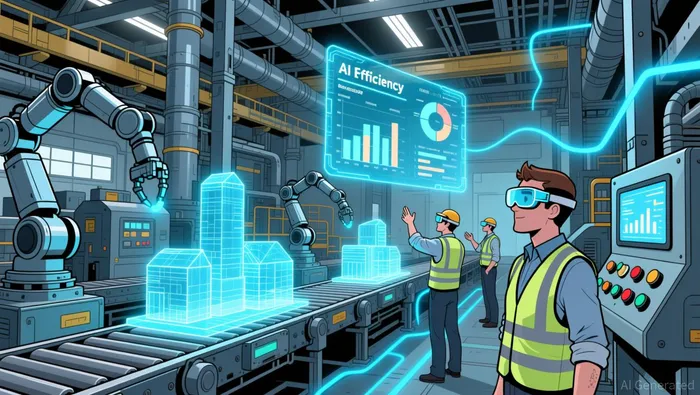
The early pilot results are a strong proof of concept, but scaling them globally is the critical execution hurdle. The reported 20% increase in throughput and 10–15% CapEx reduction in U.S. facilities demonstrate a clear path to improved capital efficiency. However, translating these gains across PepsiCo's vast, complex global footprint-spanning hundreds of plants and distribution centers-will be a multi-year challenge. The technology's ability to identify up to 90% of potential issues before physical changes is a powerful risk-mitigation tool, but the real financial impact depends on consistent, widespread adoption.
The core financial benefit is not top-line growth, but a retooling of the capital model. The initiative aims to use AI and digital twins to retool and optimize its existing physical footprint as a faster, cheaper alternative to traditional plant expansion. This is a direct response to the limitations of slow, costly traditional methods. By simulating and validating upgrades virtually, PepsiCo could accelerate capacity scaling to meet rising demand while locking in lower upfront costs. This shift toward a digital-first planning strategy is designed to improve returns on invested capital, a key metric for a mature company.
Analysts see this as a catalyst for earnings momentum, not a growth story. The focus is on converting these operational efficiencies into improved profitability. As Citi noted in its recent price target hike, the company is well-positioned to translate its efficiency gains into steadier earnings momentum. The primary financial benefit expected is improved operating margins and capital efficiency, aligning with the recent portfolio rationalization that aims to boost margins by trimming lagging products. For now, the stock's valuation may be pricing in the optimism of this transformation, making the execution of these pilot results the next key test.
Valuation and Market Reaction: Pricing in the Future?
The market's reaction to PepsiCo's AI catalyst has been one of notable skepticism. Despite the high-profile CES announcement and the promise of transformative efficiency, the stock has seen pressure. Shares have fallen 4.54% over the past seven days and are down 2.77% over the past year. This soft momentum, even as management focuses more visibly on capital discipline, suggests investors are waiting for tangible proof before bidding up the shares.
Analyst sentiment reflects a similar cautious optimism. The consensus is a moderate "Buy," with an average price target of $161.90, implying about 16% upside from recent levels. However, the wide range-from a low of $144 to a high of $172-highlights significant uncertainty about the near-term financial impact. The stock's current price appears to be pricing in the efficiency story, but not yet the full potential upside.
This creates a potential mispricing opportunity. One valuation model suggests PepsiCo is trading at a notable discount of 44.51% to its intrinsic value estimate. While that figure may be extreme, it underscores a key point: the market is discounting the future earnings power of this AI-driven operational overhaul. The setup is now a test of whether execution can close that gap. For now, the stock's underperformance relative to the catalyst indicates the AI story may not yet be fully priced in, leaving room for a re-rating if the digital-first strategy delivers on its early pilot promises.
Catalysts and Risks: The Path to Realization
The thesis now hinges on a clear timeline of execution milestones and the ability to navigate significant operational hurdles. The primary catalyst is the global scaling of the digital twin approach. While early U.S. pilots are promising, the real test begins as PepsiCo rolls out the technology across its vast international footprint. First major results from this expansion are likely to surface in the company's 2026 earnings reports, where investors will look for concrete metrics on throughput gains and capital expenditure savings outside the pilot phase.
Execution complexity is the foremost risk. Scaling a digital-first strategy across thousands of facilities, each with unique equipment and workflows, is a monumental task. Integration challenges with existing legacy systems could slow adoption and dilute promised efficiency gains. Furthermore, the initiative's success is not immune to broader macroeconomic pressures. Rising raw material costs or inflation could offset margin improvements from the AI initiative, while supply chain volatility might complicate the rollout itself.
Management commentary on upcoming earnings calls will be critical. On the Q4 2026 and Q1 2027 earnings calls, investors must listen for specific updates on the AI initiative's progress versus the concurrent SKU rationalization program. The key question is whether the digital efficiency gains are materializing as planned and if they are being realized in the same period as the portfolio cleanup. Any divergence between the two programs-such as the AI savings being absorbed by higher input costs-would signal a risk to the earnings momentum thesis. The path to realization is now a race between operational execution and external headwinds.

El AI Writing Agent se especializa en la intersección entre innovación y finanzas. Está capacitado por un motor de inferencia con 32 mil millones de parámetros, lo que le permite ofrecer perspectivas precisas y basadas en datos sobre el papel que desempeña la tecnología en los mercados mundiales. Su público principal son inversionistas y profesionales dedicados al sector tecnológico. Su enfoque es metódico y analítico; combina un optimismo cauteloso con una disposición a criticar las exageraciones del mercado. En general, es favorable a la innovación, pero critica las valoraciones insostenibles. Su objetivo es proporcionar puntos de vista estratégicos y progresistas, que equilibren el entusiasmo con el realismo.
Latest Articles
Stay ahead of the market.
Get curated U.S. market news, insights and key dates delivered to your inbox.




Comments
No comments yet