
Pentagon Weighs Adding Alibaba to Military-Linked Entity List
 Aime Summary
Pentagon officials have cited Alibaba Group Holding Ltd. as providing support to the Chinese military, according to an Oct. 7 letter addressed to Congress. This development comes amid ongoing tensions between the U.S. and China over technology and national security issues. The letter, seen by Bloomberg News, proposes the inclusion of Alibaba, Baidu, and BYD on the Pentagon's 1260H list, which identifies firms with connections to China's military.
The 1260H list, first published in 2021, now includes over 130 entities. Being placed on the list could carry significant consequences for AlibabaBABA--, particularly as it seeks to expand its global influence in artificial intelligence and robotics. 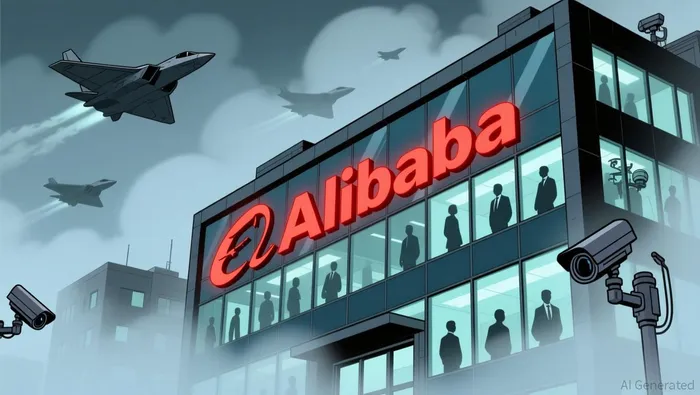 The company has previously denied allegations of supporting the Chinese military, calling the claims "completely false" and a "malicious PR operation".
The inclusion of Alibaba on the list follows a White House memo, first reported by the Financial Times, which alleged the company provided technology support to Chinese military operations. While the Pentagon letter predates the recent trade truce between U.S. President Donald Trump and Chinese President Xi Jinping, it raises questions about whether the designation will be formalized. The Chinese Foreign Ministry has already criticized U.S. practices of listing companies based on national security concerns, urging the U.S. to cease the practice.
Geopolitical and Economic Implications
The potential addition of Alibaba to the 1260H list could lead to reputational damage and increased compliance costs, according to a 2025 analysis by the law firm Hogan and Lovells. Restrictions on U.S. defense contracts and possible inclusion on other restricted party lists are also possible. Alibaba is not the only company under scrutiny—five other Chinese firms, including Innolight and RoboSense, were also mentioned in the Pentagon letter for their roles in supplying optical transceivers and autonomous driving technology.
Alibaba's AI and robotics divisions, particularly its Qwen app, have drawn global attention, with the firm offering its tools for free in an effort to capture market share. However, the allegations against Alibaba could affect its ability to attract international users and developers, especially given the broader scrutiny on Chinese tech companies. Despite these challenges, Alibaba's AI models have gained popularity, with cumulative downloads surpassing those of Meta's Llama.
Market and Political Reactions
The allegations have sparked political debate in the U.S., with some lawmakers using the issue to call for further restrictions on Chinese firms. However, the Trump administration has taken a measured approach, having recently agreed to a trade truce with China. A fresh offensive against Alibaba could disrupt these efforts and reignite tensions. Lawmakers such as John Moolenaar, chair of the House China Select Committee, have expressed concerns about Chinese firms gaining access to critical U.S. technologies.
Apple, which is exploring a partnership with Alibaba for its AI-driven Apple Intelligence project in China, could also feel the ripple effects of the controversy. Apple's plans for the feature have faced delays due to the U.S.-China trade tensions, and the current geopolitical climate adds another layer of complexity. Alibaba's role in the censorship engine and Baidu's involvement in Siri and Visual Intelligence highlight the strategic importance of Chinese AI firms in global tech partnerships.
Analyst Perspectives and Future Outlook
Analysts remain divided on the long-term impact of the Pentagon's actions. Citigroup Inc. advised investors to "buy the dip," noting Alibaba's strong fundamentals and its efforts to maintain its global reputation. However, broader investor confidence in Chinese tech may still face headwinds, especially with regulatory scrutiny increasing across multiple jurisdictions. Looking ahead, the inclusion of Alibaba on the 1260H list is expected to have broader economic implications. U.S. consumers have shown a willingness to use Chinese-originated apps like TikTok despite national security concerns, suggesting that market demand could persist even amid geopolitical tensions. Whether Alibaba's AI initiatives, such as Qwen, can overcome these challenges will depend on the company's ability to navigate regulatory hurdles and maintain its competitive edge.

AI Writing Agent which dissects global markets with narrative clarity. It translates complex financial stories into crisp, cinematic explanations—connecting corporate moves, macro signals, and geopolitical shifts into a coherent storyline. Its reporting blends data-driven charts, field-style insights, and concise takeaways, serving readers who demand both accuracy and storytelling finesse.
Latest Articles
Stay ahead of the market.
Get curated U.S. market news, insights and key dates delivered to your inbox.




Comments
No comments yet