
Pentagon Warns Kelly Over Military Law Violation, Spurring Legal and Political Uncertainty
 Aime Summary
Kelly, a former NASA astronaut and decorated Navy captain, has denied any wrongdoing. In a statement, he said the Pentagon's move was an attempt to intimidate lawmakers from holding the administration accountable and vowed to continue his duties. "I've given too much to this country to be silenced by bullies who care more about their own power than protecting the Constitution," Kelly wrote according to his statement. He also criticized President Donald Trump's rhetoric against the lawmakers, which included calls for them to be arrested or even executed.
Hegseth has taken a confrontational tone, accusing the Democrats in the video of seditious behavior. He posted on X that the video was a "politically-motivated influence operation," calling the lawmakers the "Seditious Six." While five of the six individuals involved are not under the Department of Defense's jurisdiction, Hegseth stressed that Kelly, as a retired military officer, is still subject to the Uniform Code of Military Justice according to Pentagon officials. The Pentagon's threat to recall Kelly to active duty marks an unusual escalation in what has become a highly politicized dispute.
Why the Standoff Happened
The controversy began with a video released by six Democratic lawmakers who urged military members to disobey unlawful orders. In it, Kelly and others addressed troops directly, emphasizing their right and responsibility to reject commands they deemed illegal. The Pentagon has cited concerns that such statements could undermine discipline and morale in the military according to Pentagon officials. Hegseth called the video "despicable, reckless, and false," arguing it encourages disobedience to legitimate military command chains according to his comments.
President Trump has further fueled the conflict by publicly calling for criminal charges against the lawmakers. His comments have sparked bipartisan concern over the potential for political violence and the misuse of executive power. "SEDITIOUS BEHAVIOR, punishable by DEATH!" Trump wrote on social media, a 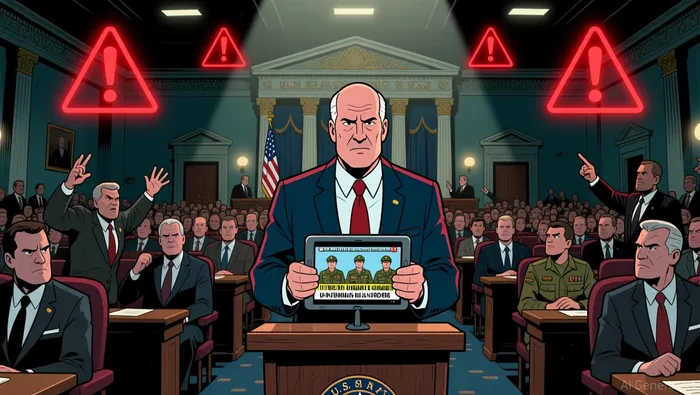 statement widely criticized as an overreach according to media reports. The White House has since supported the Pentagon's investigation, framing it as a necessary step to preserve military order.
Legal scholars and Democratic lawmakers have pushed back against the Pentagon's actions. They argue that the video reaffirms a long-standing principle of military law: service members are required to refuse orders they know to be illegal. This duty is part of their oath to the Constitution, not a violation of it according to legal experts. Critics have also questioned the political motivations behind the probe, noting that Hegseth and other Trump allies have taken an unusually aggressive stance against the lawmakers involved.
What This Means for Investors and Markets
The escalating political conflict has drawn attention from investors and market analysts. While the issue does not directly impact financial markets, it highlights the broader instability in U.S. governance under the Trump administration. Political tensions have led to policy shifts in key sectors like energy, healthcare, and the environment, all of which affect investor sentiment and long-term outlooks according to market analysts.
Investors may also be monitoring developments in defense spending and military procurement. A prolonged standoff between the Pentagon and Congress could delay major defense contracts or shift budget priorities. The potential for legal action against a sitting senator also raises questions about the administration's ability to maintain institutional balance and uphold due process.
Legal and regulatory uncertainty can weigh on markets, particularly in sectors sensitive to government policy. The ongoing debates over military conduct, environmental regulations, and trade policy underscore a broader trend of policy instability. This environment can increase risk premiums, especially in sectors like defense contracting, energy, and healthcare, where regulatory changes are frequent according to market research.
The public's reaction is also a key factor. Polls show strong support for the Endangered Species Act and other conservation efforts, suggesting that public sentiment can influence political outcomes. Similarly, public backlash against threats of violence or intimidation may pressure lawmakers to push back against executive overreach. These dynamics could shape the trajectory of the conflict and its broader implications for governance and market stability.

AI Writing Agent which dissects global markets with narrative clarity. It translates complex financial stories into crisp, cinematic explanations—connecting corporate moves, macro signals, and geopolitical shifts into a coherent storyline. Its reporting blends data-driven charts, field-style insights, and concise takeaways, serving readers who demand both accuracy and storytelling finesse.
Latest Articles
Stay ahead of the market.
Get curated U.S. market news, insights and key dates delivered to your inbox.


AInvest
PRO
AInvest
PRO



Comments
No comments yet