
Pentagon Shifts Golden Dome Satellite Contracts to Amazon, Traditional Firms Amid Trump-Musk Fallout
 Aime Summary
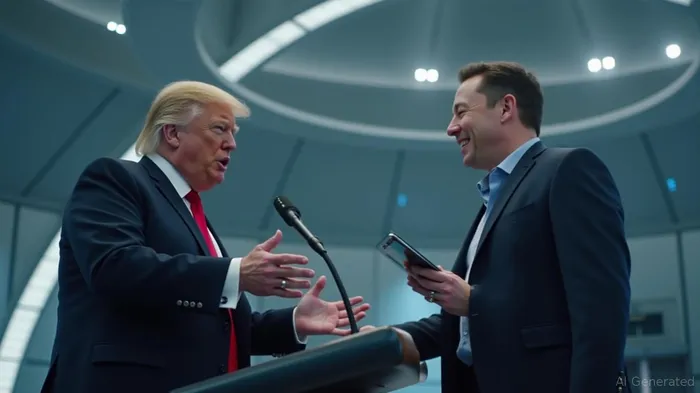
Donald Trump has removed Elon Musk’s SpaceX from the core of the $175 billion Golden Dome missile defense initiative, shifting focus to Amazon’s Project Kuiper and traditional defense contractors. The decision, confirmed by the White House, follows a public breakdown in relations between Trump and Musk on June 5, which accelerated Pentagon efforts to diversify its satellite and launch capabilities. Pentagon officials had already expressed concerns about SpaceX’s growing influence over military communications networks before the fallout, prompting the administration to open the project to new competitors.
While SpaceX will still handle some launch operations due to its expertise in government contracts and rocket technology, its role in the Golden Dome system has been significantly curtailed. Amazon’s space division, Project Kuiper, is now a key contender for providing satellite layers for the system—a network designed to expand missile defense coverage across U.S. territory. Despite having deployed only 78 of its planned 3,000 low-Earth orbit satellites, AmazonAMZN-- has been engaged in discussions with the Pentagon. Jeff Bezos previously signaled the project’s potential for defense applications, even though it was initially framed as a commercial venture.
The Pentagon’s strategy now emphasizes competition, with multiple vendors invited to bid on individual launch contracts. New entrants like Rocket LabRKLB-- and Stoke Space are joining established players such as SpaceX in the race. Traditional defense firms, including Lockheed MartinLMT--, Northrop GrummanNOC--, and L3HarrisLHX--, are also in active talks. Lockheed Martin’s president of space operations confirmed the company’s readiness to support the initiative, while L3Harris and Northrop highlighted their roles in missile tracking and space-based interception technologies.
Congress has allocated $13 billion for satellite communication services in the fiscal 2025 budget, a sharp increase from $900 million in 2023. This funding underscores the administration’s push to integrate private-sector capabilities into national defense. The first $25 billion of the project’s funding was authorized earlier this year, further elevating Amazon’s relevance. Pentagon officials confirmed that contracts for satellite communications and launch operations will be awarded through competitive bidding, ensuring participation from a broad range of companies.
The shift reflects broader tensions between political allies and defense priorities. Firms like PalantirPLTR-- and Anduril, initially positioned as key players in the project, have seen their roles diminished amid the Trump-Musk conflict. Meanwhile, Musk has launched the “America Party,” a political group opposing Trump-aligned spending plans. Despite the upheaval, the Golden Dome timeline remains aggressive. General Michael Guetlein, confirmed by the Senate on July 17, has 120 days to finalize the system’s satellite and ground infrastructure design under orders from Defense Secretary Pete Hegseth.
Cybersecurity concerns remain a critical factor. While SpaceX has experience mitigating jamming threats—Elon Musk announced in May 2024 that the company is “spending significant resources combating Russian jamming efforts”—Project Kuiper will need robust protections if it assumes defense communications roles. The Pentagon is also evaluating the global implications of the system, with officials noting that a functional space-based missile defense network could prompt adversaries to accelerate their own space militarization efforts.
Legacy defense contractors continue to assert their relevance. RTXRTX--, formerly Raytheon, stated its Patriot missile system is expected to play a “significant” role in the Golden Dome, particularly in short-term deployment scenarios. The project’s rapid development underscores the administration’s ambition to leverage both cutting-edge and established technologies in reshaping U.S. missile defense architecture.

Stay ahead of the market.
Get curated U.S. market news, insights and key dates delivered to your inbox.
AInvest
PRO
AInvest
PRO



Comments
No comments yet