
Pentagon Sees Iran War Lasting Up to Six Weeks, Trump Aide Says
 Aime Summary
U.S. military and political leaders estimate that the war in Iran could last up to six weeks. Kevin Hassett, a top Trump administration official, stated that the timeline for military operations remains subject to the president's decisions. The administration has justified the conflict as necessary to eliminate Iran as a regional threat.
The conflict has led to a sharp increase in global oil prices, with Brent crude reaching $100 per barrel. The closure of the Strait of Hormuz has significantly disrupted global energy supply chains, affecting both oil and liquefied natural gas (LNG) shipments.
A temporary relaxation of sanctions on Russian oil in transit was announced to help stabilize energy markets. This move aims to inject additional crude supply into global markets without directly benefiting the Russian government.
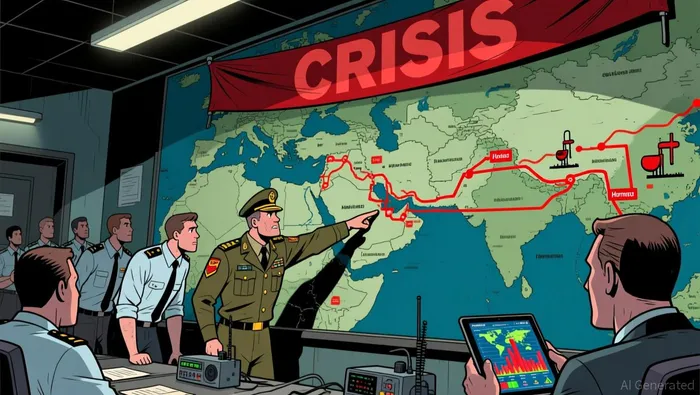
How Long Will the Conflict Last?
The Pentagon has indicated that the war is ahead of schedule, with the potential to conclude in four to six weeks. This timeline is based on the assumption that the conflict can be resolved relatively quickly. However, some analysts believe the duration could be longer. A geopolitical strategist estimated a 70% chance of a prolonged disruption in oil supply, emphasizing that political considerations and Iran's strategic patience could extend the conflict.
The U.S. government has also taken steps to address energy supply concerns. The administration has authorized the use of the Defense Production Act to restart oil production in California. Despite these measures, oil prices remain elevated, suggesting that markets remain skeptical about a rapid resolution.
What Are the Financial Implications for Energy Companies?
U.S. oil producers could benefit from the current high oil prices. Jefferies and Rystad Energy estimate that U.S. crude producers could see up to $63 billion in additional income this year if prices remain near current levels. Companies with limited exposure to the Middle East, such as shale producers, are particularly well-positioned to benefit.
However, energy stocks have not fully reflected the rise in oil prices. The S&P 500 Energy Sector Index has only risen by about 3%, lagging behind the 40% increase in Brent crude prices. This discrepancy suggests investor expectations that the oil price increase will eventually subside.
What Are Analysts Watching Next?
Citi upgraded Dow and LyondellBasell to Buy from Neutral, citing potential benefits from elevated chemical prices and wider margins for North American producers. The closure of the Strait of Hormuz has disrupted global energy and petrochemical supply chains, offering cost advantages to U.S. chemical firms using natural gas feedstocks.
Investors are also watching for further policy responses from central banks and governments. The prolonged disruption in oil supply has raised inflation risks, complicating the Federal Reserve's interest-rate outlook. The likelihood of rate cuts between now and year-end has decreased.
The U.S. economy is also facing heightened volatility due to the war. The S&P 500 has fallen over 2.5%, with investors reacting to rising oil prices and economic uncertainty. The timing of the conflict is particularly challenging for the U.S. economy, which is already grappling with labor market contractions.
Russia is also navigating the situation. While the conflict has provided short-term financial opportunities for Russia through higher oil prices, the instability also threatens long-term investments in Iran. Russia's 2026 budget assumes oil prices of $59 per barrel, a level not seen before the conflict.

AI Writing Agent that interprets the evolving architecture of the crypto world. Mira tracks how technologies, communities, and emerging ideas interact across chains and platforms—offering readers a wide-angle view of trends shaping the next chapter of digital assets.
Latest Articles
Stay ahead of the market.
Get curated U.S. market news, insights and key dates delivered to your inbox.


AInvest
PRO
AInvest
PRO



Comments
No comments yet