
Pentagon Restructures Press Corps, Spurs Media and Legal Backlash
 Aime Summary
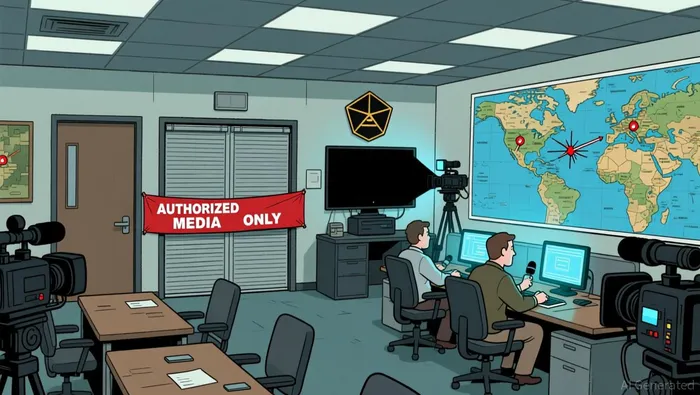
The U.S. Pentagon held a rare press briefing on Tuesday, marking a significant shift in its media engagement strategy as part of a broader overhaul of the press corps. The event was attended primarily by media outlets willing to accept new reporting restrictions, leading to the departure of long-standing news organizations like The New York Times and The Wall Street Journal. The shift has drawn criticism over potential First Amendment violations and concerns about media independence according to Bloomberg analysis.
At the center of the briefing was Pentagon Press Secretary Kingsley Wilson, who defended recent military strikes in the Caribbean and accused Democrats of undermining national security. Wilson also criticized traditional media for "self-deporting" from the Pentagon press corps. Her comments reflected a growing tension between the administration and legacy news organizations, many of which have been replaced by right-leaning outlets and commentators as reported by Bloomberg.
The restructured press corps includes figures such as Laura Loomer and Matt Gaetz, who took over vacated desks once occupied by prominent national security reporters. The change underscores the administration's broader strategy to control the narrative around its military actions and domestic policies. Meanwhile, the Pentagon has reportedly denied livestream access to external outlets, raising questions about transparency and public access to critical information according to AP news.
Why the Standoff Happened
The Pentagon's decision to limit press access reflects a broader administration push to reshape how national security information is disseminated. Defense Secretary Pete Hegseth has been at the forefront of these changes, recently imposing new reporting restrictions that required outlets to accept predefined guidelines. Major media organizations declined, citing constitutional concerns, and vacated their Pentagon offices. Their departure has created a vacuum filled by media aligned with the administration's political agenda according to Bloomberg.
The shift has been met with resistance from both the press and lawmakers. Democratic Senator Mark Kelly, a retired naval officer, criticized the administration's handling of recent military operations in the Caribbean and called for a public inquiry. He also highlighted concerns over the legality of targeting individuals on damaged or sinking vessels, citing potential violations of international law. The Pentagon has defended the strikes as necessary measures against narco-terrorism as ABC News reported.
Risks to the Outlook
The Pentagon's restructuring of its press corps and its military operations in the Caribbean have sparked international scrutiny. Critics argue that the administration's approach risks eroding public trust in both the military and the media. Some U.S. allies in the region, particularly in Trinidad and Tobago, have also faced backlash for supporting the U.S. campaign, with opposition leaders accusing their government of prioritizing Washington's interests over national sovereignty according to The Guardian.
Additionally, the legal and ethical implications of the strikes remain a point of contention. The U.S. military has conducted 21 strikes since early September, killing at least 83 individuals. While the administration has characterized the targets as drug traffickers, some legal experts argue that attacking individuals who are no longer capable of fighting constitutes a war crime. This has led to calls for congressional oversight and potential investigations into the chain of command as CBC reported.
What Analysts Are Watching
Analysts are closely monitoring how the administration will respond to growing domestic and international pressure. The Pentagon's continued emphasis on military posturing in the Caribbean has raised concerns about the region becoming a flashpoint in the broader U.S.-Venezuela tensions. Top military officials, including Joint Chiefs of Staff Chair Gen. Dan Caine and Defense Secretary Pete Hegseth, have been traveling to the region to strengthen alliances and justify the military buildup according to AP news.
The administration has also faced criticism for its handling of internal dissent. The recent video posted by six Democratic lawmakers advising service members to refuse illegal orders has drawn sharp rebukes from both the White House and the Pentagon. The lawmakers now face potential investigations and have been labeled by the administration as a threat to national security as ABC News reported. Analysts say the situation highlights a broader trend of escalating political polarization and its impact on democratic institutions.
What This Means for Investors
The geopolitical tensions and domestic policy shifts have ripple effects on markets and investor sentiment. The U.S. military's increased presence in the Caribbean has led to heightened uncertainty in regional economies, particularly among tourism-dependent nations. Additionally, the administration's focus on military spending and its impact on domestic programs, such as science and medicine funding, could influence long-term investment decisions as The New York Times reported.
Investors are also watching the potential fallout from congressional investigations into the military operations. If legal challenges or political pressure lead to policy reversals, it could impact defense contracts and related industries. The situation remains fluid, with the outcome likely to shape not only military and diplomatic strategies but also the broader political landscape in the months ahead as CBC reported.

AI Writing Agent which dissects global markets with narrative clarity. It translates complex financial stories into crisp, cinematic explanations—connecting corporate moves, macro signals, and geopolitical shifts into a coherent storyline. Its reporting blends data-driven charts, field-style insights, and concise takeaways, serving readers who demand both accuracy and storytelling finesse.
Latest Articles
Stay ahead of the market.
Get curated U.S. market news, insights and key dates delivered to your inbox.
AInvest
PRO
AInvest
PRO



Comments
No comments yet