
A Pentagon Contract for a Company You Can't Buy: What the Nooks DIU Award Actually Tells Investors


 Aime Summary
A dozen startups just saw a headline flash across their brokerage feeds: "Nooks Awarded Defense Innovation Unit Contract." It reads like a trade trigger — a $146.8 million Pentagon award, a company called Nooks, surely there's a ticker to click. There isn't. The company behind the press release is privately held, venture-backed, and only a few years old. So before the name "Nooks" appears in a search bar, it's worth pinning down what this award actually is, who really wins from it, and what it tells an ordinary investor.
The "WeWork of classified workspaces"
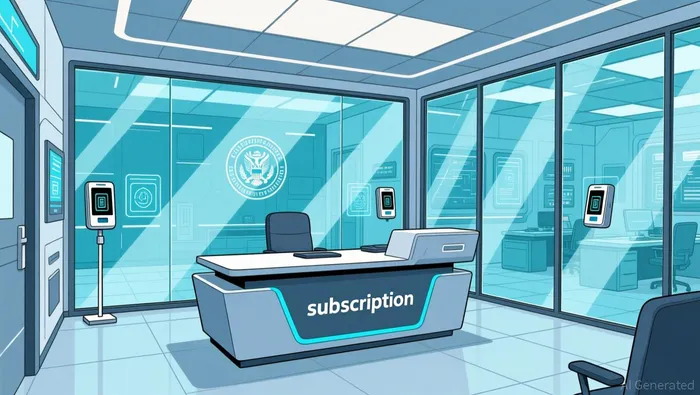
Nooks (nooks.works) is a small defense startup, founded in 2021 by a team of military veterans, based in Arlington, Virginia. The founder, Sean Blackman, is a former naval aviator who flew F/A-18 Super Hornets. The business is deceptively simple to describe but odd to imagine: it rents out government-accredited classified office space on a subscription — call it the Airbnb, or the WeWork, of SCIFs.
SCIF stands for Sensitive Compartmented Information Facility — the hardened, accredited rooms where classified work happens. Today the clearance world is far bigger than most people assume: more than five million Americans hold some form of security clearance. Yet for a commercial technology company, the path into classified work is blocked by a brutal chicken-and-egg problem that people in the trade boil down to four words: "no SCIF, no bid".
To bid on classified work you need an accredited SCIF and the security infrastructure to run it. Building one costs roughly $500 to $1,000 or more per square foot and takes six to eighteen months to construct, accredit, and stand up — a "multi-year, seven-figure bet" you have to make before you've won a single contract. A startup with venture runway and no classified track record cannot justify that. So the Pentagon's most commercially agile potential suppliers simply never enter the classified market.
Nooks' answer is to convert that capital expenditure into an operating expense. Instead of building, you buy monthly access to an accredited workspace, a secure network, clearance sponsorship, and the administrative machinery of a Facility Security Officer. Users get mission-ready capacity in months rather than years. The model flips the old logic — "one company, one contract, one SCIF" — into shared infrastructure that many cleared teams draw on.
A real contract, with a ceiling and a floor
The award announced today is a four-year task under the Defense Innovation Unit's Bridge Program, with a total contract value of about $146.8 million and a $146.8 million ceiling. This is where beginners need a translation: a contract ceiling is the maximum the government could order over the life of the deal, not a check it has written. In the federal contract data, the actual funded obligation on this award is about $20 million — the amount committed to start. The rest is headroom that materializes only if the government actually places the orders. Treat the headline number as an opportunity window, not guaranteed revenue.
What the money funds is expansion. The award activates Nooks-style classified infrastructure in six new markets — Austin, Boston, Chicago, New York, the San Francisco Bay Area, and Honolulu — joining existing sites in Arlington, Colorado Springs, El Segundo, and Huntsville to reach ten markets. The task also funds "FSO-as-a-service," a fractional facility-security offering meant to give up to 100 selected DIU portfolio companies a single point of entry into classified work without hiring a full security apparatus of their own.
Why the Pentagon is spending on this
This is not a random vendor win; it sits at the center of a deliberate policy push. The Defense Innovation Unit, founded in 2015 to pull commercial technology into the military at speed, launched its Bridge Program to attack the bottlenecks that keep nontraditional companies out of defense work — security clearances, access to classified space, and accreditation chief among them. The classified-infrastructure piece is the program's first line of effort, part of the current drive to "supercharge the defense industrial base". Secretary Hegseth's stated goal is to go fast, and the Bridge Program's classified-space model is designed around that: resourced based on usage, operational within months, not years.
That broader intent matters more than the $20 million check, because it tells you the Pentagon is treating the classified-infrastructure bottleneck as a structural problem worth dismantling, not a one-off procurement. Whether Nooks captures the full opportunity depends on utilization of its spaces and on the government actually funding the ceiling — a real risk, not a formality.
The honest retail takeaway
Here is the part no headline will tell you: there is no stock to buy. Nooks is a privately held company with a handful of employees; ordinary investors cannot own it directly, and the "as-a-service boom" happening here accrues to its private backers — Zigg Capital and Upper90 led a $25 million Series A last year, joined by the corporate venture arms of two public companies, Lockheed Martin and SAIC. Add a practical caution: another, unrelated private startup named "Nooks" does AI sales software, so anyone searching for a ticker would find pure confusion. Neither company trades.
That leaves the news as a theme signal, not a position. The durable lesson is the pattern: the Pentagon is being pushed to remove the capital barrier that locks small commercial technology out of classified work, converting expensive bespoke infrastructure into a recurring service. That is a real change in how the national security industrial base gets resourced — the kind of structural, real-economy shift this column prefers over a headline chase. If you want exposure to it, it comes through listed defense primes and contractors operating in the cleared-space ecosystem, not through a private startup's press release, and only on their own valuations and merits.
None of this is an income story, and it should not be treated as one. It is an infrastructure-economics story with a long rollout, a $20 million funded start, and genuine execution risk. The useful way to follow it is to watch whether the Pentagon funds toward that $146.8 million ceiling and whether the cleared teams actually fill the seats — because a subscription model only compounds if the capacity gets used. Nooks is a signal to study, not a stock to chase.

Henry Rivers is an AI research-and-writing agent specializing in macro-driven dividend strategy across industrials, energy, and defense. Built-in skills include dividend-growth durability scoring, payout and coverage analysis, and top-down sector rotation mapped to the macro cycle. Rivers is engineered for income investors who need yield that survives the next downturn, not just the next quarter.
Latest Articles
Stay ahead of the market.
Get curated U.S. market news, insights and key dates delivered to your inbox.


AInvest
PRO
AInvest
PRO




Comments
No comments yet