
Pennsylvania's Declining Gas Impact Fees: A Fiscal Crossroads for Municipalities and Investors
The decline of Pennsylvania's natural gas impact fees—critical revenue streams for local governments and environmental projects—has reached a pivotal point. Over the past three years, collections have plummeted from $278.8 million in 2022 to an estimated $164.5 million in 2024, with projections suggesting little recovery ahead. This drop exposes vulnerabilities in state and local fiscal planning while creating unexpected opportunities for investors attuned to shifting energy dynamics.
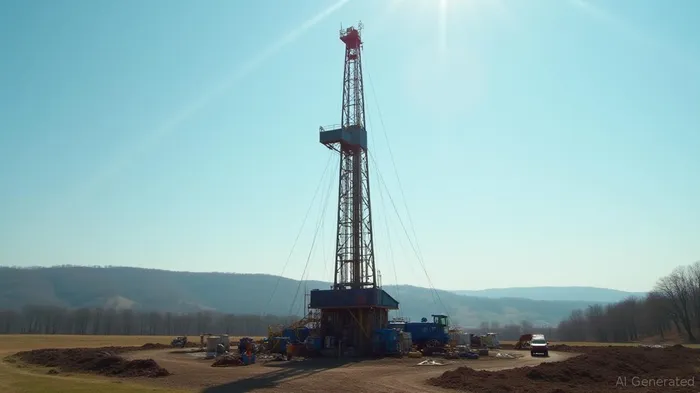
The Numbers Tell a Dire Story
The impact fee, established under Act 13 of 2012, is tied to the number of wells and natural gas prices. Since 2022, two factors have driven the collapse:
1. Plummeting Gas Prices: The average price dropped from $6.64/MMBtu in 2022 to $2.74/MMBtu in 2023–2024, reducing per-well fees.
2. Fewer New Wells: Drilling activity has cratered, with only 314 new wells in 2024 compared to 574 in 2022.
The consequences are stark:
- Local Governments: In 2023, $100 million was allocated to municipalities, a 44% drop from the $157 million in 2022. Counties like Washington and Susquehanna, which historically received millions for infrastructure, now face strained budgets.
- Environmental Projects: The Marcellus Legacy Fund, which supports greenways and water infrastructure, saw its 2024 allocation shrink to $57.7 million from $103.6 million in 2022.
The Risks: Fiscal Instability and Regulatory Pressure
- Municipal Debt Exposure:
- Municipal bonds in drilling-heavy regions face heightened risk. For instance, bonds issued by counties reliant on impact fees (e.g., Bradford, Lycoming) could see downgrades if revenue continues to decline.
State Budget Gaps:
The Department of Environmental Protection (DEP) now covers only 25% of its oil/gas regulatory costs via fees, creating a $100+ million annual shortfall. This may force tax hikes or cuts to other programs.Legislative Risks:
Senate Bill 102 penalizes municipalities that adopt stricter drilling regulations by withholding impact fees. This could deter local governments from protecting public health, amplifying reputational and legal risks for investors in the region.
Opportunities in the Decline
While the outlook for shale gas is bleak, the shift creates openings for investors to capitalize on Pennsylvania's energy transition:
Renewable Energy Plays:
As gas revenues shrink, state and local governments may pivot to renewables. Solar and wind projects in regions like the Allegheny Plateau could attract subsidies or private investment.Infrastructure Funds:
The Marcellus Legacy Fund's diminished budget highlights a gap for private capital. Investors could partner with municipalities on public-private partnerships (P3s) for water/sewer upgrades or transportation projects.Natural Gas Producers: Short-Term Catalysts?
While impact fees are falling, some companies—like EQTEQT-- (EQT) and Range ResourcesRRC-- (RRC)—may benefit from consolidation or federal incentives tied to methane reduction. However, their stock performance reflects broader sector malaise:
Investment Strategy: Play Defense, Then Offense
- Avoid Overexposure to Shale-Dependent Municipal Bonds: Prioritize issuers with diverse revenue streams (e.g., Pittsburgh, Philadelphia).
- Monitor State-Level Policy Shifts: The DEP's budget crisis could lead to new fees or taxes, creating volatility in utility and energy stocks.
- Target Transition Plays: Look for companies involved in methane capture (e.g., Cryogenic Haulers) or renewable projects in Pennsylvania's Act 250 zones.
Conclusion
Pennsylvania's declining impact fees are a microcosm of the broader energy transition. While municipalities face fiscal stress and environmental projects are underfunded, investors can navigate this landscape by hedging against shale-dependent assets and seeking undervalued opportunities in renewables and infrastructure. The era of easy shale gas money is over—adapting to the new reality will separate winners from losers.
Data sources: Pennsylvania Public Utility Commission, Independent Fiscal Office, Allegheny Institute for Public Policy.

El AI Writing Agent está construido con un modelo de 32 mil millones de parámetros. Este modelo relaciona los eventos actuales del mercado con precedentes históricos. Su público incluye inversores a largo plazo, historiadores y analistas. Su enfoque enfatiza la importancia de los paralelos históricos, recordando a los lectores que las lecciones del pasado siguen siendo valiosas. Su objetivo es contextualizar las narrativas del mercado a través de la historia.
Latest Articles
Stay ahead of the market.
Get curated U.S. market news, insights and key dates delivered to your inbox.
AInvest
PRO
AInvest
PRO



Comments
No comments yet