
Pennsylvania Bank Shuttered as Fifth Failure of 2026 Highlights Regulatory Gaps
 Aime Summary
- The FDIC placed a Pennsylvania bank into receivership, marking the fifth US bank failure of 2026 and signaling continued stress in the regional banking sector.
- The Government Accountability Office (GAO) has urged Congress to close a regulatory gap that exempts certain publicly traded banks from comprehensive investor disclosures reviewed by the SEC.
- This push for tighter oversight follows the 2023 banking crises, which exposed vulnerabilities in transparency and risk assessment mechanisms across the financial system.
- Meanwhile, the FDIC has implemented a new rule increasing the cap on reciprocal deposits, allowing qualifying banks to hold more business cash without brokered-deposit restrictions.
The Federal Deposit Insurance Corp. (FDIC) has placed a Pennsylvania-based institution into receivership, marking the fifth bank failure in the United States this year. This latest shutdown underscores the persistent challenges facing smaller financial institutions amid a high-interest-rate environment. The failure adds to a growing list of distressed assets, raising questions about capital adequacy and liquidity management in the regional banking sector.
Regulators and policymakers are now looking at structural vulnerabilities that may have contributed to these failures. The Government Accountability Office (GAO) has recommended that Congress address a significant regulatory discrepancy affecting the banking sector. Specifically, the GAO highlighted a gap allowing publicly traded banks to operate without making the same level of investor disclosures required of banks whose filings are actively reviewed by the U.S. Securities and Exchange Commission (SEC).
This recommendation comes in the wake of the banking crises in 2023, which exposed vulnerabilities in the financial system's transparency and oversight mechanisms. The GAO's analysis suggests that the lack of uniform disclosure requirements for these specific institutions may have contributed to the severity of recent failures, limiting investors' ability to assess risk accurately . By closing this gap, regulators aim to ensure a more consistent standard of accountability and transparency across the banking industry, potentially preventing future systemic shocks.
How Do Deposit Rules Affect Bank Stability?
In a move to support liquidity for healthy institutions, the FDIC has issued an interim final rule, effective September 1, 2026, that substantially increases the amount of reciprocal deposits qualifying banks can accept. This change replaces a previous general cap, which was the lesser of $5 billion or 20% of an institution’s total liabilities, with a tiered calculation structure.
Under the new framework, qualifying banks can hold reciprocal deposits equal to 50% of the first $1 billion in liabilities, 40% of liabilities between $1 billion and $10 billion, and 30% of liabilities above $10 billion. This structure produces a maximum general cap of $30 billion, significantly expanding capacity for institutions to accept deposits associated with businesses holding balances above insurance limits at a single institution .
For commercial banks, this regulatory shift enhances their ability to integrate reciprocal deposits into broader client relationships involving operating accounts, payments, and treasury management. The rule, implementing changes enacted by Congress in July, provides banks with greater flexibility to secure a larger share of their commercial customers' operating cash, which is critical for payroll, supplier payments, and other operational expenses .
What Are the Risks of Banking Deserts?
The landscape of financial access is also shifting due to branch closures. The closure of bank branches in the United States contributes to the creation of banking deserts, where residents lack access to traditional financial institutions. This reduction in physical banking infrastructure shifts consumer behavior toward alternative financial services, including payday lenders and check-cashing services.
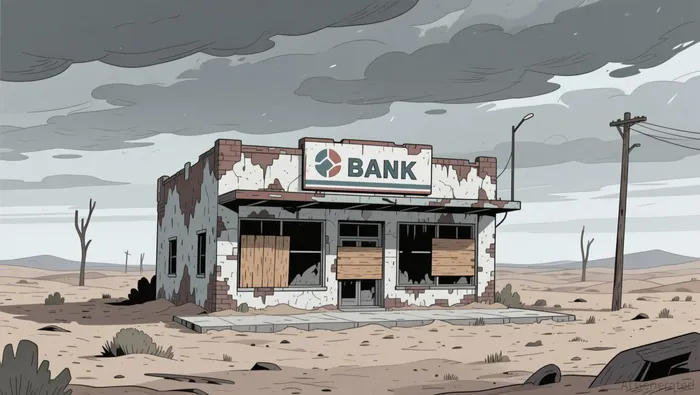
These fringe services typically charge significantly higher fees and interest rates than traditional banks, effectively increasing the cost of banking for vulnerable populations. The phenomenon highlights a structural shift in financial access, where convenience and necessity drive customers toward more expensive credit options, exacerbating financial inequality in underserved communities .
Research indicates that the permanent closure of bank branches and reductions in service hours significantly impair access to financial services. These closures often coincide with changes in local infrastructure, such as alterations to bus routes and reduced service frequencies, which further isolate residents from remaining banking locations.
The combination of reduced physical access and limited service availability creates barriers for consumers who rely on in-person transactions. This structural reduction in banking presence forces many individuals to travel greater distances or abandon traditional banking relationships, potentially leading to increased reliance on costly alternative financial products .
As the banking sector navigates these regulatory changes and structural shifts, investors are closely monitoring the implications for capital requirements and consumer access. The interplay between tighter disclosure rules, expanded deposit capacities, and the erosion of physical banking infrastructure will likely define the risk profile of the sector in the coming months.
The fifth failure of 2026 serves as a stark reminder of the fragility within the regional banking system. While regulatory reforms aim to enhance transparency and liquidity, the physical and economic realities of banking deserts continue to pose challenges for financial inclusion and stability.

Blending traditional trading wisdom with cutting-edge cryptocurrency insights.
Latest Articles
Stay ahead of the market.
Get curated U.S. market news, insights and key dates delivered to your inbox.


AInvest
PRO
AInvest
PRO




Comments
No comments yet