
The PENGU USDT Sell Signal: A Technical and Market Sentiment Deep Dive


 Aime Summary
Technical Analysis: Liquidity Crises and Structural Weaknesses
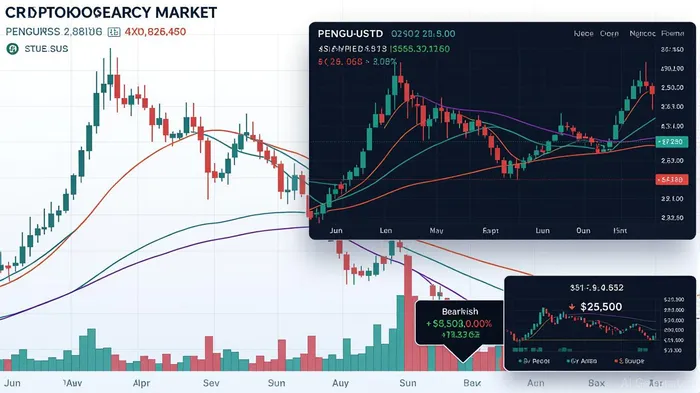 The sell-off began with a $66.6 million outflow from PENGUPENGU-- project team wallets, raising immediate concerns about liquidity and reserve transparency. This exodus coincided with the launch of the Pudgy Party game, which initially drove a 33% surge in PENGU-USDT trading volume to $202 million but ultimately failed to sustain momentum as doubts about the token's fundamentals resurfaced according to market analysis.
From a technical perspective, the price decline formed a double bottom pattern, a potential reversal signal, while On-Balance Volume and MACD indicators turned bullish, suggesting short-term recovery potential. However, these signals were overshadowed by broader macroeconomic pressures, including the Federal Reserve's aggressive rate hikes and a $19 billion liquidity crunch in October 2025, which amplified risk-off sentiment across crypto markets.
The episode also highlighted the fragility of stablecoin ecosystems. Regulatory scrutiny under the U.S. GENIUS Act and the EU's MiCA framework forced investors to migrate to regulated stablecoins like USDCUSDC--, further eroding PENGU's market share. This shift underscores the growing importance of transparency in stablecoin models, a factor that could redefine market dynamics in 2026.
Investor Psychology: Herd Behavior and Emotional Trading
Behavioral patterns played a pivotal role in amplifying the sell-off. Retail investors, driven by fear of missing out (FOMO) and social media hype, exhibited impulsive trading behaviors, with some checking prices up to 14.5 times daily. This emotional volatility created a self-fulfilling prophecy: panic selling during the initial drop accelerated the decline, while subsequent buying dips by retail and institutional investors-$157,000 and $273,000 injected, respectively-hinted at cautious optimism.
Whale activity further exacerbated the crisis. Large holders, including team wallets, executed bearish moves, triggering a cascade of liquidations and reinforcing negative sentiment. Such actions are emblematic of meme coins' susceptibility to sudden shifts in market mood, where perceived scarcity or project credibility can rapidly invert investor confidence.
Implications for Investors: Balancing Risks and Opportunities
The PENGU-USDT episode serves as a cautionary tale for crypto investors. While technical indicators like OBV and MACD suggest potential rebounds, the token's 55% annualized volatility and regulatory uncertainties remain significant headwinds. For risk-tolerant investors, the double bottom pattern and ecosystem expansions-such as PENGU's foray into gaming and real-world partnerships-could represent long-term value. However, diversification strategies must account for the token's inherent instability, particularly in a regulatory environment increasingly favoring auditable stablecoins.
Conclusion
The November 2025 PENGU-USDT sell signal encapsulates the dual forces of technical fragility and psychological volatility that define crypto markets. As regulatory frameworks mature and investor behavior evolves, tokens like PENGU will need to demonstrate robust fundamentals and transparent governance to regain trust. For now, the interplay between technical analysis and behavioral economics remains a critical lens through which to view market corrections-and opportunities.

Blending traditional trading wisdom with cutting-edge cryptocurrency insights.
Latest Articles
Stay ahead of the market.
Get curated U.S. market news, insights and key dates delivered to your inbox.






Comments
No comments yet