
The PENGU USDT Sell Signal: A Market Correction or a Bearish Reversal?


 Aime Summary
Liquidity Dynamics: A Fragile Foundation
PENGU USDT's depegging event in Q3 2025-a 28.5% price drop-exposed critical vulnerabilities in its design. The token's reliance on high-yield incentives and opaque collateral reserves left it ill-equipped to handle redemption pressure, triggering cascading liquidations in DeFi markets according to reports. A $66.6 million withdrawal from team-controlled wallets during this period further eroded trust, signaling potential insider activity and compounding liquidity risks according to data.
While PENGU briefly rebounded 12.8% in late October 2025 amid broader crypto market optimism, its inability to reclaim key resistance levels (notably the $0.023 support) underscores persistent bearish fundamentals. Analysts warn that without structural reforms-such as transparent collateral structures and regulatory compliance-the token remains susceptible to further depegging events. This fragility suggests a deeper systemic issue rather than a transient correction.
Investor Behavior: Flight to Stability
Investor sentiment has shifted decisively toward stablecoins with verifiable collateral and regulatory alignment. The U.S. GENIUS Act and the EU's MiCA regulations have accelerated this trend, pushing capital into compliant assets like USDCUSDC-- and USDG according to market analysis. PENGU's opaque governance model and lack of transparency in collateral management have made it a pariah in this environment, with investors increasingly favoring tokenized gold and other tangible assets as alternatives according to investor reports.
November 2025 data reveals a broader market trend: stablecoin adoption has surged, with Gen Z leading the charge. Tools like Bluwhale's AI Stablecoin Agent, launched in November, automate portfolio management for stablecoins, optimizing yields while mitigating risk. Meanwhile, Cross River's stablecoin payment infrastructure and USDG0's omnichain launch highlight a growing emphasis on interoperability and regulatory compliance according to industry reports and according to business updates. These innovations further marginalize algorithmic stablecoins like PENGU, which lack the infrastructure to compete.
Correction or Reversal? A Structural Outlook
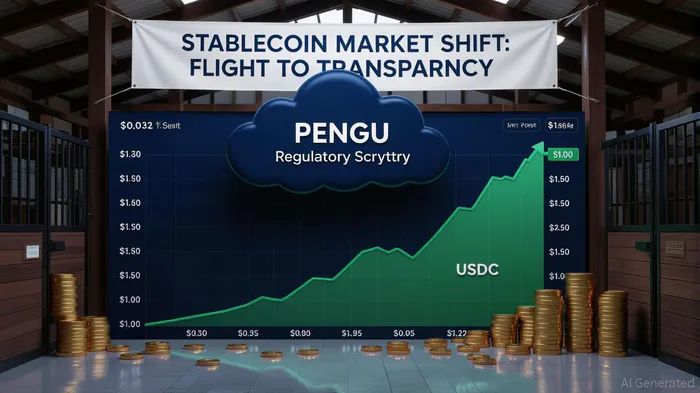 A market correction implies a temporary pullback within a longer-term bullish trend. However, PENGU's trajectory defies this pattern. The token's Q3 collapse and subsequent failure to reestablish key support levels indicate a loss of institutional and retail confidence. Redemption rates have spiked as investors flee opaque models, while regulatory scrutiny has intensified, pushing capital toward transparent alternatives.
The November 2025 sell signal aligns more closely with a bearish reversal. PENGU's liquidity challenges are not isolated but symptomatic of a broader crisis in algorithmic stablecoins. Without material improvements in collateral transparency, governance safeguards, and regulatory alignment, the token's long-term viability remains in question.
Conclusion
The PENGU USDT sell-off is not a mere correction but a harbinger of a structural bearish reversal. Liquidity dynamics, investor behavior, and regulatory shifts all point to a fundamental reevaluation of algorithmic stablecoins. For investors, the lesson is clear: prioritize stablecoins with verifiable collateral and regulatory compliance. For PENGU, the path forward requires urgent reforms-or risk obsolescence in an increasingly risk-averse market.

Combinando saberes tradicionales de negociación con análisis de criptomonedas de vanguardia.
Latest Articles
Stay ahead of the market.
Get curated U.S. market news, insights and key dates delivered to your inbox.


AInvest
PRO
AInvest
PRO



Comments
No comments yet