
PENGU USDT Sell Signal and Its Implications for Stablecoin Markets
 Aime Summary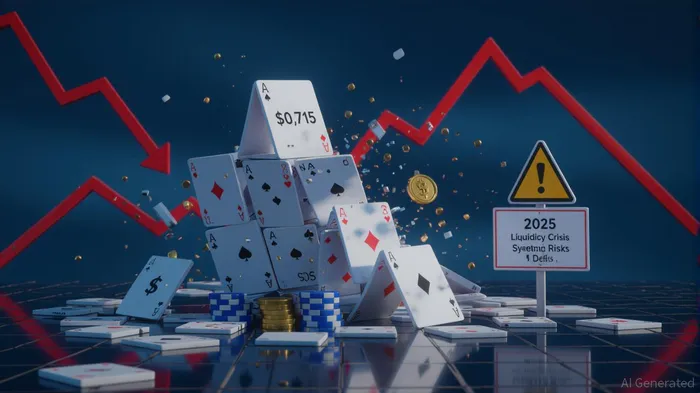
The 2025 DeFi Stablecoin Crisis: Algorithmic Pressure and Liquidity Shortages
The third quarter of 2025 marked a turning point for algorithmic stablecoins. PENGU USDT's volatility was emblematic of a sector-wide collapse, as nearly half a dozen stablecoins lost their dollar pegs. For instance, Ethena USDe temporarily fell to $0.65 in October 2025 amid U.S.-China trade tensions, illustrating how macroeconomic shocks destabilize algorithmic mechanisms. These models rely on market confidence and precise algorithmic adjustments; any erosion of trust triggers self-reinforcing sell-offs, overwhelming stabilizing protocols.
Liquidity crises were exacerbated by technical flaws. Smart contract vulnerabilities and oracle failures-such as those during a $60 million USDe sell-off-led to incorrect liquidations and amplified instability. The interconnectedness of DeFi platforms further compounded risks. Lenders on Aave and Morpho, who used stablecoins to fund leveraged positions, faced liquidations when crypto prices plummeted, destabilizing pegs. This dynamic mirrors the 2023 USDCUSDC-- depeg, which was partly driven by exposure to the collapse of Silicon Valley Bank.
Risk-Shifting Mechanisms: Technical Protocols and Cross-Chain Strategies
PENGU USDT's liquidity crisis revealed critical weaknesses in its risk-shifting architecture. During the 2025-2026 period, the token's cross-chain mechanisms failed to mitigate systemic risks. For example, PENGU USDT's depegging to $0.715 triggered $66.6 million in withdrawals from team wallets, eroding trust and exacerbating the liquidity crunch. Cross-chain strategies, while intended to broaden access, introduced vulnerabilities such as bridge exploits and opaque governance structures.
Smart contract flaws further compounded instability. The Q3 2025 sell-offs highlighted PENGU USDT's reliance on a non-transparent collateral system, which failed to withstand algorithmic pressure. Experts recommend overcollateralization and real-time monitoring as mitigation strategies, but these require robust infrastructure that many DeFi protocols lack. Hybrid solutions integrating blockchain with traditional finance-such as those proposed for trade finance-could offer scalable risk management, but their adoption remains limited.
Regulatory Responses: The GENIUS Act and Its Implications
The U.S. GENIUS Act, enacted in July 2025, represents a pivotal regulatory response to algorithmic stablecoin risks. By mandating 1:1 backing with high-quality liquid assets and monthly audits, the Act aims to restore trust in payment stablecoins. However, it excludes algorithmic stablecoins from oversight, leaving them in a legal gray area. This regulatory gap has accelerated a shift toward fiat-backed alternatives like USDC and EURe, which now dominate compliant markets.
The Act's emphasis on executive accountability-requiring CEOs and CFOs to certify reserve reports-mirrors the Sarbanes-Oxley framework, but its effectiveness hinges on enforcement. Meanwhile, the Basel Committee's review of crypto prudential rules signals a potential easing of institutional adoption, provided risks are managed. Yet, smaller protocols remain vulnerable due to inadequate infrastructure for overcollateralization and real-time monitoring.
Investor Implications and Future Outlook
For investors, the PENGU USDT sell signal serves as a cautionary tale. The token's 12% price decline in early December 2025 highlighted its susceptibility to macroeconomic shifts and regulatory tightening. While strategic partnerships with Bitso and cross-chain integrations with EthereumETH-- offered hope for recovery, sustained adoption depends on resolving technical and governance flaws.
The broader market is shifting toward fiat-backed stablecoins and CBDCs, which offer greater transparency and regulatory alignment. However, interest-paying stablecoins remain a regulatory gray area, posing risks of disintermediation in traditional banking. Investors must also monitor Bitcoin's performance and global economic indicators, as these factors will shape PENGU's recovery trajectory.
Conclusion
The PENGU USDT sell signal is a microcosm of DeFi's systemic risks. Algorithmic pressure, liquidity shortages, and opaque governance have exposed the fragility of stablecoin models, even as regulatory frameworks like the GENIUS Act seek to impose order. For investors, the lesson is clear: prioritize stablecoins with transparent reserves, robust smart contracts, and regulatory compliance. As the sector evolves, the interplay between innovation and oversight will determine whether DeFi can achieve its promise of financial inclusion without repeating the mistakes of the past.

Blending traditional trading wisdom with cutting-edge cryptocurrency insights.
Latest Articles
Stay ahead of the market.
Get curated U.S. market news, insights and key dates delivered to your inbox.


AInvest
PRO
AInvest
PRO



Comments
No comments yet