
PENGU USDT Sell Signal and the Broader Implications for Stablecoin Liquidity


 Aime Summary
A Fractured Foundation: DeFi's Systemic Risks
The Q3 2025 sell-offs in PENGU USDTUSDT-- were not isolated events but symptoms of a deeper malaise in DeFi stablecoin infrastructure. A $128 million exploit on the Balancer protocol triggered cascading liquidity shocks, exposing the interconnectedness of protocols and the fragility of synthetic pools and yield-generating assets. These structures, while designed to maximize returns, often amplify systemic risks. For instance, the collapse of Staked Stream USD (XUSD) and Elixir deUSD demonstrated how flawed collateral oversight and smart contract vulnerabilities could lead to rapid depegging and loss of confidence.
PENGU USDT, though not directly implicated in these incidents, shares exposure to similar risks. Its liquidity depends on a collateral framework that, as of Q4 2025, remains opaque. Analysts warn that overreliance on high-yield incentives-such as those offered by platforms like Katana-creates a false sense of security. While these incentives attract short-term liquidity, they also tetherUSDT-- stablecoins to unstable models, as evidenced by the implosion of StablesLabs USDX.
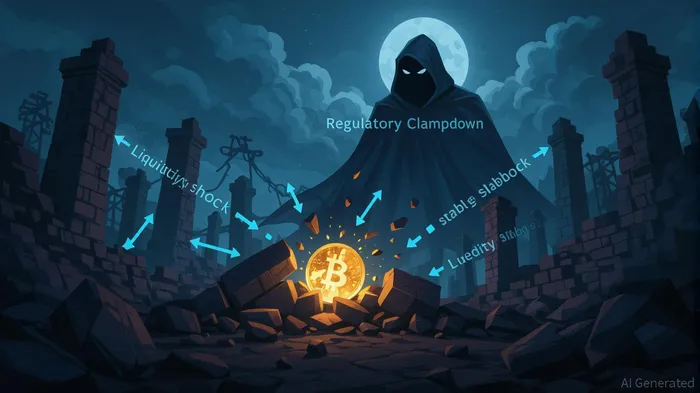
Regulatory Tightening and the Race for Compliance
The regulatory landscape has further complicated the equation. The U.S. GENIUS Act and the EU's MiCA regulation have imposed stricter compliance requirements, increasing operational costs for speculative tokens like PENGU USDT. JPMorgan analysts note that stablecoins with clearer regulatory frameworks-such as USDC-are outpacing USDT in onchain growth, driven by institutional adoption and compliance advantages. USDT's lack of MiCA authorization has already led to delistings in Europe, while USDC's adherence to regulatory standards has bolstered its market capitalization.
This divergence underscores a critical truth: in 2025, liquidity is no longer a function of yield alone but of trust. Investors are increasingly prioritizing transparency and regulatory alignment, forcing stablecoin issuers to either adapt or face obsolescence.
Mitigating the Risks: Overcollateralization and Real-Time Monitoring
To navigate these challenges, experts advocate for overcollateralized models backed by real-world assets. Such frameworks, while less efficient in yield generation, provide a buffer against liquidity shocks. For example, Polygon's DeFi lending platforms, which reached $192.88 billion in TVL during Q3 2025, have shown resilience by diversifying collateral and implementing real-time risk monitoring.
However, the path forward is not without hurdles. Diversification requires access to high-quality assets, which many DeFi protocols lack. Moreover, real-time monitoring demands sophisticated infrastructure, a costly proposition for smaller players. The European Systemic Risk Board (ESRB) has already flagged cross-chain operations as a key vulnerability, warning that interconnected protocols could amplify future crises.
Market Structure Implications: A New Equilibrium?
The PENGU USDT sell signals and broader DeFi turbulence are reshaping market structure. Investors are recalibrating their risk appetites, favoring stablecoins with robust collateral and regulatory clarity. This shift has accelerated the consolidation of the stablecoin market, with smaller players either innovating or exiting.
For PENGU USDT, the road to recovery hinges on its ability to address liquidity dependencies and align with evolving regulatory expectations. Analysts project a potential "shakeout" in its price to $0.009 before a new uptrend, but such volatility highlights the need for structural reforms.
Conclusion: Stability as a Competitive Advantage
The PENGU USDT sell signals are a microcosm of the broader challenges facing stablecoins. As the sector matures, liquidity will be determined not by speculative fervor but by the strength of risk management frameworks. Overcollateralization, real-time monitoring, and regulatory alignment are no longer optional-they are existential imperatives. For investors, the lesson is clear: in a world of interconnected protocols and tightening regulations, stability is the ultimate competitive advantage.

Combina la sabiduría del comercio tradicional con las perspectivas más avanzadas en el área de las criptomonedas.
Latest Articles
Stay ahead of the market.
Get curated U.S. market news, insights and key dates delivered to your inbox.


AInvest
PRO
AInvest
PRO



Comments
No comments yet