
PENGU Token Launches Visa Card and NFC Collectibles Amid Revenue Disconnect Risks
 Aime Summary
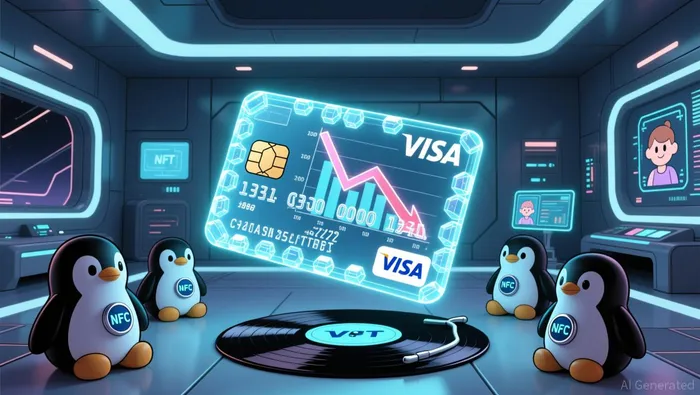
Pudgy Penguins has officially launched the PenguPENGU-- Card, a Visa-backed debit solution designed to facilitate spending of stablecoins and PENGU tokens at over 150 million merchants globally. The card, developed in partnership with VanEck, automatically converts cryptocurrency to fiat currency at checkout to mitigate volatility risks for users. Complementing this digital payment tool, the project released NFC-embedded physical collectibles that serve as tangible proof of digital NFT ownership.
The initiative marks a strategic pivot from speculative NFT trading to real-world financial utility, aiming to build a "social currency" moat for the brand. However, the PENGU token faces significant structural headwinds, trading approximately 90% below its December 2024 peak. According to analysis, the token lacks direct economic claims to brand revenue, creating a disconnect between the ecosystem's growth and token value appreciation.
In addition to the payment card, Pudgy PenguinsPENGU-- partnered with Sizeprop to launch a proprietary trading competition offering funded accounts up to $100,000 without requiring personal capital. This expansion includes hybrid physical-digital assets and aims to stabilize token utility by connecting the brand with professional trading infrastructure. Despite these commercial advancements, the project's valuation trades at a 3.2x premium over similar NFT-backed tokens, relying on sustained brand success rather than clear value accrual mechanisms.
What Are The Structural Risks To PENGU Token Value?
A critical structural disconnect exists between the brand's performance and the token's financial rights. Official documentation defines the PENGU token as existing for fun and entertainment only, meaning holders have no formal economic claim on toy sales or licensing deals. As reported, token holders possess no legal claims to revenue from toy sales, licensing deals, or other streams generated by the parent company, Igloo.
This lack of revenue linkage creates a scenario where the brand's success does not automatically transfer to token value. The token's market capitalization is driven by a massive retail footprint, including distribution in 3,100 Walmart and Target locations, yet the valuation requires continued execution on brand monetization to sustain. The current market cap of $417.5 million implies a momentum premium that may not be sustainable without clear value accrual mechanisms.
Furthermore, the token's valuation is sensitive to macro risk-on/risk-off dynamics, with a 90-day rolling correlation to the S&P 500 rising to 0.34. Investors face specific risks including high insider allocations of 29.28% subject to vesting schedules extending through 2028. Data shows the allocation structure demands careful examination, with 17.80% of total supply designated for present and future team members and an additional 11.48% reserved for corporate purposes.
How Do The New Financial Products Impact The Ecosystem?
The Pengu Card supports over 25 cryptocurrencies, including USDC, USDT, and PENGU, featuring three tiers with the Gold version offering up to 12% cashback and a 7% annual yield. The card functions by instantly converting crypto to local fiat at the point of sale, addressing volatility concerns for users and enabling seamless contactless transactions via Apple and Google Wallets. This integration aims to encourage wider adoption by making the token practical for everyday transactions, potentially attracting institutional investors interested in real-world utility.
Concurrently, the project introduced limited edition vinyl figures embedded with NFC chips, allowing owners to redeem exclusive digital NFTs by tapping the physical item. These hybrid collectibles serve as tangible proof of digital ownership, aiming to bridge the gap between physical and digital assets while fostering institutional trust. The Sizeprop partnership removes the barrier of personal capital for traders, using a terminal built specifically for crypto users to access funded accounts.
Despite the promise of these products, the Pengu Card faces hurdles including competition from other crypto debit cards and the need for broader cryptocurrency acceptance. Regulatory changes could impact the card's availability, and market reception remains uncertain. The project has also partnered with Amazon to allow avatar customization without a crypto wallet, lowering entry barriers for mainstream audiences.
What Regulatory And Market Challenges Remain?
Regulatory uncertainty remains a significant factor, with the SEC delaying decisions on potential PENGU ETFs. The token remains highly correlated with broader NFT market sentiment, and reliance on the EthereumETH-- network exposes it to gas fees and congestion risks. Future plans to launch a U.S. ETF application aim to build institutional trust, yet the project must prove it can sustain token value against competition without direct revenue linkage.
A large token unlock is scheduled for June 2026, which could depress prices and exert downward pressure on the market. The token's structure includes a maximum supply of 88.89 billion coins, with this high insider exposure presenting a distinct risk for investors assuming brand growth will transfer to token value. According to analysis, the project must navigate regulatory challenges and competition while ensuring that product adoption translates into sustainable token performance.
For an asset explicitly disconnected from company economics, the substantial insider concentration presents a meaningful risk factor for prospective holders. Brand expansion may continue, but that trajectory does not create automatic value transfer to token holders. Investors are advised to weigh the potential for mainstream adoption against the lack of formal economic rights to the brand's commercial success.

Blending traditional trading wisdom with cutting-edge cryptocurrency insights.
Latest Articles
Stay ahead of the market.
Get curated U.S. market news, insights and key dates delivered to your inbox.


AInvest
PRO
AInvest
PRO



Comments
No comments yet