
The PENGU Price Drop: A Wake-Up Call for Speculative Crypto Investors?


 Aime Summary
Regulatory Uncertainty and Liquidity Constraints
The PENGU collapse was not an isolated event but a symptom of broader systemic pressures. The U.S. Securities and Exchange Commission's (SEC) delayed decision on the Canary PENGU ETF, coupled with the looming implementation of the U.S. GENIUS Act and the EU's Markets in Crypto-Assets (MiCA) regulation, created a climate of uncertainty. These regulatory shifts raised compliance costs and tightened liquidity, particularly for tokens lacking clear utility or institutional backing. A critical catalyst was the mistaken conflation of PENGU with Pinnacle West Capital Corp (PNW), a traditional energy stock, which triggered a 30% single-day price drop in October 2025. Such liquidity shocks highlight how even minor missteps can destabilize assets with thin order books.
Social Media Sentiment and FOMO-Driven Volatility
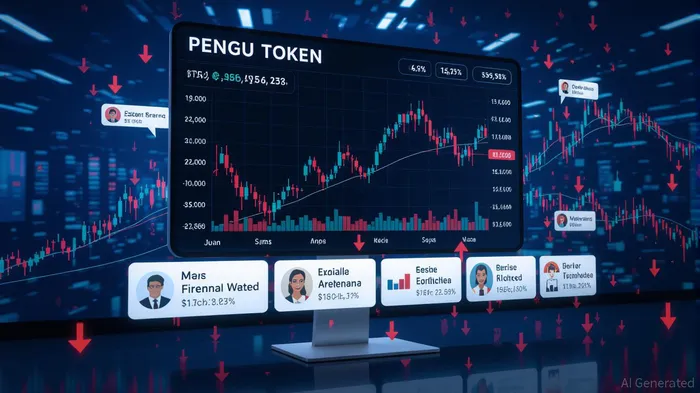 . PENGU's trajectory mirrored the broader crypto market's reliance on social media sentiment. In July 2025, a FOMO (fear of missing out)-driven surge propelled the token to a 480% gain, driven by coordinated buying from large holders and viral retail enthusiasm. However, this euphoria proved unsustainable. By October, the same social media platforms that had fueled the rally became amplifiers of panic, with negative sentiment accelerating an 80% correction.
This pattern aligns with broader trends in speculative markets. Research indicates that social media sentiment significantly influences Bitcoin's short-term volatility, with altcoins like PENGU exhibiting even sharper price swings due to their lower liquidity and higher retail concentration. A study published in ScienceDirect further notes that investor sentiment, measured through metrics like the Money Flow Index (MFI) and Relative Strength Index (RSI), correlates strongly with cryptocurrency returns, underscoring the psychological underpinnings of market behavior according to research.
The Weekend Effect and Liquidity Gaps
Liquidity constraints also played a pivotal role in PENGU's collapse. Data from the Association for Consumer Research reveals that crypto markets experience a 20–25% liquidity drop on weekends, exacerbating price volatility during periods of low trading activity. For tokens like PENGU, which rely heavily on retail participation, these liquidity gaps create fertile ground for flash crashes and exaggerated corrections.
Broader Implications for Speculative Markets
The PENGU case exposes the inherent fragility of meme-coin and utility-token ecosystems. Unlike traditional assets, these tokens often derive value from narrative-driven demand rather than intrinsic utility or earnings. When social media sentiment shifts-or regulatory clarity emerges-investors face abrupt reversals. Institutional interest, as seen in PENGU's temporary on-balance volume (OBV) spikes, may offer short-term support, but macroeconomic headwinds and regulatory risks often dominate long-term outcomes according to market analysis.
For speculative investors, the lesson is clear: liquidity and sentiment are double-edged swords. While they can drive explosive gains, they also amplify downside risks. The PENGU collapse demonstrates that in crypto markets, where retail psychology and algorithmic trading intersect, volatility is not just a feature but a flaw.
Risk Management in a Volatile Era
Investors must adopt more rigorous risk management strategies. Diversification, position sizing, and hedging against sentiment-driven swings are essential. Moreover, understanding the mechanics of liquidity-such as recognizing weekend effects and order-book depth-can help mitigate exposure to sudden shocks.
Regulators, too, face a dilemma. While frameworks like MiCA aim to stabilize markets, they risk stifling innovation in a sector defined by rapid change. Striking a balance between oversight and flexibility will be critical to fostering resilient crypto ecosystems.
Conclusion
The PENGU price drop is more than a cautionary tale; it is a wake-up call. For speculative crypto investors, it highlights the perils of relying on social media narratives and the necessity of treating liquidity as a liability rather than an asset. As the market evolves, those who survive will be those who recognize that in crypto, as in all speculative markets, psychology often drives prices far from intrinsic value-and the reckoning is always sudden.

Blending traditional trading wisdom with cutting-edge cryptocurrency insights.
Latest Articles
Stay ahead of the market.
Get curated U.S. market news, insights and key dates delivered to your inbox.






Comments
No comments yet