
PENGU Expands Ecosystem With Gaming, Merchandise, and ETF Filing
 Aime Summary
- Pudgy Penguins has evolved from a 2021 NFT collection into a broader consumer brand, integrating physical merchandise, mobile gaming, and retail partnerships.
- The PENGUPENGU-- token is supported by real-world execution, including plush toys sold on Walmart and Amazon, and a mobile game with over one million players.
- A proposed PENGU ETF under development and strategic blockchain infrastructure (Abstract, a ZK-stack blockchain) aim to enhance institutional adoption and value stability.
Pudgy Penguins launched as a Solana-based token in December 2024, drawing attention for its structured growth and real-world applications. The brand's shift toward consumer goods, including toys and apparel, aligns with a broader strategy to bridge Web3 and mainstream markets. Pudgy Party, the mobile game developed by the project, has already attracted a large player base and continues to grow, indicating strong engagement and potential for recurring user activity.
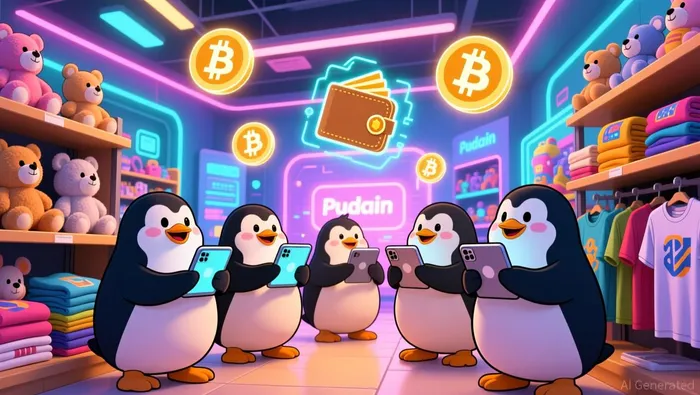
The token has secured $4.02 million in liquidity on Binance and is being positioned for long-term institutional adoption, with the filing of a PENGU ETF. This move underscores the project's ambition to become a regulated, on-chain investment vehicle. Pudgy Penguins' ecosystem also includes a community-first airdrop model and long-term team vesting, which differentiate it from speculative meme coins.
What Is the Basis for PENGU's Growth Strategy?
Pudgy Penguins' success is attributed to its expansion beyond NFTs into gaming and physical products. The brand's pivot from an NFT project to a consumer brand under Luca Schnetzler (Luca Netz) has included partnerships with global retailers and the development of a mobile game. These efforts have positioned PENGU as a token with real-world utility and brand strength, rather than one driven solely by speculative hype.
The project's phygital strategy—linking physical toys to the Pudgy World metaverse— creates a unique value proposition. Retail partnerships with WalmartWMT-- and AmazonAMZN--, combined with the Pudgy Party game, provide multiple avenues for brand engagement and token utility. This approach has helped maintain trading activity and a more resilient floor price for PENGU compared to other meme coins.
What Risks and Uncertainties Remain for PENGU?
Despite its structured growth, PENGU faces risks such as regulatory uncertainty and market volatility. The proposed PENGU ETF remains pending, and institutional adoption is still in its early stages. Additionally, the broader market for meme coins has experienced a cooldown, which could impact PENGU's performance.
Analysts like Altcoin Sherpa and Awan suggest that PENGU's fundamentals and brand strength may support a $1 price target in the long term. However, the token's performance remains subject to broader Solana market conditions and investor sentiment. Institutional investors are also cautious about the token's price volatility and concentration of supply.
How Does PENGU Differ From Other Meme Coins?
PENGU distinguishes itself through its real-world execution and structured distribution model. Unlike many meme coins that rely on hype and social media trends, Pudgy PenguinsPENGU-- has expanded into physical products, retail partnerships, and mobile gaming. This diversification has created a more sustainable model, with ongoing revenue streams and brand recognition.
The token's community-first approach, including airdrops and long-term vesting, also supports a more decentralized and equitable distribution model. Pudgy Penguins' plans for an ETF and Abstract blockchain infrastructure aim to further differentiate PENGU from speculative assets. These developments suggest that PENGU is positioning itself as a token with long-term institutional appeal and real-world utility.

Blending traditional trading wisdom with cutting-edge cryptocurrency insights.
Latest Articles
Stay ahead of the market.
Get curated U.S. market news, insights and key dates delivered to your inbox.


AInvest
PRO
AInvest
PRO



Comments
No comments yet