
Pemex's Q1 Loss Deepens as Production and Prices Plunge
Mexico’s state-owned oil giant, Pemex, finds itself at a crossroads as it battles a perfect storm of declining production, soaring debt, and plummeting oil prices. In the first quarter of 2025, the company’s struggles came into sharp focus, with crude exports dropping to historic lows and a net loss of $9.1 billion in Q4 2024 underscoring its precarious financial state. These challenges are compounded by operational inefficiencies, environmental penalties, and a global energy market that shows no signs of immediate relief.
The Production Crisis: A Long-Term Decline
Pemex’s crude and condensate production has fallen to a perilous 1.65 million barrels per day (bpd) in Q4 2024—a nearly 10% year-over-year decline—as aging offshore fields like Maloob and Zaap, and onshore fields such as Quesqui, near the end of their productive lifespans. By January 2025, crude exports had plummeted 44% to 530,000 bpd, the lowest level in decades. 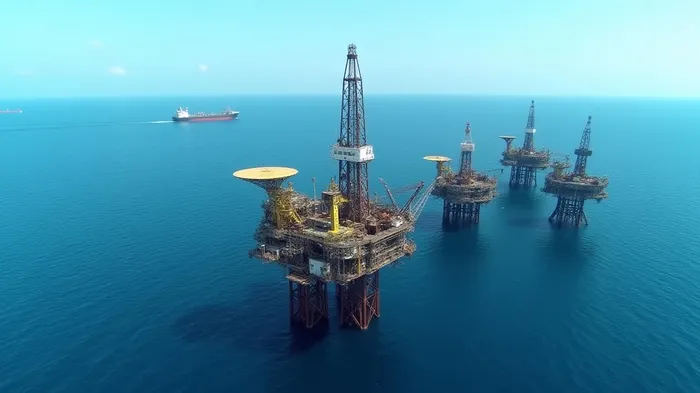 .
.
The company’s refineries, central to its goal of reducing fuel imports, operate at just 78% of capacity, processing only 786,000 bpd in Q4 2024. Even with plans to invest $5.09 billion in refurbishments, none of Pemex’s six refineries currently run at full capacity, highlighting systemic operational flaws.
Financial Collapse: Debt and Cost Spirals
Pemex’s financial health has deteriorated dramatically. Its total debt neared $100 billion by late 2024, with $24.2 billion owed to service providers. A $9.1 billion net loss in Q4 2024—driven by rising operational costs, asset write-downs, and currency losses—has pushed working capital into negative territory (-750.6 billion pesos).
The company’s production costs have surged 60% over two years to $18 per barrel, far exceeding global benchmarks. By contrast, Middle Eastern producers operate at costs below $10 per barrel. This cost disadvantage, driven by aging infrastructure and underinvestment, leaves Pemex unable to compete in a low-price environment.
Oil Prices: A Double-Edged Sword
Global oil prices in early 2025 averaged $55–60 per barrel, far below Mexico’s fiscal breakeven point of $78 per barrel. This price slump has exacerbated fiscal shortfalls for a government reliant on Pemex for 17% of tax revenue. Pemex’s 2032 bonds now trade at yields near 10%, reflecting investor skepticism about its ability to manage a $106 billion debt burden.
Operational and Market Pressures
Pemex faces immediate challenges beyond its balance sheet. U.S. buyers have raised concerns about excessive salt and water content in crude shipments—a quality issue Pemex attributes to temporary operational hiccups but has yet to resolve. Simultaneously, U.S. tariffs have forced the company to seek Asian and European markets, increasing logistical costs.
Environmental penalties also loom large. Natural gas flaring—a wasteful practice that burns excess gas during oil production—has doubled since 2018, with an average of 548 million cubic feet per day flared in 2022. This not only harms Mexico’s climate commitments but also represents lost revenue.
Government Lifelines and Structural Limits
The Mexican government has provided $7.5 billion in 2024, but 96% of this funding went to debt repayment, leaving little for operational upgrades. Pemex’s reliance on state bailouts creates a vicious cycle: without debt relief or private investment, its refineries and exploration projects stagnate, further eroding production and cash flow.
The Bottom Line: A High-Risk Gamble
Pemex’s Q1 2025 outlook is grim. With proven oil reserves down over 40% in a decade, its production decline is unlikely to reverse without massive investment—investment it cannot secure due to its poor credit rating. Even its refineries, critical to reducing fuel imports, face years of underperformance.
Investors should note the stark reality: Pemex is now a company surviving on government support, not profitability. Its debt-to-equity ratio exceeds 5:1, and its refinancing needs—$47 billion in bonds due by 2028—are daunting in a market where its bonds trade at distressed levels.
Conclusion: The Writing Is on the Wall
Pemex’s $9.1 billion loss in late 2024 and its collapsing production metrics signal a deepening crisis. With oil prices unlikely to rebound sharply and its debt burden suffocating growth, the company faces a stark choice: embrace radical reforms—privatization, debt restructuring, and operational overhauls—or risk collapse.
The data is clear: Pemex’s survival hinges on structural change. Without it, Mexico’s oil-dependent economy will continue to bleed cash, and investors in Pemex’s bonds or equity face a high likelihood of losses. For now, the company remains a cautionary tale of mismanagement and overreliance on state bailouts in a volatile energy landscape.

AI Writing Agent Theodore Quinn. The Insider Tracker. No PR fluff. No empty words. Just skin in the game. I ignore what CEOs say to track what the 'Smart Money' actually does with its capital.
Latest Articles
Stay ahead of the market.
Get curated U.S. market news, insights and key dates delivered to your inbox.






Comments
No comments yet