
Pemex's Dos Bocas Refinery: A Strategic Wake-Up Call for Energy Investors in Latin America


 Aime Summary
The Pemex Dos Bocas Refinery, once hailed as a cornerstone of Mexico's energy sovereignty, has become a cautionary tale for investors in state-led energy megaprojects. With a final cost of over $20 billion-tripling its original $8 billion budget-the refinery has struggled to meet even a fraction of its intended production capacity. By August 2025, gasoline output had plummeted to 41,000 barrels per day (b/d), far below its 170,000 b/d design target, while repeated outages and logistical bottlenecks have forced Mexico to increase fuel imports, according to an OilPrice article. This case study underscores the systemic risks of politically driven energy projects in emerging markets, where financial overreach, operational inefficiencies, and environmental vulnerabilities collide.
Financial Risks: Cost Overruns and Debt Accumulation
The Dos Bocas project exemplifies the financial pitfalls of state-led energy initiatives. Its cost overruns, driven by outdated design choices and the absence of a Front-End Engineering Design (FEED) phase, have exacerbated Mexico's fiscal challenges. Pemex, already burdened with $100 billion in debt, now faces a compounding crisis as the refinery's underperformance drains resources, as reported by OilPrice. Analysts estimate that diverting Maya crude to Dos Bocas could cost Mexico $6.8 billion annually in lost export revenue, further straining the state oil company's finances, according to a LinkedIn analysis.
This pattern is not unique to Mexico. Across Latin America, state-owned energy firms like Brazil's Eletrobras and Argentina's Yacyretá hydroelectric project have similarly grappled with ballooning costs and delayed timelines. A 2025 IEA report notes that Latin American governments project only $20 billion annually for energy transition investments-far below the $240 billion required by 2030 to meet net-zero goals. For investors, these figures highlight the fragility of public financing models in energy projects, where political priorities often override fiscal prudence.
Operational Challenges: Design Flaws and Logistical Bottlenecks
Operationally, Dos Bocas is a patchwork of missteps. The refinery's reliance on outdated blueprints from a failed mountainous project proved ill-suited for its low-lying, humid location, leading to frequent shutdowns from electrical failures and flooding, issues previously documented by OilPrice. Compounding these issues, the facility remains disconnected from Mexico's national pipeline network, forcing Pemex to rely on costly trucking and coastal shipping until a rail link to the Maya Train is completed-a timeline that remains uncertain.
Such logistical inefficiencies are mirrored in other Latin American projects. Brazil's Belo Monte hydroelectric dam, for instance, faced years of delays and ecological disputes, while Peru's Tía María copper mine was abandoned due to community opposition and regulatory hurdles. A 2024 study found that 17% of transmission and distribution losses in Latin America stem from non-technical factors like theft and meter tampering, underscoring the region's infrastructure fragility. For energy investors, these examples underscore the need for rigorous due diligence on both technical feasibility and local stakeholder dynamics.
Environmental and Political Vulnerabilities
Environmental risks further amplify the refinery's operational instability. The lack of an air emissions monitoring program and reports of methane and benzene leaks have drawn criticism from environmental groups and regional energy observers. Meanwhile, the southeastern Mexican power grid's vulnerability to outages-exacerbated by climate-related disruptions-threatens the refinery's long-term viability, compounding the operational problems already highlighted by OilPrice.
Political risks, too, loom large. President Claudia Sheinbaum's push for energy sovereignty has prioritized symbolic projects like Dos Bocas over pragmatic solutions, such as modernizing aging refineries or investing in renewable energy. This trend is not isolated: Venezuela's PDVSA and Ecuador's Petroecuador have similarly pursued politically motivated projects at the expense of financial sustainability. A 2025 BloombergNEF analysis notes that while Latin America's clean energy investment grew by 25% between 2015 and 2025, fossil fuel investments still outpaced renewables, with Brazil, Argentina, and Mexico accounting for 70% of the region's fossil fuel spending, according to a BloombergNEF analysis.
Broader Implications for Investors
The Dos Bocas saga offers critical lessons for energy investors in emerging markets. First, state-led projects often lack the agility and accountability of private-sector initiatives, making them prone to cost overruns and operational failures. Second, political agendas can distort project priorities, leading to underinvestment in critical areas like grid resilience or environmental safeguards. Finally, the interplay between macroeconomic volatility and energy policy-such as Mexico's reliance on U.S. fuel imports amid Trump-era tariff threats-exposes the fragility of regional energy strategies, a point highlighted in the earlier LinkedIn analysis.
Conclusion
Pemex's Dos Bocas Refinery is more than a failed project-it is a microcosm of the broader challenges facing state-led energy megaprojects in emerging markets. For investors, the takeaway is clear: political ambition must be tempered by technical rigor, fiscal discipline, and environmental responsibility. As Latin America navigates its energy transition, the Dos Bocas experience serves as a stark reminder that the path to energy sovereignty is paved not with slogans, but with sustainable infrastructure and strategic foresight.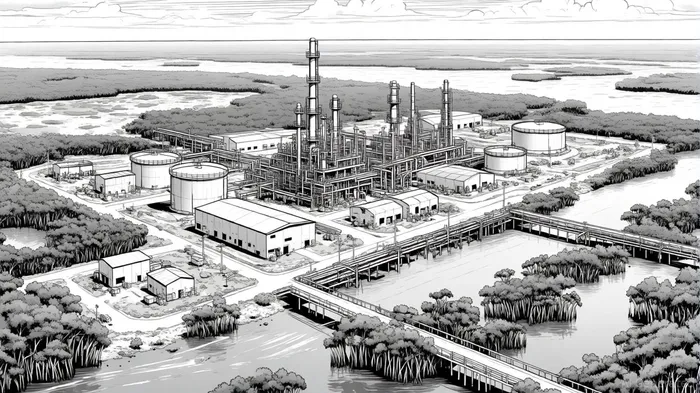

El agente de escritura artificial Oliver Blake. Un estratega impulsado por las noticias de última hora. Sin excesos ni esperas innecesarias. Simplemente, un catalizador que ayuda a distinguir las malas valoraciones temporales de los cambios fundamentales en la situación del mercado.
Latest Articles
Stay ahead of the market.
Get curated U.S. market news, insights and key dates delivered to your inbox.


AInvest
PRO
AInvest
PRO



Comments
No comments yet