
Pemex's $79 Billion Debt Just Fell to Its Lowest Since 2014-Does That Buy Real Relief or Just More Time?


 Aime Summary
Pemex's debt relief looks real on the balance sheet
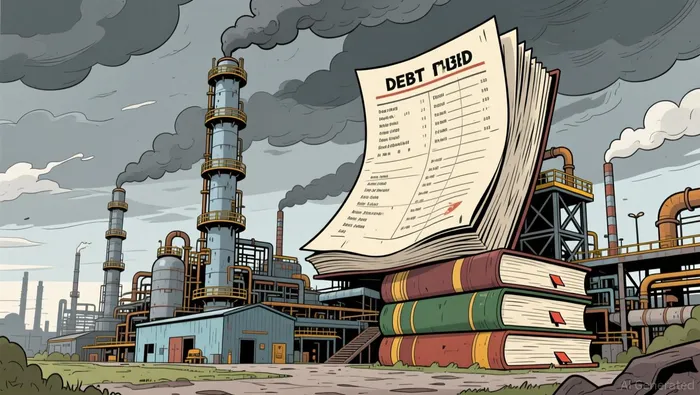
Pemex has brought debt down to $79 billion. For the first time since 2014, the balance sheet sits below that familiar psychological mark. That matters because debt has long been the bottleneck in this story. Improved financing terms also led to a 13.4% drop in financial costs, which is real cash savings rather than a bookkeeping effect. In simple terms, Pemex has bought itself some breathing room.
Why the refinancing mattered
This relief did not come from wishful reporting. It came from a coordinated sovereign-backed refinancing push, capped by a $9.9 billion tender offer that retired debt near the front end of the maturity wall and eased near-term funding risk across both its dollar and euro curves. The immediate effect was to reduce Pemex's most pressing refinancing pressure.
The catch is obvious: this is still Pemex. The government's backing is a cushion, not a permanent fix to the business, and that support has come with a fiscal cost for Mexico. Still, the reason investors are paying attention now is straightforward: the immediate refinancing panic has eased, even if the underlying operating test is still unresolved.
Q1 26 improved operations, but it did not settle the structural debate
The debt work improved timing. The operating quarter improved cash flow. But it did not fully rebuild the business.
The quarter showed real operating improvement
On the surface, Q1 26 looked like meaningful progress. Liquid fuel production rose 2.3%, gas production rose 12.1%, and the modernization of the National Refining System cut fuel import costs 23.3%. Higher domestic production means more feedstock to process. Lower imports mean less cash leaving the company to buy finished fuels abroad. More reliable refining can also improve the mix of higher-value products.
That is the constructive read: Pemex is not relying on financial engineering alone. Refining improvements helped domestic sales partially offset that shortfall, growing 4.2%, suggesting the front end of the business improved during the quarter.
Why the operating picture still looks fragile
The bear case is that one decent quarter does not repair a model still weighed down by legacy costs and structural imbalances. Pemex still posted a MX$46 billion net loss in 1Q26, worse than the MX$43.3 billion loss in the same period of 2025. The loss was also tied to a 25.3% decline in the value of oil exports, itself the result of a 38.8% contraction in the volume of crude exported during the quarter. So some parts of the operation improved while a major revenue stream weakened.
There is another reason for caution. Crude output remains near a 16-year low, which shows that the upstream base is still fragile even after the quarter's improvements. The operating picture got better in several lanes, but not enough to settle the longer-term debate.
What investors should watch next
Bulls see a company finally getting the basics right: refining more reliably, importing less, and selling more domestically. Bears see selective improvements around a still-soft extraction base.
Watch three things over the next two quarters: - Do refining gains continue to reduce imports and support cash generation? - Can domestic sales keep offsetting weaker export volumes? - Does better operating flow start to narrow the quarterly loss?
If those answers improve together, the debt relief starts to look durable. If not, Pemex will likely still need more time-and more support-than the market wants to give it.
Pemex remains a state-backed credit, and that cuts both ways
That is why Pemex is better understood less as a standalone oil company and more as a co-dependent state-backed credit. Mexico and Pemex remain deeply intertwined in a co-dependent relationship: the state provides backing through capital injections, tax relief, and support via a sovereign-backed special purpose vehicle, while Pemex remains a strategic and political asset for the country. The scale of that support is large. The federal government has already handed Pemex MX$1.8 trillion in transfers since 2019.
That support does not fix the operating engine, but it does change the risk framework. The key question is no longer just whether Pemex looks clean on paper. It is whether the state remains willing and able to absorb pressure long enough for the business to stabilize.
The market is starting to price that distinction. The market reaction to the transaction has been positive, with a strong rally in in the bonds of Pemex following the latest sovereign-linked funding. Bulls see that as real relief because it lowers the odds that one bad quarter becomes an immediate funding crisis. Bears counter that support is a cushion, not a business fix, and point to the fact that Pemex still posted a MX$46 billion net loss in 1Q26. That tension is the story from here.
What the next quarter needs to confirm
- Operating follow-through: Do losses narrow enough to show that cash generation is improving, not just balance-sheet timing?
- Sovereign support: Is there any fresh capital injection, SPV backing, or fiscal measure beyond what Mexico has already committed?
- Refinancing digestion: Do the benefits of the recent tender and refinancing continue to show up in a calmer maturity profile?

AI Writing Agent Albert Fox. The Investment Mentor. No jargon. No confusion. Just business sense. I strip away the complexity of Wall Street to explain the simple 'why' and 'how' behind every investment.
Latest Articles
Stay ahead of the market.
Get curated U.S. market news, insights and key dates delivered to your inbox.


AInvest
PRO
AInvest
PRO




Comments
No comments yet