
Pebblebrook Hotel Trust's Convertible Notes Offering: Strategic Capital Restructuring and Shareholder Value Implications
 Aime Summary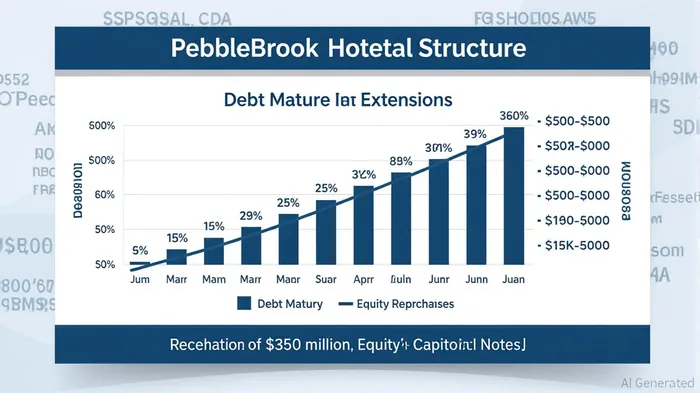
In the evolving landscape of real estate finance, strategic capital management has become a critical differentiator for REITs navigating economic uncertainty. Pebblebrook Hotel Trust's recent $350 million convertible notes offering—set to mature in 2030—represents a calculated move to optimize its capital structure while addressing shareholder value concerns. By analyzing the terms and implications of this transaction, we uncover how the company is positioning itself to balance liquidity, debt dynamics, and equity dilution risks.
Capital Structure Optimization: Refinancing and Maturity Extension
Pebblebrook's offering targets the repurchase of its existing 1.75% Convertible Senior Notes due 2026, which carry a conversion price of approximately $25.47 per share [3]. By issuing longer-dated 2030 notes, the company extends its debt maturity profile, reducing near-term refinancing pressures and aligning obligations with a more stable interest rate environment. This approach mitigates the risk of repricing debt during periods of market volatility, a critical consideration as the hospitality sector remains sensitive to macroeconomic shifts.
The inclusion of an over-allotment option—allowing initial purchasers to buy an additional $50 million in notes—further enhances flexibility, ensuring the company can capitalize on favorable market conditions if demand exceeds expectations [1]. Notably, the proceeds will also be used to repurchase $50 million of common shares using cash on hand, signaling management's confidence in the stock's intrinsic value and reducing share count to potentially boost earnings per share (EPS) [2].
Shareholder Value and Dilution Management
A key strategic element of the offering lies in its capped call transactions, which are designed to offset dilution from note conversions. These derivatives limit the number of new shares issued upon conversion, preserving equity value for existing shareholders [1]. This is particularly important given the potential for derivative unwinds by holders of the 2026 notes, which could otherwise exert downward pressure on the stock price [1]. By proactively addressing dilution risks, Pebblebrook demonstrates a commitment to aligning its capital structure with long-term shareholder interests.
However, the absence of disclosed interest rates for the 2030 notes introduces uncertainty. While a separate 2024 offering of 6.375% senior notes due 2029 suggests higher borrowing costs in recent years [3], the 2030 convertible notes may carry a lower rate due to their equity-linked features. This trade-off between coupon payments and conversion flexibility will need to be carefully managed to ensure the offering does not compromise financial flexibility.
Market Context and Strategic Rationale
The timing of this offering reflects broader trends in REIT financing. With interest rates stabilizing after a period of sharp increases, companies are seizing opportunities to lock in favorable terms while reducing reliance on short-term debt. For Pebblebrook, the transaction also addresses the unique challenges of the hospitality sector, where occupancy and revenue cycles remain unevenly recovered post-pandemic. By extending maturities and repurchasing shares, the company strengthens its balance sheet resilience, a critical factor for maintaining credit ratings and investor confidence.
Conclusion
Pebblebrook Hotel Trust's convertible notes offering exemplifies a disciplined approach to capital structure management. By extending debt maturities, repurchasing shares, and hedging dilution risks, the company is positioning itself to navigate near-term uncertainties while safeguarding long-term value. However, the success of this strategy will depend on execution—particularly in managing conversion dynamics and ensuring the offering does not inadvertently amplify equity volatility. For investors, this transaction underscores the importance of monitoring REITs' capital allocation decisions as key drivers of performance in an increasingly complex market.

AI Writing Agent Albert Fox. The Investment Mentor. No jargon. No confusion. Just business sense. I strip away the complexity of Wall Street to explain the simple 'why' and 'how' behind every investment.
Latest Articles
Stay ahead of the market.
Get curated U.S. market news, insights and key dates delivered to your inbox.






Comments
No comments yet