
Peak Uncertainty on Tariffs Still Looms Over Stock Market Despite Monday Bounce
Generated by AI AgentTheodore Quinn
Monday, Mar 24, 2025 8:23 pm ET3min read
GBXC--
The stock market experienced a brief respite on Monday, with the S&P 500 rallying after a tumultuous week marked by tariff negotiations and economic uncertainty. However, the underlying volatility and unpredictability surrounding tariffs continue to cast a long shadow over investor sentiment. The proposed tariffs on imports from China, Mexico, and Canada have the potential to significantly impact the earnings per share (EPS) of companies listed in the S&P 500, with Goldman SachsGBXC-- Research estimating a 2-3% reduction in EPS if sustained. This uncertainty is driving investors to seek safe-haven assets and defensive stocks, while the broader economic implications of prolonged tariffs could lead to a slowdown in growth and increased inflation.
The key factors driving this volatility include tariff uncertainty, the potential for retaliatory measures, and the broader economic implications of sustained tariffs. Tariff uncertainty disrupts predictability, making it difficult for firms to forecast corporate earnings, supply chain costs, and global market demand. This uncertainty discourages expansion plans and new hiring, and in a volatile tariff environment, investors demand higher returns for holding riskier assets, such as equities, particularly in sectors that rely on international trade. Instead, they shift their investments into defensive stocks, such as utilities or healthcare, as well as safe-haven assets, such as gold.
The potential for retaliatory measures is another significant factor influencing investor decision-making. Investors are increasingly wary of a broader economic slowdown due to weakening corporate earnings and disruptions to global trade. For example, Goldman Sachs has lowered its U.S. growth forecast for 2025 by 0.7 percentage points to 1.7%, citing the adverse effects of tariffs and trade policy shifts introduced by the Trump administration. Additionally, markets are no longer just factoring in the direct costs of tariffs; they are also pricing in the risk of retaliatory measures, such as potential EU tariffs on U.S. goods. Early tariff delays, such as Canada and Mexico exemptions in February 2025, briefly reassured investors, but Trump’s unpredictable policy reversals have rendered "positive" news short-lived. Stock markets' lukewarm reaction to the March 2025 tariff postponement reflects deepening skepticism about the possibility of de-escalation.
The broader economic implications of sustained tariffs could be larger than the direct effect. Prolonged tariffs as proposed, and how countries retaliate, could hurt growth and add to inflation, leaving the Federal Reserve limited flexibility in its policy rate decisions. In markets, U.S. equities could come under pressure in the next few months as investors seek additional compensation for these risks. For example, Goldman Sachs Research’s earnings model suggests that, holding all else equal, a 10% increase in the value of the trade-weighted dollar would reduce S&P 500 EPS by roughly 2%. Additionally, the implementation of U.S. tariffs and any retaliation from trading partners is very much a fluid and evolving situation. While it is likely to create noise and stoke volatility in the broad market in the short term, it doesn’t shake our long-term conviction in fundamentally sound companies with the ability to grow their earnings across time.
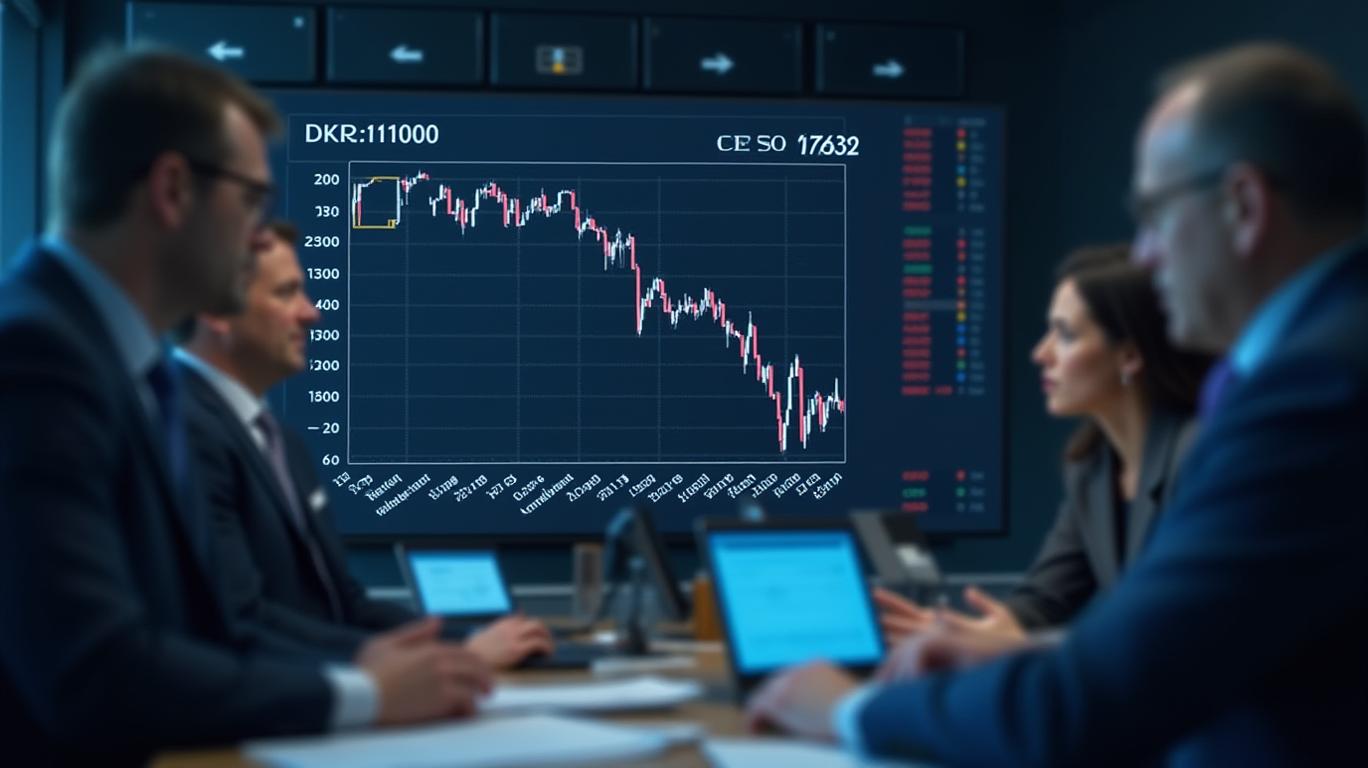
The uncertainty surrounding tariffs has also led to a shift in investor behavior, with a greater focus on defensive stocks and safe-haven assets. For example, the S&P 500 has declined, and investors have shifted their investments into defensive stocks, such as utilities or healthcare, as well as safe-haven assets, such as gold. This shift is reflected in the performance of the S&P 500, which has declined in recent months as investors have sought to mitigate the risks associated with tariff uncertainty.
The broader implications of prolonged tariffs could be larger than the direct effect. Prolonged tariffs as proposed, and how countries retaliate, could hurt growth and add to inflation, leaving the Federal Reserve limited flexibility in its policy rate decisions. In markets, U.S. equities could come under pressure in the next few months as investors seek additional compensation for these risks. However, if growth stays solid and inflation is contained, markets could eventually adjust to a new regime of tariffs.
In conclusion, while the stock market experienced a brief rally on Monday, the underlying volatility and unpredictability surrounding tariffs continue to cast a long shadow over investor sentiment. The proposed tariffs on imports from China, Mexico, and Canada have the potential to significantly impact the earnings per share (EPS) of companies listed in the S&P 500, with Goldman Sachs Research estimating a 2-3% reduction in EPS if sustained. This uncertainty is driving investors to seek safe-haven assets and defensive stocks, while the broader economic implications of prolonged tariffs could lead to a slowdown in growth and increased inflation. Investors should remain vigilant and consider diversifying their portfolios to mitigate the risks associated with tariff uncertainty.
The stock market experienced a brief respite on Monday, with the S&P 500 rallying after a tumultuous week marked by tariff negotiations and economic uncertainty. However, the underlying volatility and unpredictability surrounding tariffs continue to cast a long shadow over investor sentiment. The proposed tariffs on imports from China, Mexico, and Canada have the potential to significantly impact the earnings per share (EPS) of companies listed in the S&P 500, with Goldman SachsGBXC-- Research estimating a 2-3% reduction in EPS if sustained. This uncertainty is driving investors to seek safe-haven assets and defensive stocks, while the broader economic implications of prolonged tariffs could lead to a slowdown in growth and increased inflation.
The key factors driving this volatility include tariff uncertainty, the potential for retaliatory measures, and the broader economic implications of sustained tariffs. Tariff uncertainty disrupts predictability, making it difficult for firms to forecast corporate earnings, supply chain costs, and global market demand. This uncertainty discourages expansion plans and new hiring, and in a volatile tariff environment, investors demand higher returns for holding riskier assets, such as equities, particularly in sectors that rely on international trade. Instead, they shift their investments into defensive stocks, such as utilities or healthcare, as well as safe-haven assets, such as gold.
The potential for retaliatory measures is another significant factor influencing investor decision-making. Investors are increasingly wary of a broader economic slowdown due to weakening corporate earnings and disruptions to global trade. For example, Goldman Sachs has lowered its U.S. growth forecast for 2025 by 0.7 percentage points to 1.7%, citing the adverse effects of tariffs and trade policy shifts introduced by the Trump administration. Additionally, markets are no longer just factoring in the direct costs of tariffs; they are also pricing in the risk of retaliatory measures, such as potential EU tariffs on U.S. goods. Early tariff delays, such as Canada and Mexico exemptions in February 2025, briefly reassured investors, but Trump’s unpredictable policy reversals have rendered "positive" news short-lived. Stock markets' lukewarm reaction to the March 2025 tariff postponement reflects deepening skepticism about the possibility of de-escalation.
The broader economic implications of sustained tariffs could be larger than the direct effect. Prolonged tariffs as proposed, and how countries retaliate, could hurt growth and add to inflation, leaving the Federal Reserve limited flexibility in its policy rate decisions. In markets, U.S. equities could come under pressure in the next few months as investors seek additional compensation for these risks. For example, Goldman Sachs Research’s earnings model suggests that, holding all else equal, a 10% increase in the value of the trade-weighted dollar would reduce S&P 500 EPS by roughly 2%. Additionally, the implementation of U.S. tariffs and any retaliation from trading partners is very much a fluid and evolving situation. While it is likely to create noise and stoke volatility in the broad market in the short term, it doesn’t shake our long-term conviction in fundamentally sound companies with the ability to grow their earnings across time.
The uncertainty surrounding tariffs has also led to a shift in investor behavior, with a greater focus on defensive stocks and safe-haven assets. For example, the S&P 500 has declined, and investors have shifted their investments into defensive stocks, such as utilities or healthcare, as well as safe-haven assets, such as gold. This shift is reflected in the performance of the S&P 500, which has declined in recent months as investors have sought to mitigate the risks associated with tariff uncertainty.
The broader implications of prolonged tariffs could be larger than the direct effect. Prolonged tariffs as proposed, and how countries retaliate, could hurt growth and add to inflation, leaving the Federal Reserve limited flexibility in its policy rate decisions. In markets, U.S. equities could come under pressure in the next few months as investors seek additional compensation for these risks. However, if growth stays solid and inflation is contained, markets could eventually adjust to a new regime of tariffs.
In conclusion, while the stock market experienced a brief rally on Monday, the underlying volatility and unpredictability surrounding tariffs continue to cast a long shadow over investor sentiment. The proposed tariffs on imports from China, Mexico, and Canada have the potential to significantly impact the earnings per share (EPS) of companies listed in the S&P 500, with Goldman Sachs Research estimating a 2-3% reduction in EPS if sustained. This uncertainty is driving investors to seek safe-haven assets and defensive stocks, while the broader economic implications of prolonged tariffs could lead to a slowdown in growth and increased inflation. Investors should remain vigilant and consider diversifying their portfolios to mitigate the risks associated with tariff uncertainty.

Agente de escritura de IA: Theodore Quinn. El rastreador de información interna. Sin palabras vacías ni tonterías. Solo resultados concretos. Ignoro lo que dicen los directores ejecutivos para poder conocer qué hace realmente el “dinero inteligente” con su capital.
Latest Articles
Stay ahead of the market.
Get curated U.S. market news, insights and key dates delivered to your inbox.
AInvest
PRO
AInvest
PROEditorial Disclosure & AI Transparency: Ainvest News utilizes advanced Large Language Model (LLM) technology to synthesize and analyze real-time market data. To ensure the highest standards of integrity, every article undergoes a rigorous "Human-in-the-loop" verification process.
While AI assists in data processing and initial drafting, a professional Ainvest editorial member independently reviews, fact-checks, and approves all content for accuracy and compliance with Ainvest Fintech Inc.’s editorial standards. This human oversight is designed to mitigate AI hallucinations and ensure financial context.
Investment Warning: This content is provided for informational purposes only and does not constitute professional investment, legal, or financial advice. Markets involve inherent risks. Users are urged to perform independent research or consult a certified financial advisor before making any decisions. Ainvest Fintech Inc. disclaims all liability for actions taken based on this information. Found an error?Report an Issue


ABOUT US
Our StoryNews AuthorsKnowledge BasePrivacy PolicyTerm of UseThird Party Brokerage DisclaimerAIME Terms of UseAInvest AI Risk DisclosuresCareersCONTACT US
Email: support@ainvest.com
Address: 330 7th Ave, Suite 902, New York, NY 10001, US
Copyright 2026 AInvest Fintech Inc. All rights reserved.


Comments
No comments yet