
PCE Report Signals Warming Inflation Pressures and Policy Dilemmas


 Aime Summary
The latest Personal Consumption Expenditures (PCE) report for September 2025 underscores a persistent inflationary backdrop, complicating the Federal Reserve's efforts to balance price stability with economic growth. With annual inflation holding steady at 2.7% and the core PCE index rising by 0.2% monthly,
the data highlights the uneven nature of disinflation, particularly in services sectors like housing and supercore services. This report, delayed by a 43-day government shutdown, has intensified scrutiny ahead of the October PCE release, which is projected to show a marginal improvement but still remain above the Fed's 2% target
according to market analysis.
Inflationary Pressures and the Fed's Tightrope
The Federal Reserve faces a classic policy dilemma: maintaining restrictive rates to curb inflation while avoiding undue harm to economic momentum. The September PCE data, coupled with expectations for a 0.2–0.3% monthly core PCE increase in October,
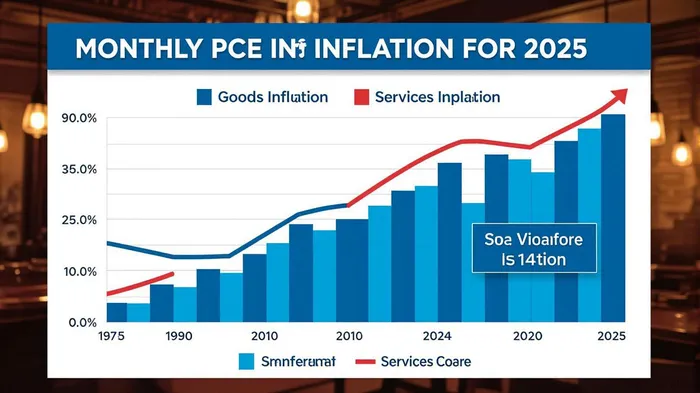
suggests inflation is cooling at a glacial pace. While headline inflation is easing-driven by normalized goods prices and stable energy costs-the stickiness of services inflation, particularly in housing,
remains a drag. The Cleveland Fed's nowcasting model further indicates that core PCE may not reach 2% until late 2026,
implying prolonged accommodative policy risks.
This uncertainty has
fueled market expectations of a 25-basis-point rate cut at the December 10 meeting, with traders pricing in an 87% probability of action. However,
the Fed's internal divide-between hawks prioritizing inflation control and doves advocating for rate cuts to cushion a potential slowdown-has introduced volatility into both equity and bond markets.
Equity Market Implications: A Dual-Edged Sword
Historical patterns suggest that rate cuts typically buoy equities by lowering discount rates and reducing corporate borrowing costs
according to financial analysis. J.P. Morgan Research anticipates two additional 2025 rate cuts and one in 2026, which could drive the fed funds rate to 3.4% by year-end 2026
according to market forecasts. Such a trajectory would likely support risk assets, particularly growth-oriented sectors sensitive to interest rate changes. However,
the Fed's cautious approach-pausing cuts in summer 2025 due to inflationary tariff concerns-demonstrates that policy easing will remain conditional on incoming data.
Equity investors must also contend with the Fed's balancing act. If inflation proves more resilient than expected, the central bank could delay further cuts, dampening market optimism. Conversely, a sharper-than-anticipated slowdown might accelerate rate reductions, creating a short-term rally but raising long-term inflation risks.
Bond Market Dynamics: Yields, Duration, and Uncertainty
The bond market's response to rate cuts hinges on the interplay between yield expectations and economic outlook.
Lower rates typically drive bond prices higher, especially for longer-duration instruments, as investors seek to lock in yields before further cuts. BlackRock notes that reducing cash allocations in favor of bonds or alternatives could
capitalize on this environment. Yet, long-dated bonds face headwinds in this cycle. A benign economic outlook and investor demand for higher term premiums may limit their performance, contrasting with historical cycles where duration played a stronger role
according to market analysis.
The Fed's divided stance has also
amplified bond market volatility. While rate cuts could initially boost bond prices, persistent inflation risks and fiscal stimulus-driven pressures may cap yields, creating a tug-of-war for fixed-income investors.
Conclusion: Navigating the Fed's Tightrope
The September and anticipated October PCE reports highlight the Fed's challenging path: addressing stubborn inflation while mitigating recessionary risks. For investors, the key lies in hedging against policy uncertainty. Equities may benefit from rate cuts but remain vulnerable to inflation surprises, while bond markets face a fragmented response shaped by duration dynamics and economic forecasts. As the Fed inches closer to its 2% target, the December meeting will serve as a critical inflection point, testing the resilience of both markets and monetary policy.

Stay ahead of the market.
Get curated U.S. market news, insights and key dates delivered to your inbox.






Comments
No comments yet