
The PCE Report and the Fed's Inflation Path: Implications for Equity and Bond Markets


 Aime Summary
The 2023 PCE Baseline: A Stalled Hike and Lingering Uncertainty
In September 2023, the headline PCE price index rose 3.4% year-over-year, unchanged from August, while core PCE edged up 3.7%, down from 4.3% the prior month. This data, though showing a slight moderation in core inflation, left the Fed with a dilemma: inflation remained above its 2% target, yet labor market resilience and slowing growth hinted at a potential pivot. The Federal Open Market Committee (FOMC) held rates steady at 5.25%-5.5% in September 2023, signaling one additional 25-basis-point hike by year-end before a gradual shift to rate cuts in 2024. The Summary of Economic Projections (SEP) at the time projected the fed funds rate to fall to 5.1% in 2024 and 3.9% in 2025, reflecting a cautious optimism about inflation's trajectory.
2025 PCE: A Cooler Inflation Path and Policy Flexibility
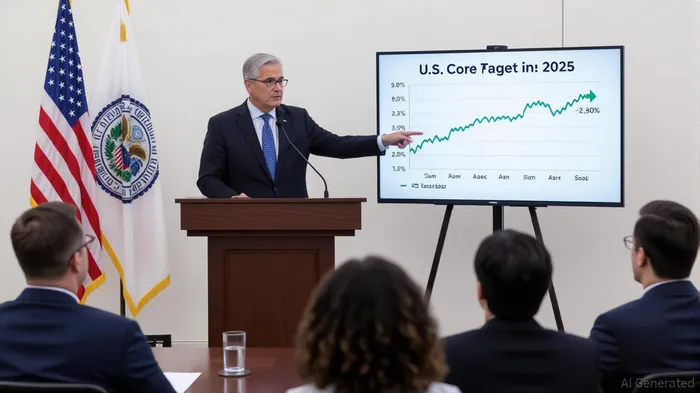
By September 2025, the core PCE price index had cooled to 2.8% year-over-year, down from 2.9% in August, nearing the Fed's long-term target. This moderation, while modest, tilted the scales toward accommodative policy. The FOMC minutes from the September 2025 meeting revealed that nearly all participants expected a 25-basis-point rate cut at the December meeting, with half anticipating an additional cut in October. Market pricing reflected this shift: traders priced in an 86% probability of a December cut, with expectations of 2-3 more reductions in 2026.
The Fed's internal debate, however, remained contentious. Five of the 12 FOMC voting members publicly opposed a December cut in 2025, citing lingering inflation risks, while fourFORM-- supported the move to address labor market softness. Fed Chair Jerome Powell's acknowledgment that a cut was "not guaranteed" underscored the central bank's balancing act between inflation control and economic stability.
Market Reactions: Equities, Bonds, and Volatility Dynamics
The September 2025 PCE data and associated rate-cut expectations catalyzed significant market movements. The S&P 500 surged 3.65% in September 2025, driven by outperformance in technology and communication services sectors, as investors anticipated a Fed pivot. Treasury yields responded inversely, with the 10-year U.S. yield dropping eight basis points, flattening the yield curve and signaling expectations of prolonged low inflation.
Volatility metrics also reflected a more tranquil market environment. The VIX Index, a gauge of equity market fear, fell below its 200-day moving average of 19.2, indicating subdued near-term uncertainty. Defensive positioning gained traction, with fund flows favoring fixed income and municipal bonds. The Bloomberg Short/Intermediate Municipal Bond Index returned 0.96% in September 2025, while corporate bond issuance hit $226 billion, supported by tightening credit spreads.
Strategic Implications for Investors
The Fed's evolving inflation path and rate-cut trajectory are reshaping asset allocation strategies. Defensive equities and high-quality bonds have gained favor as central bank easing reduces the cost of capital. Meanwhile, the flattening yield curve and low volatility metrics suggest a market primed for risk-on activity, albeit with caution. Investors must remain attuned to the Fed's dual mandate: while inflation has cooled, labor market pressures and geopolitical risks could delay further cuts.
For now, the data points to a Fed that is increasingly willing to act preemptively to avert a hard landing. As the December 2025 meeting approaches, the interplay between inflation data and policy responses will remain the linchpin of market direction.

Delivering real-time insights and analysis on emerging financial trends and market movements.
Latest Articles
Stay ahead of the market.
Get curated U.S. market news, insights and key dates delivered to your inbox.






Comments
No comments yet