
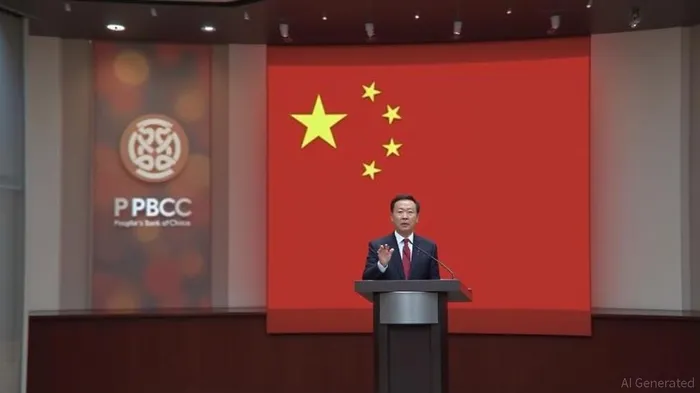
PBoC: to adjust intensity and pace of policy implementation according to situations
ByAinvest
Friday, Aug 15, 2025 6:05 am ET1min read
PBoC: to adjust intensity and pace of policy implementation according to situations
The People's Bank of China (PBoC) is reportedly considering a new strategy to tackle the country's housing glut, a move that reflects the central bank's willingness to adapt its policy implementation to the current economic landscape. According to sources familiar with the matter, the PBoC is planning to mobilize state-owned enterprises and bad debt managers to purchase unsold homes from distressed property developers [1].This initiative comes amidst a backdrop of limited success from previous government efforts to clear the housing glut. The PBoC had previously relied on local governments to buy unsold homes, but this approach has not been effective. The new strategy involves asking some of the largest state-owned enterprises and bad debt managers, including China Cinda Asset Management Co., to participate in the program. These firms will be allowed to tap into 300 billion yuan ($41.8 billion) of funding earmarked by the central bank last year [1].
The renewed effort aims to accelerate the clearance of China’s 408 million square meters of excess inventory, which is larger than the size of Detroit. Officials are also considering scrapping a price cap for the program, a move that could help improve the economics of the plan for both developers and state buyers [1].
However, the effectiveness of this new approach remains uncertain. The bad-debt managers themselves have been grappling with souring loans, which could limit their ability to participate fully in the program. Additionally, the plan comes at a time when China’s property sector is facing a new low, with the delisting of China Evergrande Group and a significant decline in new-home sales by the 100 largest developers [1].
The PBoC's decision to adjust the intensity and pace of its policy implementation reflects a broader trend in China's monetary policy landscape. The central bank has been cautious in its approach to the property sector, seeking to avoid a repeat of the 2017-2018 crisis. However, the ongoing housing crisis has led to calls for more aggressive measures, including the acceleration of a "new model" for property development [1].
In summary, the PBoC's new strategy to clear China's housing glut is a response to the current economic situation. While the effectiveness of this approach remains to be seen, it reflects the central bank's willingness to adapt its policies to the evolving economic landscape.
References:
[1] https://www.fastbull.com/news-detail/china-mulls-asking-firms-run-by-central-government-4339664_0
Stay ahead of the market.
Get curated U.S. market news, insights and key dates delivered to your inbox.


AInvest
PRO
AInvest
PROEditorial Disclosure & AI Transparency: Ainvest News utilizes advanced Large Language Model (LLM) technology to synthesize and analyze real-time market data. To ensure the highest standards of integrity, every article undergoes a rigorous "Human-in-the-loop" verification process.
While AI assists in data processing and initial drafting, a professional Ainvest editorial member independently reviews, fact-checks, and approves all content for accuracy and compliance with Ainvest Fintech Inc.’s editorial standards. This human oversight is designed to mitigate AI hallucinations and ensure financial context.
Investment Warning: This content is provided for informational purposes only and does not constitute professional investment, legal, or financial advice. Markets involve inherent risks. Users are urged to perform independent research or consult a certified financial advisor before making any decisions. Ainvest Fintech Inc. disclaims all liability for actions taken based on this information. Found an error?Report an Issue




Comments
No comments yet