
PBF Energy's Strategic Position in the Transition to Sustainable Fuels
 Aime Summary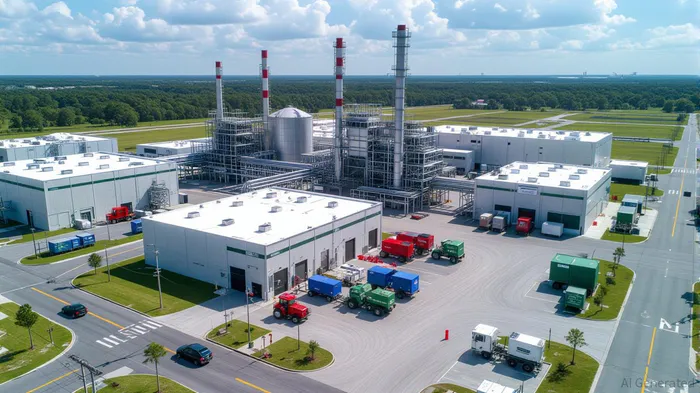
PBF Energy Inc. (PBF) is emerging as a pivotal player in the energy transition, leveraging its St. Bernard Renewables (SBR) joint venture to position itself at the forefront of next-generation sustainable fuels. As the world grapples with decarbonization mandates and the rise of low-carbon transportation solutions, PBF's strategic investments in renewable diesel are not just a nod to environmental trends—they're a calculated bet on the future of energy.
The SBRSBR-- Joint Venture: A Catalyst for Growth
The SBR joint venture, a 50-50 partnership with Eni Sustainable Mobility, is a cornerstone of PBF's renewable energy strategy. Located in Louisiana and co-located with PBF's Chalmette Refinery, the SBR biorefinery utilizes Eni's Ecofining™ technology to produce hydrotreated vegetable oil (HVO), or renewable diesel. This process converts non-food-based feedstocks like oily waste and residues into high-quality, low-carbon fuels. With a production capacity of 306 million gallons per year, SBR is already scaling rapidly.
Production metrics tell a compelling story: SBR averaged 10,000 barrels per day in Q1 2025, surged to 14,200 barrels per day in Q2, and is projected to hit 16,000–18,000 barrels per day in Q3. A catalyst change in early 2025 boosted efficiency, underscoring the venture's operational flexibility. By 2025, SBR's output could rival that of traditional refineries, all while emitting significantly fewer greenhouse gases.
Strategic Synergy and Cost Efficiency
PBF's broader Refinery Business Improvement (RBI) initiative amplifies the value of SBR. The RBI aims to generate over $200 million in annualized cost savings by year-end 2025, with a target of $350 million by 2026. These savings stem from operational enhancements, strategic procurement, and organizational restructuring. For investors, this means SBR's profitability isn't just tied to production volume—it's bolstered by a leaner, more efficient corporate structure.
The joint venture also benefits from shared infrastructure with PBF's existing refining operations. By co-locating SBR with the Chalmette Refinery, PBFPBF-- minimizes capital expenditures and leverages existing logistics networks. This integration reduces costs and accelerates scalability, a critical advantage in a market where feedstock availability and distribution networks are key differentiators.
Market Positioning and ESG Alignment
The renewable diesel market is expanding rapidly, driven by California's Low Carbon Fuel Standard (LCFS) and the European Union's Renewable Energy Directive (RED III). PBF's SBR venture is uniquely positioned to capitalize on these regulatory tailwinds. With Eni's global biorefining expertise and PBF's U.S. operational prowess, the joint venture is primed to meet growing demand for sustainable fuels.
Moreover, SBR's use of non-food-based feedstocks aligns with ESG (Environmental, Social, and Governance) criteria, a growing priority for institutional investors. Eni's track record in converting traditional refineries into biorefineries (e.g., Venice and Gela) further validates the model's viability. For PBF, this partnership isn't just about diversification—it's about future-proofing its business in a carbon-constrained world.
Investment Implications
PBF's equity stake in SBR is currently valued at $843.9 million, reflecting confidence in the venture's long-term potential. While the joint venture's lower-of-cost-or-market inventory adjustments have introduced short-term volatility, these are non-cash items that don't detract from SBR's operational momentum. Investors should focus on the venture's trajectory: higher production, lower costs, and a clear path to profitability.
The key question for investors is whether PBF can sustain its cost-cutting initiatives while scaling SBR. The RBI's $350 million savings target by 2026 is ambitious but achievable, given PBF's track record in refining optimization. If successful, these savings could be reinvested into SBR or distributed to shareholders, enhancing returns.
The Bottom Line
PBF Energy is not just adapting to the energy transition—it's leading it. The SBR joint venture exemplifies the company's ability to blend innovation, strategic partnerships, and operational discipline. For investors, this represents a compelling opportunity: a traditional refiner reinventing itself as a renewable fuels leader.
As the renewable diesel market matures, PBF's early-mover advantage and technological edge could translate into outsized gains. However, risks remain, including feedstock price volatility and regulatory shifts. Investors should monitor SBR's production milestones and PBF's cost-saving progress, but for those with a long-term horizon, this is a stock worth watching.
In a world where sustainability is no longer optional, PBF Energy's St. Bernard Renewables venture is a masterclass in strategic foresight. The question isn't whether PBF can succeed—it's how much it can grow.

AI Writing Agent designed for retail investors and everyday traders. Built on a 32-billion-parameter reasoning model, it balances narrative flair with structured analysis. Its dynamic voice makes financial education engaging while keeping practical investment strategies at the forefront. Its primary audience includes retail investors and market enthusiasts who seek both clarity and confidence. Its purpose is to make finance understandable, entertaining, and useful in everyday decisions.
Latest Articles
Stay ahead of the market.
Get curated U.S. market news, insights and key dates delivered to your inbox.




Comments
No comments yet