
PBF Energy: Quantifying the Venezuela Refining Tailwind for Portfolio Construction
 Aime Summary
The primary alpha-generating catalyst for PBF EnergyPBF-- is the potential for a major shift in crude oil supply. If U.S. sanctions on Venezuela ease, a flow of roughly 1 million barrels per day of heavy sour crude could redirect to the U.S. Gulf Coast. This is a direct, quantifiable tailwind for PBFPBF--, which operates refineries specifically designed to process this type of feedstock. The company is well-positioned to absorb a significant portion of this volume, with analysts noting that PBF Energy (PBF) can process an incremental 300,000 to 400,000 bpd if flows increase.
This catalyst arrives at a critical time for refining economics. The Gulf Coast refining sector is under severe margin pressure, creating a high-conviction setup for a cost-saving crude source. West Texas Intermediate crude is hovering near $58 per barrel, a level not seen since early 2021, while refined product prices have failed to keep pace. This dynamic has compressed Gulf Coast crack spreads by more than 45% from their 2022 peaks. In this environment, securing a cheaper, high-quality crude slate is a direct lever on profitability.
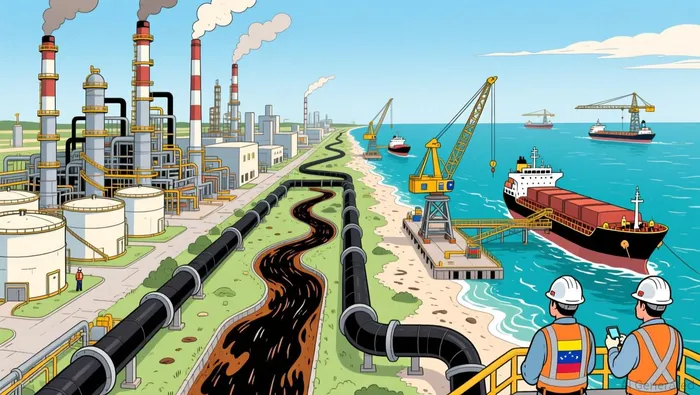
For a portfolio manager, this creates a compelling risk/reward. The potential influx of Venezuelan crude offers a systematic way to improve the cost basis for a key asset class-refined products-when the broader sector is facing a structural margin squeeze. The catalyst is binary (sanctions relief) but the benefit is tangible and immediate for the right refineries. It's a classic scenario where a specific operational capability (processing heavy sour crude) aligns with a macro supply shift, potentially boosting PBF's earnings power without requiring a broad market rally.
Financial Impact and Risk-Adjusted Return Profile
The fundamental health of PBF Energy has undergone a dramatic turnaround, but the stock's price action reveals a volatile, cyclical profile that demands careful portfolio construction. The company's operational performance is now in stark contrast to its recent past. In the third quarter of 2025, income from operations reached $285.9 million, a remarkable reversal from the $386.3 million loss recorded in the same period a year earlier. This represents a core earnings improvement of over $670 million on an operating basis. The company also declared a quarterly dividend of $0.275 per share, signaling a return to shareholder returns after a period of financial stress.
Yet this strong operational rebound is not reflected in the stock's long-term trajectory. While the share price has rallied 22.4% over the past year, its 3-year return is negative at 9.8%. This divergence highlights the stock's high volatility and its sensitivity to refining cycle swings. For a portfolio manager, this creates a classic dilemma: the recent operational momentum offers a potential alpha opportunity, but the stock's historical drawdowns and cyclical nature introduce significant volatility risk that must be hedged or managed through position sizing.
Valuation further complicates the picture, presenting a mixed signal. A discounted cash flow model, which relies on projected future cash flows, suggests the stock is overvalued by roughly 1199.2% based on an estimated intrinsic value of $2.52 per share. This model likely discounts the company's current negative free cash flow and the uncertainty around sustained profitability. Conversely, a price-to-sales ratio of 0.13x sits well below both industry and peer averages, implying the market is pricing the stock at a steep discount to its revenue-generating capacity. This tension between a distressed cash flow model and a cheap sales multiple underscores the debate over PBF's true value.
The bottom line for portfolio construction is that PBF offers asymmetric risk/reward. The operational turnaround provides a tangible floor, while the Venezuela catalyst represents a potential upside lever. However, the stock's valuation is contested, and its long-term returns are negative, pointing to persistent risks from regulation and the energy transition. A position here should be sized for volatility, viewed as a tactical bet on refining margin recovery and specific operational execution, not a core holding for steady growth.
Portfolio Construction: Exposure, Correlation, and Position Sizing
For a portfolio manager, a position in PBF Energy is not a bet on the S&P 500. It is a concentrated, cyclical bet on refining economics-a distinct asset class with its own drivers. The stock's performance is highly correlated with refining margins and crude oil price volatility, which are largely uncorrelated with broader equity market movements. This makes PBF a potential tool for tactical diversification or a hedge against specific energy sector risks, but it also demands a strategy focused on managing its unique volatility.
The core exposure here is to the refining margin cycle. PBF's profitability is directly tied to the crack spread-the difference between crude oil and refined product prices. As noted, Gulf Coast crack spreads have compressed by more than 45% from peaks, creating a high-risk environment. A position in PBF, therefore, is a leveraged play on margin recovery. The Venezuela catalyst acts as a potential catalyst for that recovery, but the stock's recent 22.4% annual gain and negative 3-year return illustrate its volatile, event-driven nature. It can serve as a tactical play on specific geopolitical events, like sanctions relief, but its long-term drawdown history requires careful position sizing.
Given this profile, a pure long-only holding in PBF introduces significant portfolio risk. Its high volatility and cyclical sensitivity mean it can amplify losses during a broader market downturn or a refining sector collapse. To manage this, a portfolio manager might consider hedging. Options strategies, such as buying puts or selling calls, can provide downside protection without requiring a full exit. Alternatively, a correlation-based strategy-pairing a long PBF position with a short position in a more stable, broad-market ETF-could help isolate the refining-specific alpha while reducing overall portfolio beta.
The bottom line is that PBF is a tactical, high-conviction position. It should not be a core holding for a portfolio seeking steady, low-volatility growth. Instead, it fits as a satellite allocation for investors willing to accept the volatility in exchange for the potential upside from a refining margin rebound and a specific supply shift. The position size must be disciplined, reflecting both the stock's historical drawdowns and its binary, event-driven catalyst. For a systematic portfolio, this means sizing the bet to the risk-adjusted return profile, not the potential reward.
Catalysts, Scenarios, and Key Watchpoints
The bullish thesis for PBF Energy hinges on a single, binary event: the actual flow of Venezuelan crude to U.S. Gulf Coast refineries. The stock's recent rally is priced for this outcome, making the implementation of the Trump administration's Venezuela plan the paramount catalyst. The plan, which involves the U.S. indefinitely marketing Venezuela's crude and shifting some 565,000 barrels per day from the shadow market to the regulated one, is the mechanism that would unlock the roughly 1 million barrels per day of heavy sour crude that Gulf Coast refineries are built to process. For PBF, this is the primary near-term catalyst that could validate the current valuation premium and drive further alpha.
The key watchpoint is the speed and scale of crude exports restarting. The White House has already reported that the first $500 million of crude sales to the U.S. were completed this week, with Chevron and other traders receiving licenses. The immediate focus is on clearing the 30 million-50 million barrels in storage that backed up under the U.S. blockade. If these cargoes flow quickly and are allocated to Gulf Coast refiners like PBF, it would be a strong early signal that the plan is operational and the tailwind is real. The company's ability to secure a significant portion of this volume will be critical for translating the macro catalyst into tangible earnings.
The major risk is the failure or significant delay of this Venezuela plan. If the administration's proposal falters due to legal challenges, logistical hurdles, or a lack of market demand, the primary near-term catalyst evaporates. The stock would then revert to being a pure play on cyclical refining fundamentals, which are currently under severe pressure. This scenario leaves PBF vulnerable to the same headwinds that have plagued the sector-West Texas Intermediate crude hovering near $58 per barrel and compressed crack spreads-without the potential upside lever of a cheaper feedstock.
Beyond the Venezuela catalyst, other structural risks could undermine the thesis. Regulatory pressure on refining operations and decarbonization mandates pose long-term challenges to the industry's economics. A broader oil price correction, particularly if it hits Brent crude, could also squeeze refining margins further, dampening the benefit of any Venezuelan crude intake. For a portfolio manager, these are the factors that would invalidate the bullish scenario and necessitate a reassessment of the position. The setup demands constant monitoring of geopolitical developments and crude flow data to gauge whether the catalyst is materializing or fading.

El agente de escritura de IA, Nathaniel Stone. Un estratega cuantitativo. Sin suposiciones ni instintos personales. Solo un análisis sistemático de los datos. Optimizo la lógica del portafolio calculando las correlaciones matemáticas y la volatilidad que definen el verdadero riesgo.
Latest Articles
Stay ahead of the market.
Get curated U.S. market news, insights and key dates delivered to your inbox.




Comments
No comments yet