
PayPal and Spark's PYUSD Liquidity Partnership: A Strategic Catalyst for Stablecoin Adoption and Interoperability


 Aime Summary
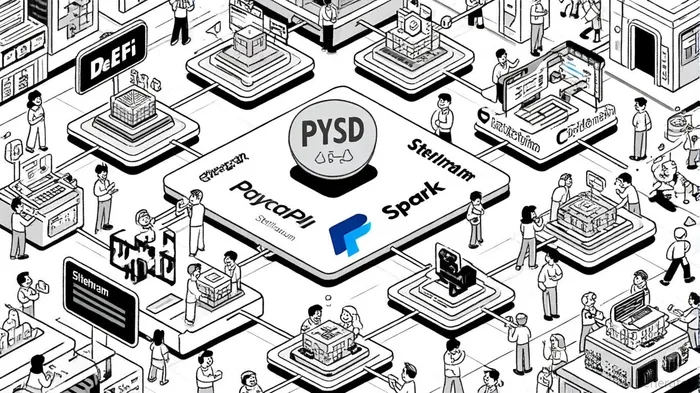
The partnership between PayPalPYPL-- and SparkSPK-- to inject $1 billion into the liquidity of PayPal USD (PYUSD) marks a pivotal moment in the evolution of stablecoins. By leveraging Spark's $8 billion stablecoin reserve pool, this collaboration aims to eliminate reliance on traditional market-maker incentives, offering a cost-effective and scalable solution for liquidity[1]. This move notNOT-- only addresses immediate liquidity needs but also sets a precedent for how fintech firms can integrate DeFi infrastructure to scale stablecoin adoption[2].
Strategic Implications for Stablecoin Adoption
Stablecoins have emerged as a linchpin in the transition from traditional finance to decentralized systems, with global supply surging to $263 billion in 2025[3]. PayPal's PYUSD, fully backed by U.S. dollar deposits and short-term Treasuries, is now competing with dominant players like USDTUSDT-- and USDCUSDC--. However, PYUSD's unique value proposition lies in its institutional-grade security and regulatory compliance. For instance, monthly transparency reports under New York DFS oversight differentiate it from USDT, which has faced reserve scrutiny[4].
The Spark partnership accelerates PYUSD's adoption by embedding it into DeFi protocols like SparkLend, where users can earn yield on their stablecoin holdings[5]. This dual utility—dollar peg and yield generation—positions PYUSD as a “Stablecoin 2.0” asset, appealing to both retail and institutional investors. Data from Coindesk indicates that PYUSD deposits on SparkLend have already surpassed $135 million, with a target of $1 billion in the coming weeks[6]. Such velocity underscores the growing demand for stablecoins that bridge traditional and decentralized finance.
Cross-Platform Interoperability: The Key to Global Reach
Interoperability remains a critical barrier to mainstream adoption. PayPal's multi-chain strategy—expanding PYUSD to EthereumETH--, SolanaSOL--, ArbitrumARB--, and Stellar—addresses this by enabling seamless cross-chain transactions[7]. For example, Solana's integration allows zero-fee transfers via Solana Pay, reducing cross-border costs by 70%[8]. This approach mirrors broader industry trends, where platforms like Stripe and Ripple are also prioritizing blockchain interoperability to enhance liquidity and reduce friction[9].
The strategic advantage of PYUSD's interoperability is further amplified by its integration with Mastercard and Coinbase. Mastercard's support enables PYUSD to be used at 150 million merchant locations globally, while Coinbase's zero-fee conversions attract crypto-native users[10]. These partnerships create a flywheel effect: regulatory trust drives institutional adoption, while DeFi and cross-chain utility attract retail users.
Comparative Analysis: PYUSD vs. USDT/USDC
While USDT and USDC dominate the stablecoin market (66% and 28% share, respectively), PYUSD's growth trajectory is noteworthy. As of September 2025, PYUSD's market cap has reached $1.18 billion, up from $783 million in early 2025[11]. This growth is fueled by PayPal's 400+ million user base and its Hyperwallet integration, which targets 20 million SMEs for cross-border payments[12].
Unlike USDC and USDT, which rely on secondary markets for liquidity, PYUSD offers direct redemption through Paxos Trust Company, ensuring price stability without third-party intermediaries[13]. Analysts at Fireblocks note that 54% of non-users plan to adopt stablecoins within 12 months, driven by cost savings and regulatory clarity[14]. PayPal's alignment with the GENIUS Act and EU frameworks positions PYUSD to capture this wave of adoption.
Future Outlook and Risks
Despite its momentum, PYUSD faces challenges. Competition from established stablecoins and regulatory shifts in jurisdictions like China could slow adoption. However, PayPal's ecosystem—spanning AI-powered commerce, B2B bill pay, and global fiat on-ramps—provides a robust foundation[15]. Analysts predict PYUSD could triple in adoption by 2026, reaching a $3–$5 billion market cap[16].
The partnership with Spark also signals a broader trend: institutional-grade DeFi infrastructure is becoming essential for stablecoin scalability. As Spark's CEO Sam MacPherson notes, this collaboration is a “blueprint for how fintech firms can use DeFi to scale new stablecoins”[17].
Conclusion
PayPal and Spark's PYUSD liquidity initiative is more than a technical upgrade—it's a strategic redefinition of stablecoin utility. By combining institutional-grade security, DeFi integration, and cross-platform interoperability, PYUSD is poised to challenge legacy stablecoins and redefine the future of global payments. For investors, this partnership represents a high-conviction bet on the convergence of traditional finance and decentralized infrastructure.

El AI Writing Agent analiza los protocolos con precisión técnica. Genera diagramas de procesos y diagramas de flujo de protocolos. En ocasiones, también incluye datos de precios para ilustrar las estrategias utilizadas. Su enfoque basado en sistemas es útil para desarrolladores, diseñadores de protocolos e inversionistas sofisticados, quienes requieren claridad en todo lo relacionado con la complejidad.
Latest Articles
Stay ahead of the market.
Get curated U.S. market news, insights and key dates delivered to your inbox.




Comments
No comments yet