
PayPal and KKR Expand €65B BNPL Deal as Stock Slides to 66th in $1.28 Billion Trading Volume
 Aime Summary
Market Snapshot
, 2025, closing at a reduced value for the day. Despite the drop, , ranking 66th among U.S.-listed stocks in terms of liquidity. The stock’s performance reflects mixed investor sentiment, balancing optimism over strategic financial partnerships with concerns about short-term volatility.
Key Drivers
PayPal’s renewed partnership with KKRKKR--, announced on November 17, emerged as the primary catalyst for market activity. The agreement, which builds on a 2023 collaboration, , pay-later (BNPL) loan receivables through March 2028. , ensuring ongoing access to capital for PayPal’s BNPL operations in key European markets such as France, Germany, Italy, Spain, and the UK. The structure of the deal enables PayPalPYPL-- to retain control over customer-facing responsibilities—including underwriting and servicing—while leveraging KKR’s capital to scale its BNPL portfolio without overburdening its balance sheet.
The partnership underscores PayPal’s strategic shift toward a “balance-sheet-light model,” a framework designed to optimize capital allocation and support long-term growth. By offloading BNPL receivables to KKR, PayPal can preserve liquidity for strategic investments and shareholder returns, including its recently announced dividend. , PayPal’s Chief Financial and Operating Officer, emphasized that the agreement reflects the company’s disciplined approach to managing its balance sheet while expanding its BNPL footprint in Europe. This model aligns with broader industry trends, as fintech competitors like Klarna have similarly partnered with institutional investors to scale short-term credit offerings without straining financial resources. 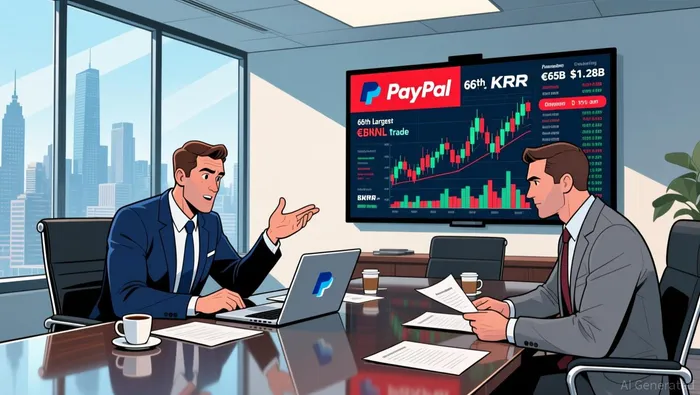
KKR’s involvement also highlights the growing demand for (ABF) solutions in the BNPL sector. KKR’s Managing Director noted that the expanded commitment demonstrates the scalability of the firm’s global ABF platform, which secures loans against assets such as receivables and inventory. By leveraging its capital markets expertise, KKR has positioned itself as a key enabler of PayPal’s BNPL growth, which has seen increased adoption among millennials and Gen Z consumers in Europe. The deal also benefits KKR by providing access to a high-quality, expanding asset class with strong cash flow potential.
While the partnership was factored into PayPal’s October 2025 earnings guidance, the stock’s intraday performance suggests lingering uncertainties. , such as tightening credit conditions and regulatory scrutiny. However, PayPal’s ability to raise its full-year profit forecast in October, citing resilient consumer spending, indicates confidence in its diversified revenue streams. The company’s recent dividend announcement further signals a focus on shareholder value, potentially mitigating some short-term volatility.
The broader BNPL market remains a critical growth lever for PayPal, with European adoption rates surging due to rising e-commerce and shifting consumer preferences. By expanding its collaboration with KKR, PayPal aims to capitalize on this trend while maintaining operational flexibility. The deal’s structure—retaining customer service responsibilities while outsourcing financial risk—allows the company to innovate in product offerings and customer engagement without compromising its financial stability. As BNPL platforms face increasing competition, PayPal’s partnership model may serve as a template for balancing scalability with prudence in a rapidly evolving financial landscape.

Encuentre esos activos que tengan un volumen de transacciones explosivo.
Latest Articles
Stay ahead of the market.
Get curated U.S. market news, insights and key dates delivered to your inbox.
AInvest
PRO
AInvest
PRO



Comments
No comments yet