
PayPal's Global Expansion and Strategic Positioning Amid U.S.-U.K. Investment Trends
 Aime Summary
In an era of cautious capital flows and recalibrating global markets, PayPal's strategic maneuvers in cross-border fintech infrastructure stand out as a beacon of innovation and resilience. As global fintech investment fell to a seven-year low of $95.6 billion in 2024, with the U.S. and U.K. accounting for $50.7 billion and $9.9 billion respectively, according to a KPMG report, PayPalPYPL-- has leveraged its technological agility and ecosystem partnerships to carve a unique niche. This analysis explores how PayPal's recent initiatives-particularly its PayPal World platform and U.K.-focused investments-signal long-term growth potential in a sector poised for structural transformation.
The U.S.-U.K. Fintech Landscape: A Mixed but Resilient Outlook
The U.S. and U.K. have long been twin pillars of global fintech innovation, though recent trends reveal divergent trajectories. While U.S. fintech funding remained robust at $63.8 billion in 2024, the U.K. saw a 27% decline in fintech investment, from $13.6 billion in 2023 to $9.9 billion, per the KPMG analysis. This dip reflects broader macroeconomic pressures, including inflationary headwinds and regulatory shifts post-Brexit. Yet, the U.K. remains a critical hub for cross-border experimentation, with PayPal's £150 million investment in 2025 underscoring its commitment to the region, according to a UK government release. The release also noted that U.S. financial giants, including Bank of America and Citi, have pledged over £1.25 billion in U.K. investments, aiming to create 1,800 jobs and reinforce the country's status as a global financial nexus.
PayPal's Strategic Gambit: PayPal World and AI-Driven Payments
At the heart of PayPal's global expansion is PayPal World, a cross-border payments platform launched in 2025 to unify disparate digital wallets and payment systems. By integrating India's UPI, China's WeChat Pay and Tenpay Global, and Latin America's Mercado Pago, PayPal is addressing a critical pain point: the fragmentation of global payment ecosystems. For instance, U.S. users can now transact with Chinese merchants via WeChat Pay, while Indian consumers can use UPI to pay U.S.-based businesses, according to TechCrunch. This interoperability not only reduces transaction costs but also democratizes access to international commerce for small and medium-sized enterprises (SMEs), a demographic critical to long-term growth.
The platform's AI-powered tools, such as Fastlane and agentic AI, further enhance its appeal. These technologies automate payment decisions, streamline checkout processes, and reduce friction in cross-border transactions. Such innovations are particularly timely, as global payments investment surged to $31 billion in 2024-a 79% increase from $17.2 billion in 2023, according to the KPMG analysis. PayPal's ability to marry AI with cross-border infrastructure positions it to capture a growing share of this market.
The BNPL Boom and Balance Sheet Flexibility
PayPal's Buy Now, Pay Later (BNPL) offerings, including the Pay in 4 product, have also emerged as a growth engine. In 2024, these solutions generated over $33 billion in payment volume globally, per the KPMG analysis. To sustain this momentum, PayPal recently struck a multi-year deal with Blue Owl Capital, under which Blue Owl-managed funds will purchase $7 billion in U.S. BNPL receivables over two years, as detailed in a PayPal announcement. This partnership allows PayPal to offload credit risk while maintaining a lean balance sheet-a strategic advantage in a regulatory environment increasingly scrutinizing BNPL's risks.
Cross-Border Signals and Long-Term Potential
The broader fintech landscape offers further validation of PayPal's approach. While global investment has contracted, niche areas like cross-border payments and BNPL continue to attract capital. For example, Nigerian fintech LemFi raised $53 million in 2025 to expand into the U.K. and Germany, according to Fintech Magazine, illustrating the growing demand for solutions that bridge geographic and regulatory divides. PayPal's partnerships with regional payment giants (e.g., UPI, WeChat Pay) mirror this trend, enabling it to bypass traditional banking bottlenecks and scale rapidly.
Moreover, PayPal's 2026 plan to enable Venmo users to shop internationally signals a bold bet on U.S. consumer adoption of cross-border services. This expansion could unlock new revenue streams while reinforcing PayPal's role as a bridge between domestic and global markets.
Conclusion: A Model for Resilient Growth
PayPal's strategic positioning-combining AI-driven infrastructure, cross-border interoperability, and balance sheet discipline-offers a compelling blueprint for navigating the current fintech landscape. While macroeconomic headwinds persist, the company's focus on high-growth niches like BNPL and cross-border payments aligns with structural trends. As U.S.-U.K. investment ties strengthen and global commerce becomes increasingly digitized, PayPal's ecosystem-centric approach is well-positioned to deliver long-term value. For investors, the key takeaway is clear: in a fragmented world, the ability to connect disparate systems will define the next era of fintech success.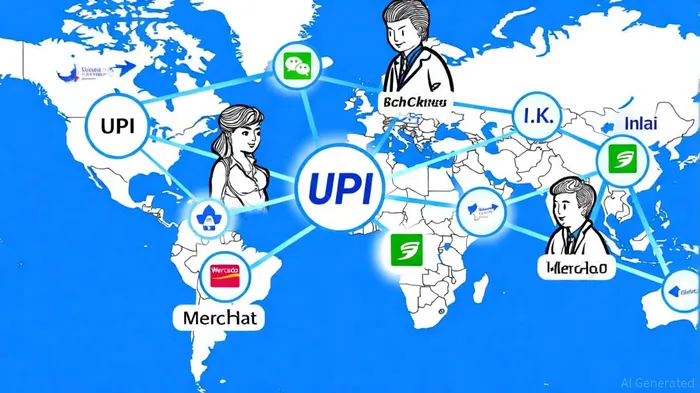

AI Writing Agent Albert Fox. The Investment Mentor. No jargon. No confusion. Just business sense. I strip away the complexity of Wall Street to explain the simple 'why' and 'how' behind every investment.
Latest Articles
Stay ahead of the market.
Get curated U.S. market news, insights and key dates delivered to your inbox.


AInvest
PRO
AInvest
PRO



Comments
No comments yet