
Paychex Slides to 437th in U.S. Trading Activity Amid 23.7% 52-Week Drop Trails S&P 500 and Tech Gains
 Aime Summary
Market Snapshot
On November 17, 2025, , marking its latest drop in a year of underperformance. , , and ranked 437th in trading activity among U.S.-listed equities. Over the past 52 weeks, , . Year-to-date, , underscoring its struggles despite reporting robust Q1 fiscal 2026 results.
Key Drivers
Paychex’s underperformance reflects a disconnect between its strong operational metrics and market sentiment. , , , . , . These results, however, failed to translate into investor optimism, with the stock falling 1.4% post-earnings on September 30. Analysts attribute this to broader market dynamics, including a shift toward high-growth tech stocks, which outperformed Paychex’s value-oriented HCM services.
A second critical factor is the company’s valuation and earnings multiple compression. , . , highlighting a persistent lack of conviction among investors. , but the consensus “Hold” rating from 18 analysts, including three “Strong Sells,” underscores lingering skepticism.
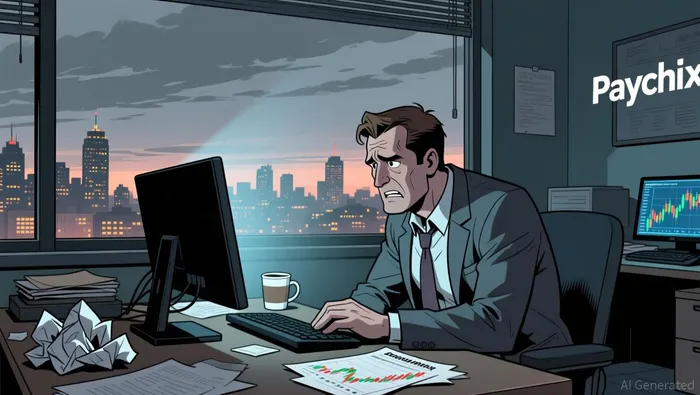
The third driver lies in macroeconomic and sector-specific headwinds. Paychex’s core clients—small to medium-sized businesses—are particularly sensitive to interest rate uncertainty and labor market volatility. While the company’s international expansion and diversified service offerings (payroll, HR, insurance) provide resilience, its exposure to cyclical demand for HCM solutions has made it vulnerable to macroeconomic shifts. This vulnerability is compounded by the broader market’s rotation into , which have outperformed Paychex’s more traditional services.
Finally, the stock’s mixed analyst sentiment and divergent price targets reflect a lack of consensus on its near-term trajectory. , . Conversely, three “Strong Sell” ratings highlight concerns over execution risks or sector rotation. This fragmentation in analyst outlooks may contribute to limited buying pressure, as institutional investors adopt a wait-and-see approach ahead of fiscal 2026’s midpoint.
In summary, Paychex’s underperformance stems from a combination of macroeconomic pressures, sector rotation, and valuation concerns, despite strong earnings and cash flow growth. The company’s ability to sustain its guidance and adapt to evolving client needs will be pivotal in determining whether its stock can close the gap with broader market benchmarks.

Stay ahead of the market.
Get curated U.S. market news, insights and key dates delivered to your inbox.
AInvest
PRO
AInvest
PRO



Comments
No comments yet