
AInvest Newsletter
Daily stocks & crypto headlines, free to your inbox
 Aime Summary
Date of Call: December 20, 2025
revenue increase of 18% year-over-year to $1.6 billion for the second quarter, with adjusted operating income growing 21% over the prior year.The growth was driven by higher productivity, operational efficiencies, and the integration of Paycor, which contributed approximately 17 percentage points to the revenue growth.
Paycor Integration and Synergy Realization:
8% to 9% growth after adjusting for year-end processing fees from the prior year.The integration is progressing well, with revenue synergies on track and cost synergies expected to reach $100 million for fiscal year 2026, up from the initial target of $80 million.
PEO Business Performance:
6% to $337 million, driven by solid growth in the number of average PEO worksite employees and insurance revenues.Despite challenges in the insurance agency segment, the PEO business continues to perform well with market-leading mid-single-digit worksite employee growth, supported by strong demand and retention.
AI and Technological Advancements:
These advancements are aimed at strengthening Paychex's competitive position by leveraging its extensive proprietary data sets and combining technology with HR expertise.
Cost Management and Expense Control:
27% to $986 million, primarily due to the Paycor acquisition, but excluding Paycor, expenses grew only low single digits.80 basis points year-over-year.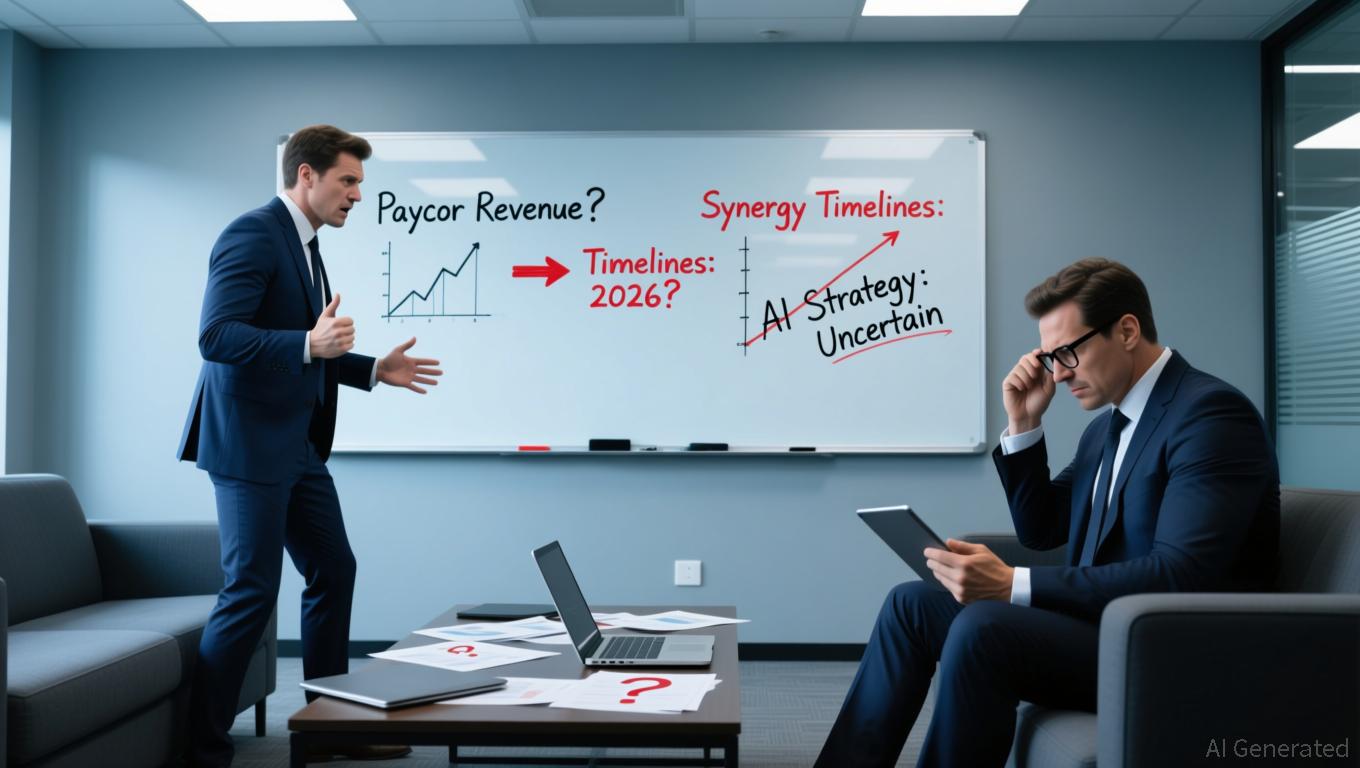
Overall Tone: Positive
Contradiction Point 1
Paycor's Recurring Revenue Growth Characterization
This is a substantial contradiction regarding the core financial integration outcome. The characterization shifts from a broad, confident "double-digit grower" (2025Q4) to a specific, lower pro forma estimate (8-9% in 2026 Q2) and acknowledges integration disruption (2026Q1). This directly impacts forecasts for a major acquisition's contribution.
Does the 12-13% Paycor contribution to fiscal 2026 growth being more conservative than its standalone public growth stem from churn assumptions? - Samad Samana (Jefferies)
2025Q4: Robert Lewis Schrader: There is conservative in the guide, but Paycor is still expected to be a strong double-digit grower in fiscal 2026. - [Robert Lewis Schrader](CFO)
Has Paycor's recurring revenue growth slowed after integration due to disruption, and does the "double-digit" growth guidance include revenue synergies? - Samad Samana (Jefferies)
2026Q1: For the full year, Paycor recurring revenue is expected to grow double digits. Q1 growth was in line with expectations... Some disruption from integration activities earlier in the year is acknowledged... - [Robert Schrader](CFO) and [John Gibson](CEO)
Contradiction Point 2
Revenue Synergy Realization Timeline
This is a substantial strategic contradiction regarding the timing of a key financial synergy. The narrative changes from a future, multi-year contributor (2025Q4) to a present reality that is already being achieved (2026 Q2). This alters the interpretation of current performance and near-term growth drivers.
What is included in the 2026 guidance for top-line synergies? Can you quantify the cadence of cost synergies? - Andrew Nicholas (William Blair)
20251219-2026 Q2: Paycor's growth contribution for Q2 is estimated at 8% to 9% on a pro forma basis, adjusting for year-end filing headwinds... - [Robert Schrader](CFO) and [John Gibson](CEO)
Can you explain the reasons for the stock price decline related to Paycor's growth contribution and integration challenges? - Mark Marcon (Baird)
2025Q4: Robert Lewis Schrader: Revenue synergies are expected to contribute 30-50 basis points to the 2026 growth guide. This is a conservative estimate that builds over several years, starting with cross-selling... - [Robert Lewis Schrader](CFO)
Contradiction Point 3
Guidance Revision Rationale
This is a substantial contradiction concerning the explanation for a material financial guidance change. The company shifts from attributing the revision to internal derisking and confidence-building post-acquisition (2025Q3) to stating it was due solely to underlying business trends (2026 Q2). This affects trust in management's communication.
Can you provide more details on the $80 million in cost synergies from the Paycor acquisition and the timeline for achieving them? - Daniel Maxwell (Analyst)
20251219-2026 Q2: Integration is progressing well. The company is achieving revenue synergies and exceeding cost synergies... Cross-selling and platform migrations are ongoing, making precise revenue attribution difficult. - [John Gibson](CEO)
Was the guidance cut to the low end due to underlying business trends or risk mitigation from investor feedback? - Samad Samana (Jefferies)
2025Q3: The acquisition of Paycor is expected to be accretive... Work since announcing the transaction has increased confidence in achieving cost synergies... - [John Gibson](CEO)
Contradiction Point 4
PEO Growth Driver Attribution
This is a substantial market strategy contradiction. The explanation for PEO segment performance shifts from being driven by strong internal execution and anniversaring specific headwinds (2026 Q2) to being attributed to a broad, external macroeconomic trend of client cost management (2026 Q2). This changes the perceived sustainability and company-specific nature of the growth.
What factors will drive PEO's 3-point acceleration to hit the low end of the 6-8% range, and what visibility do you have into it? - Jason Kupferberg (Wells Fargo)
20251219-2026 Q2: The adjustment was due to underlying business trends, not investor feedback. - [Robert Schrader](CFO)
What is the outlook for Management Solutions' organic growth acceleration (excluding Paycor), and did any F4Q factors impact F1Q? - Samad Samana (Jefferies)
20251219-2026 Q2: The acceleration is driven by a combination of strong execution (double-digit demand, strong retention) and easier year-over-year comparisons, as the major enrollment headwinds from last year are anniversaried... - [John Gibson](CEO)
Contradiction Point 5
AI Tool Deployment Strategy and Timeline
This is a substantial operational strategy contradiction. The description of a key technological initiative (AI) changes from being in early stages for back-office efficiency (2026Q1) to being a fully deployed, client-facing sales productivity tool (2026 Q2). This indicates a significant and rapid shift in the application and rollout plan for a strategic asset.
What productivity improvements do you expect from the agentic AI pilots, and how do you measure success? - Daniel Jester (BMO Capital Markets)
2026Q1: The trends are macro-driven, with businesses managing costs. This is seen across all market segments, where clients are opting for lower-tier bundles. - [John Gibson](CEO)
What is the deployment status of the AI sales engine, and what productivity gains have you observed? - Scott Wurtzel (Wolfe Research)
2026Q1: A new agentic AI tool is in pilot to handle high-volume client transactions, which is in early stages. The goal is to free up service providers for higher-value advisory work... - [John Gibson](CEO)

Discover what executives don't want to reveal in conference calls

Jan.11 2026

Jan.10 2026

Jan.10 2026

Jan.10 2026

Jan.10 2026
Daily stocks & crypto headlines, free to your inbox





Comments
No comments yet