
AInvest Newsletter
Daily stocks & crypto headlines, free to your inbox
 Aime Summary
In October 2025, Paxos Trust Company executed an unprecedented minting of $300 trillion in
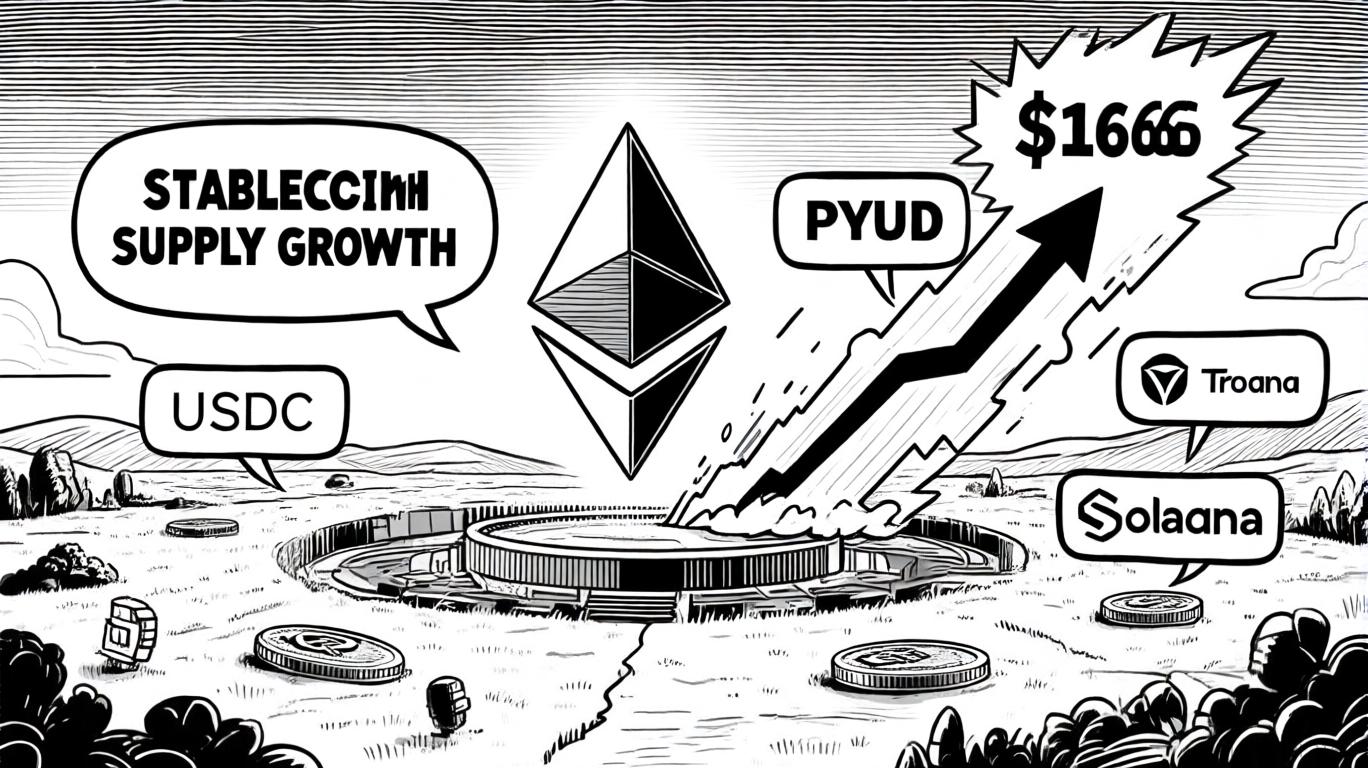
USD (PYUSD) stablecoin on the blockchain, only to burn the tokens within an hour. This event, described as a "technical anomaly" by blockchain observers, exposed critical vulnerabilities in stablecoin infrastructure and trust mechanisms, according to . While the incident was likely a display error or testnet leak, its implications for decentralized finance (DeFi) and global financial systems demand rigorous scrutiny.!
The minting of 300 trillion PYUSD tokens—equivalent to 18 times global GDP—triggered immediate fear, uncertainty, and doubt (FUD) in crypto markets, as detailed in
. Blockchain explorers briefly displayed the impossibly large sum, leading to speculation about systemic risks in stablecoin issuance. Despite Paxos's swift burn of the tokens, the event underscored the fragility of confidence in digital assets, particularly when issued by entities bridging traditional and decentralized finance, .According to
, the incident highlighted the need for real-time transparency and robust auditing mechanisms for stablecoins. While PYUSD remains fully backed by U.S. Treasuries and cash equivalents, according to , the episode raised questions about the reliability of reserve-backed stablecoins in high-stakes environments.Ethereum's DeFi ecosystem, which hosts over $48 billion in total value locked (TVL), faces dual challenges: maintaining scalability while ensuring trust in stablecoin systems. The PYUSD incident, though not directly impacting user behavior or protocol adoption rates in the short term, amplified existing concerns about security and transparency, per a
.1. Gas Fees and Scalability: Ethereum's gas fees have plummeted to historic lows, averaging $1.38 for token swaps and $2.32 for NFT sales as of April 2025, according to
. This decline, driven by Layer-2 solutions like and Base, has made Ethereum a more attractive platform for stablecoin operations. However, the PYUSD incident revealed that even minor technical glitches can disrupt market confidence, particularly in high-volume environments.2. Stablecoin Dominance: Ethereum's stablecoin supply surged to $166 billion by late 2025, with PYUSD, USDT, and
accounting for 85% of the total, as . This growth reflects institutional confidence in Ethereum's infrastructure, but the PYUSD anomaly underscores the need for stricter oversight. For instance, the U.S. Securities and Exchange Commission (SEC) closed its PYUSD investigation in February 2025 without enforcement action, according to , signaling a softer regulatory stance. However, the incident reignited debates about the need for real-time reserve audits and cross-chain interoperability standards.3. Protocol Adaptations: Ethereum's infrastructure has evolved to address scalability and security challenges:
introduced "blob" data storage, reducing rollup costs and enabling faster transactions. Meanwhile, Layer-2 solutions now handle 70% of DeFi activity, a trend noted in , mitigating the impact of high gas fees on the mainnet. These adaptations position Ethereum as a hybrid settlement layer, balancing institutional-grade security with user-friendly DeFi applications.The SEC's decision to drop its PYUSD probe aligns with broader trends of regulatory leniency toward stablecoins, as
. However, the incident intensified calls for federal legislation, such as the proposed GENIUS Act, which seeks to establish a distinct regulatory framework for payment stablecoins, an outcome . While the SEC's non-enforcement stance provides clarity for issuers like PayPal, it also highlights the fragmented nature of crypto regulation, where state and federal laws often conflict, according to .Monetarily, the PYUSD incident has had mixed effects. On one hand, it reinforced Ethereum's role as the dominant stablecoin platform, with its market share surpassing
and , as . On the other, it exposed vulnerabilities in trust mechanisms, prompting DeFi protocols to adopt stricter smart contract audits and user education initiatives, discussed in .Ethereum's roadmap includes the Pectra and Fusaka upgrades, which will further optimize data availability and scalability, as outlined in
. These advancements, coupled with the growing adoption of Layer-2 solutions, suggest a resilient future for Ethereum-based DeFi. However, the PYUSD incident serves as a cautionary tale: even the most robust systems require continuous innovation in transparency and governance.For investors, the key takeaway is that Ethereum's strategic adaptations—Layer-2 integration, regulatory clarity, and infrastructure upgrades—position it to dominate the next phase of DeFi growth. Yet, the incident underscores the importance of monitoring technical risks and regulatory shifts in a rapidly evolving market.

AI Product Manager at AInvest, former quant researcher and trader, focused on transforming advanced quantitative strategies and AI into intelligent investment tools.

Dec.22 2025

Dec.21 2025

Dec.16 2025

Dec.14 2025

Dec.11 2025
Daily stocks & crypto headlines, free to your inbox





Comments
No comments yet