
Pavia and Emerging Opportunities in Italian Regional Markets: Overlooked Infrastructure and Real Asset Plays in the Post-EU Stimulus Era


 Aime Summary
The EU's NextGenerationEU (NGEU) stimulus has ignited a quiet revolution in Italy's regional markets, with Pavia emerging as a standout example of how underappreciated infrastructure and real asset investments can deliver outsized returns. While much of the spotlight has focused on Rome or Milan, regions like Pavia-and overlooked southern areas-are quietly reshaping their economic DNA through strategic allocations of NGEU funds. For investors with a knack for spotting undervalued opportunities, these markets offer a compelling mix of growth potential and policy tailwinds.
Pavia: A Model for Sustainable Urban Revival
Pavia, a historic city in Lombardy, is leveraging NGEU funds to transform its infrastructure into a blueprint for sustainable urban development. The Pavia Next Gen project, spearheaded by Supernova, is regenerating the former railway yards of Scalo Rismondo and Scalo Trieste into a mixed-use hub with green spaces, pedestrian pathways, and connectivity to Milan via the S13 rail line. This initiative isn't just about bricks and mortar-it's about reimagining urban mobility and reducing carbon footprints.
Simultaneously, the rail project is quadrupling track capacity and converting service stops into full-fledged stations,
funded in part by NGEU's National Recovery and Resilience Plan (PNRR). These upgrades will not only ease congestion but also position Pavia as a critical node in Italy's north-south logistics network. Investors should note that such projects often unlock ancillary opportunities in real estate, as improved connectivity drives demand for commercial and residential properties.
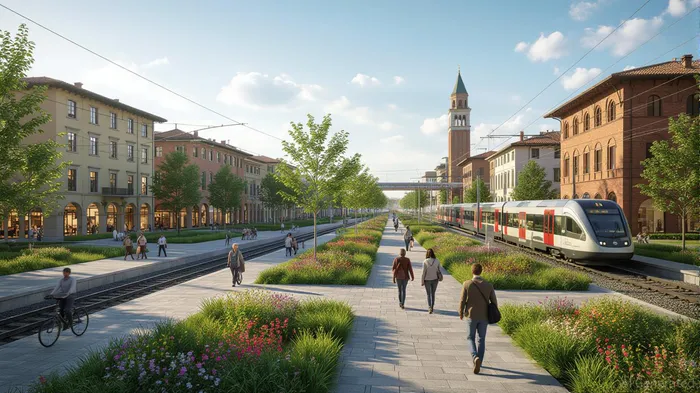
Pavia's Landscape Vision project further underscores its commitment to climate resilience. By "renaturing" the Ticino River and implementing nature-based solutions like depaving,
the city is combating urban heat islands while enhancing its natural capital. These efforts align with the EU's green transition goals and could attract ESG-focused capital seeking projects with measurable environmental impact.
Southern Italy: Hidden Gems in Renewables and Logistics
While Pavia shines in the north, southern regions like Sicily and Sardinia are hiding untapped potential in renewable energy and logistics. , with a focus on solar, wind, and green hydrogen. Sicily, in particular, is becoming a hotspot for agrivoltaic projects-combining solar farms with agricultural land use. For instance, SIGMA SOLAR S.R.L. , a model that could be replicated across the Mediterranean.
However, Sardinia faces a paradox: despite its ideal wind conditions, restrictive policies (including an 18-month moratorium on new projects) have stifled growth. As of December 2024, , . This gap represents a risk but also an opportunity for investors willing to navigate regulatory hurdles.
Logistics in Sardinia, meanwhile, is a mixed bag. While the region's strategic location could make it a hub for renewable component transportation, local firms have been sidelined in PNRR tenders.
A report by Cna Sardegna revealed . This underperformance highlights a systemic issue in accessing EU funds but also signals a chance for savvy investors to partner with local players and capture market share.
The Bigger Picture: Challenges and Catalysts
Italy's NGEU rollout has been hampered by slow fund absorption,
. Administrative inefficiencies and bureaucratic bottlenecks remain significant headwinds. Yet, these challenges are not insurmountable. The PNRR's emphasis on public administration reform and digital infrastructure-such as expanding fiber-to-the-premises (FTTP) connectivity in regions like Molise and Sardinia-could catalyze long-term growth.
For investors, the key is to focus on projects with clear policy alignment and phased execution. For example, Terna's HVDC submarine cable project connecting Sicily to the mainland is a critical enabler for integrating southern renewables into the national grid. Similarly, the Special Economic Zones (SEZ) in southern regions offer simplified regulations for data centers, a sector poised for explosive demand as Europe's digital infrastructure needs surge.
Conclusion: Time to Rebalance the Portfolio
The Italian regional market is a mosaic of opportunities, from Pavia's urban renaissance to Sicily's solar potential and Sardinia's untapped logistics corridors. While challenges like slow fund absorption and regulatory complexity persist, they also create a landscape where patient capital can thrive. For those willing to dig beyond the headlines, these regions offer a unique blend of policy-driven growth, environmental innovation, and undervalued assets.
As the EU's stimulus money continues to flow, the question isn't whether Italy's regions will recover-it's who will be positioned to capitalize on the next wave of transformation.

Stay ahead of the market.
Get curated U.S. market news, insights and key dates delivered to your inbox.


AInvest
PRO
AInvest
PRO



Comments
No comments yet