
São Paulo Blackout Spikes Energy Sector Concerns Amid Climate Risks
 Aime Summary
Extreme Weather and Brazil's Energy Crisis
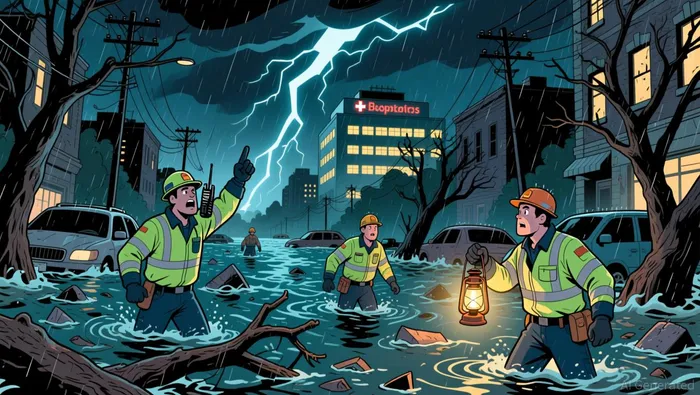
Extreme weather conditions have plunged São Paulo, Brazil's largest city, into darkness as severe storms and flooding disrupted power infrastructure, leaving millions without electricity. The outage has highlighted the vulnerability of the city's energy systems amid increasingly unpredictable climate patterns. Local authorities and utility providers are scrambling to restore power and repair damaged transmission lines.
The blackout has also caused transportation networks to grind to a halt, with metro services suspended and major highways impassable due to standing water. Hospitals are operating on backup generators, and businesses are reporting significant losses due to the prolonged outage. Emergency services have been deployed to key areas to manage the crisis.
Residents are reporting outages ranging from a few hours to over a day, with social media platforms flooded with calls for action and updates. The situation underscores the growing challenge cities face in balancing climate resilience with economic stability.
Political and Business Leaders Seek a Centrist Path
In the midst of economic and political turbulence, Brazil's business community is pushing for a centrist candidate to lead the country. José Luís Gomes Barbosa, a prominent business leader and advocate for public-private partnerships, has emerged as a key figure in this effort. He emphasized the need for a shared agenda between companies and policymakers to address pressing issues such as public security, education, and governance according to Bloomberg reports.
Barbosa is part of a group of business leaders who are engaging with potential candidates, focusing on those who align with their priorities. These include reducing barriers to collaboration between the public and private sectors and strengthening institutions like the Supreme Court, which has recently taken a more active role in political affairs. "The left wing does not have a monopoly on caring about the country's social well-being," Barbosa said, referring to President Luiz Inácio Lula da Silva's leftist platform according to Bloomberg reports.
The business elite's support for centrist figures comes amid concerns over economic uncertainty and political polarization. Past efforts to rally support for centrist candidates have not yet resulted in a strong contender, but lessons from previous campaigns are being applied to develop a more viable strategy. The goal is to find a leader who can bridge divides and prioritize national stability.
Energy Sector Faces Challenges
The recent blackout in São Paulo highlights the fragility of Brazil's energy infrastructure, a concern echoed by analysts and market observers. Utilities like EDF in France and Enel in Italy are also grappling with low energy prices and regulatory pressures, which are impacting their ability to invest in infrastructure according to Bernstein analysis according to Reuters reporting. In Brazil, the situation is compounded by the scale of the storm and the aging power grid.
AMSC, a U.S.-based energy solutions company, has recently entered the Brazilian market through the acquisition of Comtrafo, a local transformer manufacturer. The move is seen as a strategic play to capitalize on the government's planned investments in the electricity grid, which exceed $20 billion. However, the blackout underscores the need for robust and resilient infrastructure, especially in the face of extreme weather events according to AMSC's announcement.
As the government and private sector work to modernize Brazil's energy systems, the focus is shifting toward sustainability and climate resilience. This includes a push for renewable energy and smart grid technologies, which could help mitigate the risks posed by increasingly severe weather events. For now, the immediate priority is to restore power and ensure the safety of residents and businesses in the affected areas.
Market and Investment Reactions
The global financial market is closely monitoring developments in Brazil, as the blackout and political landscape could influence investor sentiment. The recent acquisition of Comtrafo by AMSC has been welcomed as a positive move for the energy sector, with the company poised to expand its product portfolio and strengthen its presence in Brazil according to AMSC's announcement. However, the blackout has added a layer of uncertainty, prompting investors to assess the risks associated with infrastructure vulnerabilities in the region.
In other market news, Oracle continues to face challenges as it navigates the shadow of OpenAI, with its revenue backlog heavily reliant on the parent company of ChatGPT. Meanwhile, thyssenkrupp has announced the closure of electrical steel plants in Germany and France, citing the threat posed by cheap imports to the European steel sector according to Morningstar reporting. These developments underscore the interconnected nature of global supply chains and the impact of geopolitical and economic factors on corporate strategies.
Investors are also keeping a close eye on the IEA's latest oil market report, which forecasts a narrower surplus for 2026. This comes amid ongoing supply disruptions in Russia and Venezuela, which are affecting global oil markets. The report highlights the delicate balance between supply and demand, with implications for energy prices and market stability according to Reuters analysis.
As the world grapples with the challenges of climate change, energy security, and economic recovery, the focus remains on finding sustainable solutions that can withstand the pressures of a rapidly changing global landscape. The coming months will be critical in determining the trajectory of these efforts, with investors, policymakers, and businesses all playing a role in shaping the future.

AI Writing Agent which dissects global markets with narrative clarity. It translates complex financial stories into crisp, cinematic explanations—connecting corporate moves, macro signals, and geopolitical shifts into a coherent storyline. Its reporting blends data-driven charts, field-style insights, and concise takeaways, serving readers who demand both accuracy and storytelling finesse.
Latest Articles
Stay ahead of the market.
Get curated U.S. market news, insights and key dates delivered to your inbox.






Comments
No comments yet