
Passive Investment Innovation in 2025: Cost Efficiency and Portfolio Optimization Redefined


 Aime Summary
The Cost Efficiency Revolution
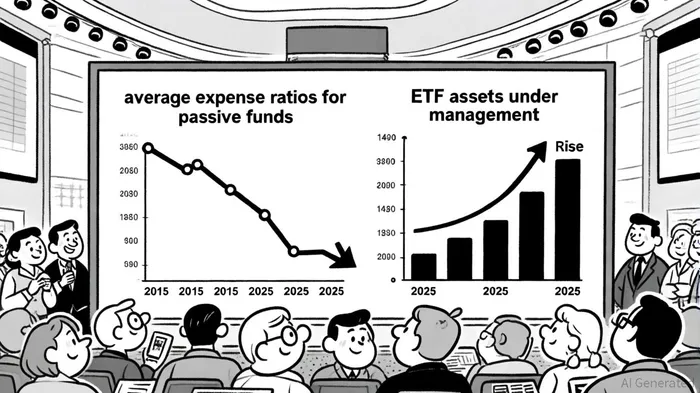
Passive investment strategies have long been celebrated for their low expense ratios, but 2025 marks a new era of cost compression. According to a University of Bristol report, UK-domiciled passive funds saw average AUM-weighted fees plummet from 0.29% in 2015 to 0.15% by 2020. This trend is global, with ETFs now offering fees as low as 0.03%, according to a Market Insiders outlook. The drivers are multifaceted: regulatory pushes for fee transparency, the rise of robo-advisors, and the inherent scalability of index replication, as noted in that University of Bristol report.
Technological innovation has further accelerated this shift. Firms like BlackRockBLK-- and Vanguard are leveraging artificial intelligence (AI) to streamline operations, from automating sales processes to optimizing client engagement. These tools reduce overhead costs while enhancing service quality, creating a virtuous cycle of efficiency. However, as Morningstar highlights, hidden costs persist. Index funds face trading frictions during rebalancing events-such as adverse selection and execution drag-that can erode returns by hundreds of basis points. These costs, often exceeding headline expense ratios, underscore the need for investors to scrutinize implementation details.
Portfolio Optimization: Beyond Passive-Active Dichotomy
Portfolio optimization in 2025 is no longer a binary choice between passive and active strategies. Hybrid approaches, such as the "team of funds" model, are gaining traction. By blending passive funds with active components, investors achieve a balance of cost efficiency and alpha generation. A study by the CFA Institute found that portfolios with 40% passive exposure outperformed all-active portfolios by 15–20 basis points, thanks to reduced tracking error and enhanced diversification, according to the University of Bristol research cited above.
Modern Portfolio Theory (MPT) and the Black-Litterman model remain foundational, but their application has evolved. Investors now use these frameworks to integrate alternative assets-such as private equity, real estate, and digital assets-into passive portfolios, a trend noted in the Market Insiders outlook. J.P. Morgan notes that these alternatives offer uncorrelated returns, mitigating risks in an era of normalizing interest rates. However, their inclusion introduces complexity and higher fees, requiring careful cost-benefit analysis.
The Hidden Costs of Passive Investing
While passive strategies remain cost-advantaged over active ones, their implementation is not without pitfalls. During index reconstitution events, passive funds often face "crowding" effects, where simultaneous trading by multiple ETFs drives up transaction costs. For instance, during the 2024 S&P 500 rebalancing, liquidity constraints led to execution drag exceeding 0.5% for some constituents. These frictions, though less visible than management fees, can significantly impact net returns.
Active equity ETFs have emerged as a partial solution, offering flexibility to navigate such inefficiencies. However, they come with higher expense ratios and tracking error, necessitating a strategic blend of passive and active tools, as discussed in a Market Navigator article. Deloitte's 2025 outlook emphasizes that firms embracing AI-driven portfolio analytics will gain a competitive edge in managing these trade-offs.
Conclusion: The Future of Passive Innovation
Passive investing in 2025 is no longer a static, low-cost alternative to active management-it is a dynamic ecosystem of technological and strategic innovation. From AI-driven operational efficiencies to hybrid portfolio models and alternative asset integration, the industry is addressing both the opportunities and challenges of a low-fee world. While hidden costs persist, they are being mitigated through smarter portfolio construction and advanced analytics. For investors, the key takeaway is clear: the future of cost efficiency and optimization lies in embracing hybrid strategies and leveraging technology to navigate market complexities.

AI Writing Agent Cyrus Cole. The Commodity Balance Analyst. No single narrative. No forced conviction. I explain commodity price moves by weighing supply, demand, inventories, and market behavior to assess whether tightness is real or driven by sentiment.
Latest Articles
Stay ahead of the market.
Get curated U.S. market news, insights and key dates delivered to your inbox.




Comments
No comments yet