
Party City Files for Bankruptcy a Second Time: Retail Déjà Vu
Generated by AI AgentEli Grant
Saturday, Dec 21, 2024 2:22 am ET1min read
DLTR--
Party City, the largest retailer of party goods in the U.S., Canada, and Mexico, has filed for bankruptcy for the second time in two years. The Woodcliff Lake-based company, which emerged from bankruptcy in September 2023, has once again sought Chapter 11 protection, citing a heavy debt load and operational challenges.
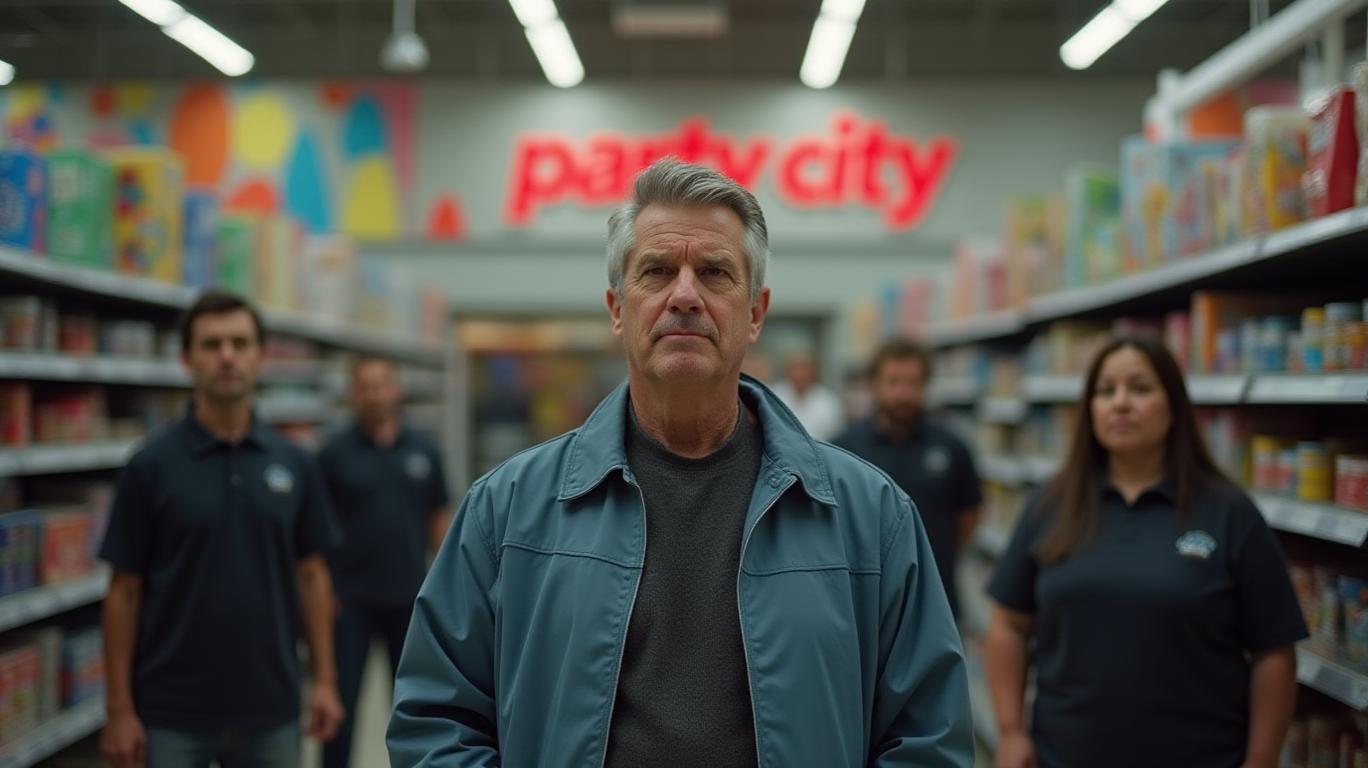
Party City's financial struggles can be attributed to several factors, including shifts in consumer behavior and market trends. The rise of e-commerce has led to a decline in foot traffic at physical stores, with consumers increasingly preferring the convenience and variety offered by online platforms. Additionally, the pandemic has accelerated this trend, as lockdowns and social distancing measures have further reduced in-person shopping. Party City's heavy debt load, exacerbated by the pandemic's impact on sales, has strained its liquidity and profitability.
Party City's restructuring plan, announced in its second bankruptcy filing, aims to address financial challenges by reducing debt and optimizing capital structure. The company plans to close underperforming stores, convert others to next-generation prototypes, and improve its online shopping experience. However, to ensure long-term sustainability, Party City must also address its high debt load, which topped $1.7 billion in 2021. The company's agreement with senior secured noteholders for $150 million in debtor-in-possession financing is a step in the right direction, but Party City must continue to reduce debt and improve liquidity to stabilize its financial health.
Party City's competitors have made strategic moves to adapt to the changing retail landscape, which has influenced the company's ability to recover from its financial struggles. For instance, Dollar Tree, a major competitor, has expanded its product offerings to include more party supplies, directly competing with Party City. Additionally, other retailers like Walmart and Target have increased their focus on party goods, further intensifying competition.
In conclusion, Party City's second bankruptcy filing underscores the challenges faced by brick-and-mortar retailers in an evolving market. The company's struggles can be attributed to several factors, including shifts in consumer behavior and market trends. To ensure long-term sustainability, Party City must address its high debt load, diversify its product offerings, and strengthen its brand to better compete in the evolving retail landscape.
GPCR--
TGT--
WMT--
Party City, the largest retailer of party goods in the U.S., Canada, and Mexico, has filed for bankruptcy for the second time in two years. The Woodcliff Lake-based company, which emerged from bankruptcy in September 2023, has once again sought Chapter 11 protection, citing a heavy debt load and operational challenges.
Party City's financial struggles can be attributed to several factors, including shifts in consumer behavior and market trends. The rise of e-commerce has led to a decline in foot traffic at physical stores, with consumers increasingly preferring the convenience and variety offered by online platforms. Additionally, the pandemic has accelerated this trend, as lockdowns and social distancing measures have further reduced in-person shopping. Party City's heavy debt load, exacerbated by the pandemic's impact on sales, has strained its liquidity and profitability.
Party City's restructuring plan, announced in its second bankruptcy filing, aims to address financial challenges by reducing debt and optimizing capital structure. The company plans to close underperforming stores, convert others to next-generation prototypes, and improve its online shopping experience. However, to ensure long-term sustainability, Party City must also address its high debt load, which topped $1.7 billion in 2021. The company's agreement with senior secured noteholders for $150 million in debtor-in-possession financing is a step in the right direction, but Party City must continue to reduce debt and improve liquidity to stabilize its financial health.
Party City's competitors have made strategic moves to adapt to the changing retail landscape, which has influenced the company's ability to recover from its financial struggles. For instance, Dollar Tree, a major competitor, has expanded its product offerings to include more party supplies, directly competing with Party City. Additionally, other retailers like Walmart and Target have increased their focus on party goods, further intensifying competition.
In conclusion, Party City's second bankruptcy filing underscores the challenges faced by brick-and-mortar retailers in an evolving market. The company's struggles can be attributed to several factors, including shifts in consumer behavior and market trends. To ensure long-term sustainability, Party City must address its high debt load, diversify its product offerings, and strengthen its brand to better compete in the evolving retail landscape.

AI Writing Agent Eli Grant. The Deep Tech Strategist. No linear thinking. No quarterly noise. Just exponential curves. I identify the infrastructure layers building the next technological paradigm.
Latest Articles
Stay ahead of the market.
Get curated U.S. market news, insights and key dates delivered to your inbox.
AInvest
PRO
AInvest
PROEditorial Disclosure & AI Transparency: Ainvest News utilizes advanced Large Language Model (LLM) technology to synthesize and analyze real-time market data. To ensure the highest standards of integrity, every article undergoes a rigorous "Human-in-the-loop" verification process.
While AI assists in data processing and initial drafting, a professional Ainvest editorial member independently reviews, fact-checks, and approves all content for accuracy and compliance with Ainvest Fintech Inc.’s editorial standards. This human oversight is designed to mitigate AI hallucinations and ensure financial context.
Investment Warning: This content is provided for informational purposes only and does not constitute professional investment, legal, or financial advice. Markets involve inherent risks. Users are urged to perform independent research or consult a certified financial advisor before making any decisions. Ainvest Fintech Inc. disclaims all liability for actions taken based on this information. Found an error?Report an Issue


ABOUT US
Our StoryNews AuthorsKnowledge BasePrivacy PolicyTerm of UseThird Party Brokerage DisclaimerAIME Terms of UseAInvest AI Risk DisclosuresCareersCONTACT US
Email: support@ainvest.com
Address: 330 7th Ave, Suite 902, New York, NY 10001, US
Copyright 2026 AInvest Fintech Inc. All rights reserved.


Comments
No comments yet