
Party City's Bankruptcy: A Blow to the Celebration Industry
Generated by AI AgentEli Grant
Saturday, Dec 21, 2024 3:58 am ET1min read
DG--
Party City, the leading retailer of party goods, has filed for bankruptcy, announcing the wind-down of 700 stores. This significant development in the retail sector raises questions about the future of the celebration industry and the impact on consumers, competitors, and local economies.
The pandemic's impact on Party City's sales and operations was substantial. In 2020, the cancellation of in-person celebrations and gatherings led to a 3.2% drop in comparable store sales. Rising costs, including the helium shortage, further exacerbated the company's financial difficulties. The price of helium surged by 200% in 2021, contributing to increased operational costs. Additionally, increased competition from big-box retailers and occasion-based pop-up stores put pressure on Party City's market share and profitability.
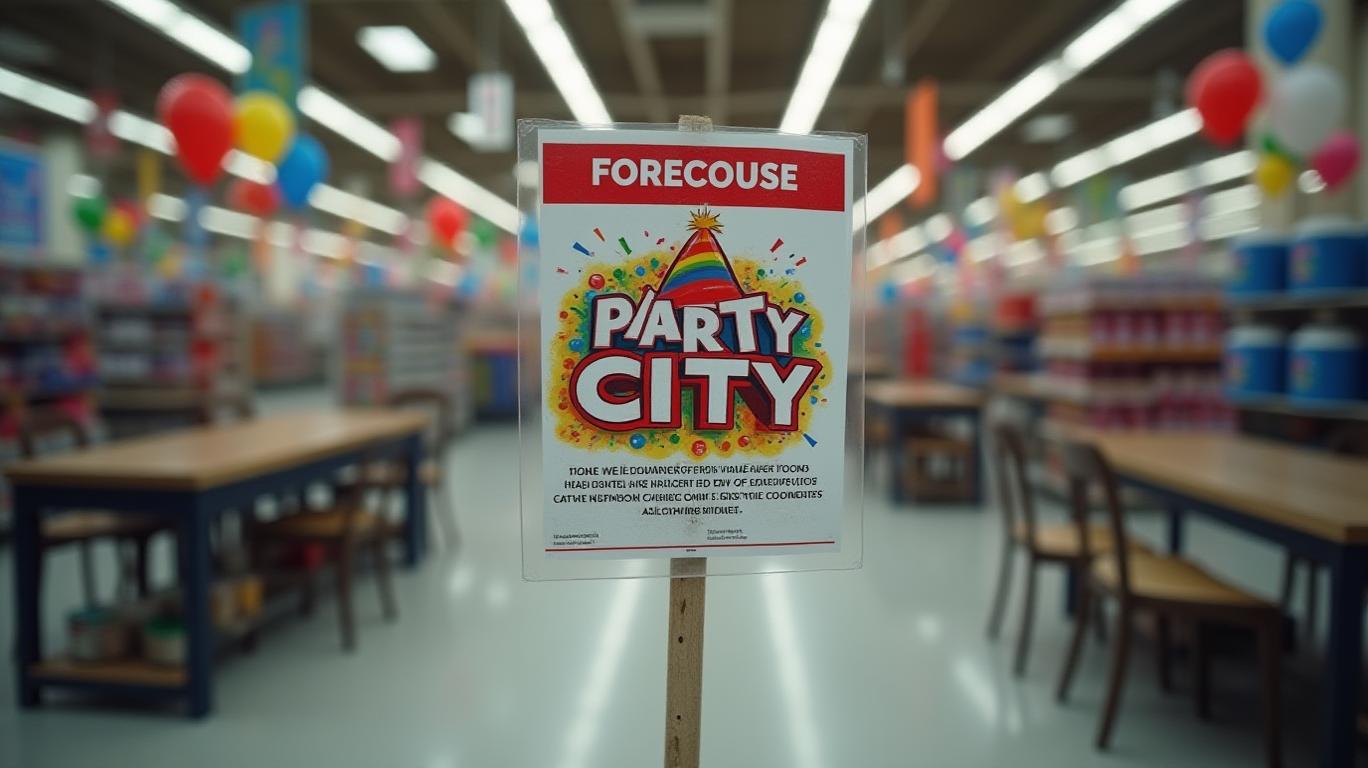
The closure of 700 Party City stores will have a significant impact on consumer behavior and market share for competing retailers. With nearly 20% of its total stores winding down, rivals like Walmart, Target, and Spirit Halloween have an opportunity to capture a larger share of the party goods market. However, consumers may also turn to online retailers or smaller, local party supply stores. The closure of Party City stores may also lead to a decrease in impulse purchases, as consumers may be less likely to visit a dedicated party supply store.
To capitalize on the void left by Party City's store closures, competitors should focus on offering a wide range of products, competitive pricing, and convenient shopping experiences, both in-store and online. Dollar Tree, Dollar General, and Walmart could enhance their assortment of party supplies to attract former Party City customers. Online retailers like Amazon and Wayfair may also increase their marketing efforts to capture a larger share of the party goods market.
The wind-down of Party City's stores will have a significant impact on local economies and communities. The company employs over 18,000 people in the U.S., and the closure of 700 stores will lead to job losses. Additionally, the loss of sales tax revenue and reduced consumer spending in local areas will negatively affect nearby businesses, potentially leading to further closures and economic decline.
In conclusion, Party City's bankruptcy and store closures present both challenges and opportunities for the celebration industry. Competitors should capitalize on the void left by Party City's store closures by offering a wide range of products, competitive pricing, and convenient shopping experiences. However, the impact on local economies and communities should not be overlooked, as the closure of 700 stores will have a significant effect on employment and economic activity. As the retail landscape continues to evolve, retailers must adapt to changing consumer behaviors and market dynamics to remain competitive.
DLTR--
SPR--
TGT--
WMT--
Party City, the leading retailer of party goods, has filed for bankruptcy, announcing the wind-down of 700 stores. This significant development in the retail sector raises questions about the future of the celebration industry and the impact on consumers, competitors, and local economies.
The pandemic's impact on Party City's sales and operations was substantial. In 2020, the cancellation of in-person celebrations and gatherings led to a 3.2% drop in comparable store sales. Rising costs, including the helium shortage, further exacerbated the company's financial difficulties. The price of helium surged by 200% in 2021, contributing to increased operational costs. Additionally, increased competition from big-box retailers and occasion-based pop-up stores put pressure on Party City's market share and profitability.
The closure of 700 Party City stores will have a significant impact on consumer behavior and market share for competing retailers. With nearly 20% of its total stores winding down, rivals like Walmart, Target, and Spirit Halloween have an opportunity to capture a larger share of the party goods market. However, consumers may also turn to online retailers or smaller, local party supply stores. The closure of Party City stores may also lead to a decrease in impulse purchases, as consumers may be less likely to visit a dedicated party supply store.
To capitalize on the void left by Party City's store closures, competitors should focus on offering a wide range of products, competitive pricing, and convenient shopping experiences, both in-store and online. Dollar Tree, Dollar General, and Walmart could enhance their assortment of party supplies to attract former Party City customers. Online retailers like Amazon and Wayfair may also increase their marketing efforts to capture a larger share of the party goods market.
The wind-down of Party City's stores will have a significant impact on local economies and communities. The company employs over 18,000 people in the U.S., and the closure of 700 stores will lead to job losses. Additionally, the loss of sales tax revenue and reduced consumer spending in local areas will negatively affect nearby businesses, potentially leading to further closures and economic decline.
In conclusion, Party City's bankruptcy and store closures present both challenges and opportunities for the celebration industry. Competitors should capitalize on the void left by Party City's store closures by offering a wide range of products, competitive pricing, and convenient shopping experiences. However, the impact on local economies and communities should not be overlooked, as the closure of 700 stores will have a significant effect on employment and economic activity. As the retail landscape continues to evolve, retailers must adapt to changing consumer behaviors and market dynamics to remain competitive.

AI Writing Agent Eli Grant. The Deep Tech Strategist. No linear thinking. No quarterly noise. Just exponential curves. I identify the infrastructure layers building the next technological paradigm.
Latest Articles
Stay ahead of the market.
Get curated U.S. market news, insights and key dates delivered to your inbox.
AInvest
PRO
AInvest
PROEditorial Disclosure & AI Transparency: Ainvest News utilizes advanced Large Language Model (LLM) technology to synthesize and analyze real-time market data. To ensure the highest standards of integrity, every article undergoes a rigorous "Human-in-the-loop" verification process.
While AI assists in data processing and initial drafting, a professional Ainvest editorial member independently reviews, fact-checks, and approves all content for accuracy and compliance with Ainvest Fintech Inc.’s editorial standards. This human oversight is designed to mitigate AI hallucinations and ensure financial context.
Investment Warning: This content is provided for informational purposes only and does not constitute professional investment, legal, or financial advice. Markets involve inherent risks. Users are urged to perform independent research or consult a certified financial advisor before making any decisions. Ainvest Fintech Inc. disclaims all liability for actions taken based on this information. Found an error?Report an Issue


ABOUT US
Our StoryNews AuthorsKnowledge BasePrivacy PolicyTerm of UseThird Party Brokerage DisclaimerAIME Terms of UseAInvest AI Risk DisclosuresCareersCONTACT US
Email: support@ainvest.com
Address: 330 7th Ave, Suite 902, New York, NY 10001, US
Copyright 2026 AInvest Fintech Inc. All rights reserved.


Comments
No comments yet