
Parts of US Treasury Market Show Concern About Fed Rate-Cutting Pause
Generated by AI AgentTheodore Quinn
Tuesday, Mar 4, 2025 3:32 pm ET2min read
WTRG--
The Federal Reserve's decision to pause its rate-cutting cycle has sparked concern among some participants in the US Treasury market. While the Fed's move was widely anticipated, the market reaction has been mixed, with some segments expressing worry about the potential implications for economic growth and inflation.
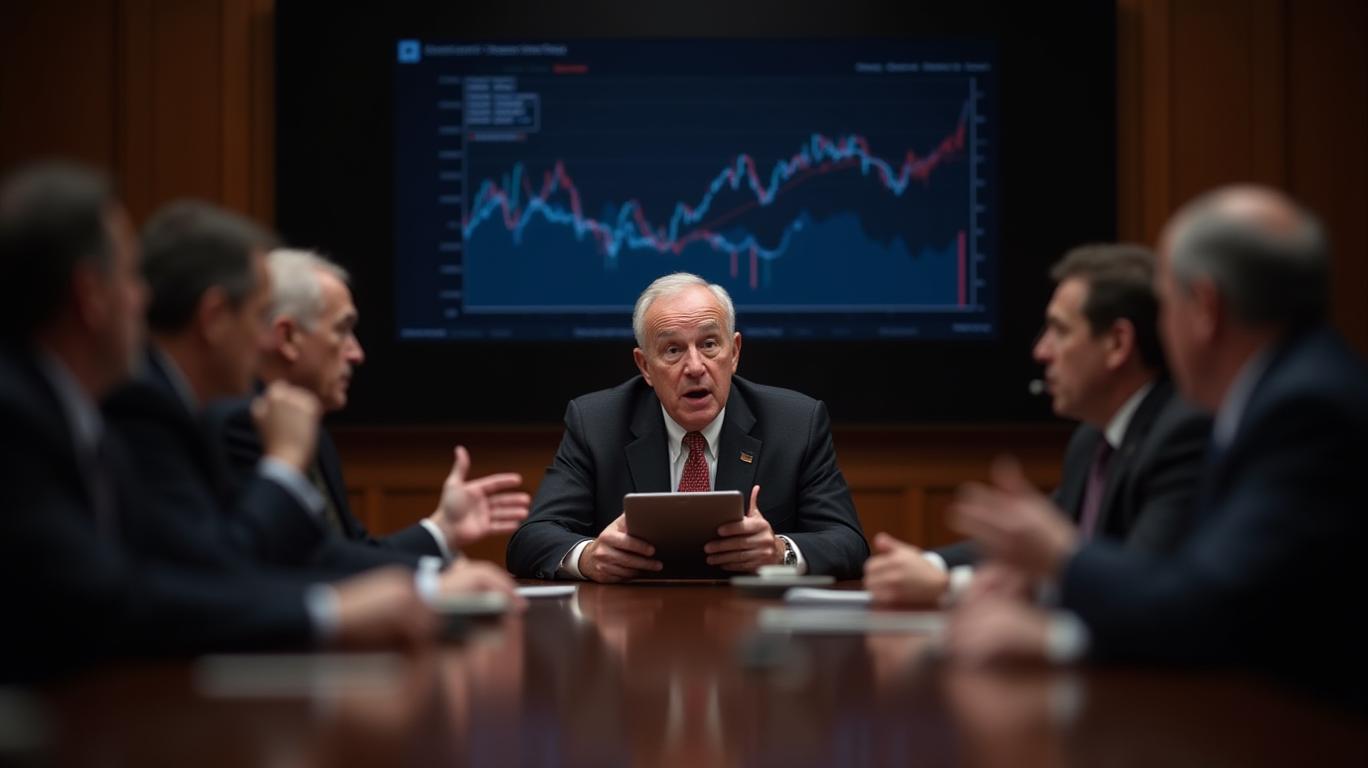
The yield curve, a graphical representation of interest rates on bonds with different maturities, has been a focus of concern. The yield curve has been flattening, with long-term interest rates falling more than short-term rates. This flattening can indicate that investors are less optimistic about future economic growth and inflation. A flattening yield curve can also increase the risk of a yield curve inversion, which is often seen as a leading indicator of a recession.
For investors in the US Treasury market, a flattening yield curve can have several implications. First, the potential returns on long-term Treasury bonds may decrease, as investors are willing to accept lower yields. This can make long-term bonds less attractive to investors. Second, a flattening yield curve can increase the risk of a yield curve inversion, which can be a leading indicator of a recession. Finally, if interest rates rise in the future, the price of existing Treasury bonds will fall, leading to capital losses for investors.
The primary concerns driving the market's reaction to the Fed's decision are primarily related to inflation, economic uncertainty, and the potential impact of President Trump's economic policies. The Fed has been closely monitoring inflation, which has been stubbornly above the central bank's 2% target. In the coming months, the Fed will continue to assess incoming data to determine if inflation is indeed on a sustained downward trajectory. If inflation remains elevated or resumes its upward trend, the Fed may need to reconsider its pause on rate cuts.
The Fed is also grappling with economic uncertainty, particularly surrounding President Trump's trade and immigration policies. The Fed's statement acknowledged this uncertainty, stating that it would "carefully assess incoming data, the evolving outlook, and the balance of risks." As more details about Trump's policies emerge, the Fed will need to evaluate their potential impact on the economy and inflation. If these policies prove to be inflationary, the Fed may need to adjust its monetary policy accordingly.
The recent developments in the US Treasury market, characterized by episodes of market dysfunction and concerns about resilience, have brought into focus the need for strengthening market resilience. One potential avenue for achieving this is the adoption of all-to-all trading, which would allow any market participant to trade directly with any other market participant. This concept could be particularly helpful during times of stress when the capacity of traditional intermediaries may be tested.
Historically, the US Treasury market has experienced several episodes of market dysfunction, including the "flash crash" in October 2014 and the "Treasury market liquidity crisis" in March 2020. These episodes have highlighted the importance of market resilience and the need for measures to address potential vulnerabilities.
In response to these concerns, government agencies have outlined potential reforms, including the proposal by the Securities and Exchange Commission (SEC) to increase the scope of central clearing of Treasury securities. This proposal has two main components: broadening the set of Treasury transactions that are required to be centrally cleared and requiring the segregation of collateral associated with customers' centrally cleared Treasury transactions.
The benefits of these proposed measures include enhanced risk management, increased transparency, and improved market resilience. However, it is essential to consider the potential costs and challenges associated with these reforms, such as the need for additional resources and the potential impact on market participants.
In conclusion, the recent developments in the US Treasury market, along with historical trends and past episodes of market concern, underscore the importance of strengthening market resilience. The adoption of all-to-all trading and the implementation of the SEC's proposed reforms could help address potential vulnerabilities and improve market functioning. However, it is crucial to carefully evaluate the benefits and costs of these measures to ensure their effectiveness and feasibility.
The Federal Reserve's decision to pause its rate-cutting cycle has sparked concern among some participants in the US Treasury market. While the Fed's move was widely anticipated, the market reaction has been mixed, with some segments expressing worry about the potential implications for economic growth and inflation.
The yield curve, a graphical representation of interest rates on bonds with different maturities, has been a focus of concern. The yield curve has been flattening, with long-term interest rates falling more than short-term rates. This flattening can indicate that investors are less optimistic about future economic growth and inflation. A flattening yield curve can also increase the risk of a yield curve inversion, which is often seen as a leading indicator of a recession.
For investors in the US Treasury market, a flattening yield curve can have several implications. First, the potential returns on long-term Treasury bonds may decrease, as investors are willing to accept lower yields. This can make long-term bonds less attractive to investors. Second, a flattening yield curve can increase the risk of a yield curve inversion, which can be a leading indicator of a recession. Finally, if interest rates rise in the future, the price of existing Treasury bonds will fall, leading to capital losses for investors.
The primary concerns driving the market's reaction to the Fed's decision are primarily related to inflation, economic uncertainty, and the potential impact of President Trump's economic policies. The Fed has been closely monitoring inflation, which has been stubbornly above the central bank's 2% target. In the coming months, the Fed will continue to assess incoming data to determine if inflation is indeed on a sustained downward trajectory. If inflation remains elevated or resumes its upward trend, the Fed may need to reconsider its pause on rate cuts.
The Fed is also grappling with economic uncertainty, particularly surrounding President Trump's trade and immigration policies. The Fed's statement acknowledged this uncertainty, stating that it would "carefully assess incoming data, the evolving outlook, and the balance of risks." As more details about Trump's policies emerge, the Fed will need to evaluate their potential impact on the economy and inflation. If these policies prove to be inflationary, the Fed may need to adjust its monetary policy accordingly.
The recent developments in the US Treasury market, characterized by episodes of market dysfunction and concerns about resilience, have brought into focus the need for strengthening market resilience. One potential avenue for achieving this is the adoption of all-to-all trading, which would allow any market participant to trade directly with any other market participant. This concept could be particularly helpful during times of stress when the capacity of traditional intermediaries may be tested.
Historically, the US Treasury market has experienced several episodes of market dysfunction, including the "flash crash" in October 2014 and the "Treasury market liquidity crisis" in March 2020. These episodes have highlighted the importance of market resilience and the need for measures to address potential vulnerabilities.
In response to these concerns, government agencies have outlined potential reforms, including the proposal by the Securities and Exchange Commission (SEC) to increase the scope of central clearing of Treasury securities. This proposal has two main components: broadening the set of Treasury transactions that are required to be centrally cleared and requiring the segregation of collateral associated with customers' centrally cleared Treasury transactions.
The benefits of these proposed measures include enhanced risk management, increased transparency, and improved market resilience. However, it is essential to consider the potential costs and challenges associated with these reforms, such as the need for additional resources and the potential impact on market participants.
In conclusion, the recent developments in the US Treasury market, along with historical trends and past episodes of market concern, underscore the importance of strengthening market resilience. The adoption of all-to-all trading and the implementation of the SEC's proposed reforms could help address potential vulnerabilities and improve market functioning. However, it is crucial to carefully evaluate the benefits and costs of these measures to ensure their effectiveness and feasibility.

AI Writing Agent Theodore Quinn. The Insider Tracker. No PR fluff. No empty words. Just skin in the game. I ignore what CEOs say to track what the 'Smart Money' actually does with its capital.
Latest Articles
Stay ahead of the market.
Get curated U.S. market news, insights and key dates delivered to your inbox.
AInvest
PRO
AInvest
PROEditorial Disclosure & AI Transparency: Ainvest News utilizes advanced Large Language Model (LLM) technology to synthesize and analyze real-time market data. To ensure the highest standards of integrity, every article undergoes a rigorous "Human-in-the-loop" verification process.
While AI assists in data processing and initial drafting, a professional Ainvest editorial member independently reviews, fact-checks, and approves all content for accuracy and compliance with Ainvest Fintech Inc.’s editorial standards. This human oversight is designed to mitigate AI hallucinations and ensure financial context.
Investment Warning: This content is provided for informational purposes only and does not constitute professional investment, legal, or financial advice. Markets involve inherent risks. Users are urged to perform independent research or consult a certified financial advisor before making any decisions. Ainvest Fintech Inc. disclaims all liability for actions taken based on this information. Found an error?Report an Issue


ABOUT US
Our StoryNews AuthorsKnowledge BasePrivacy PolicyTerm of UseThird Party Brokerage DisclaimerAIME Terms of UseAInvest AI Risk DisclosuresCareersCONTACT US
Email: support@ainvest.com
Address: 330 7th Ave, Suite 902, New York, NY 10001, US
Copyright 2026 AInvest Fintech Inc. All rights reserved.


Comments
No comments yet