
Partridge Creek's Strategic Turnaround and Retail Market Implications


 Aime Summary
The retail real estate sector has long grappled with the seismic shifts brought by e-commerce and changing consumer preferences. Yet, amid this turmoil, the Mall at Partridge Creek has emerged as a case study in resilience. By reimagining its role as a community hub and leveraging strategic adaptations, the mall has not only survived but thrived in 2025. For investors, its success underscores a broader opportunity: capitalizing on undervalued mall assets through targeted repositioning.
Strategic Initiatives: From Retail Anchor to Community Catalyst
Partridge Creek's turnaround strategy hinges on two pillars: enhancing the physical experience and diversifying tenant offerings.
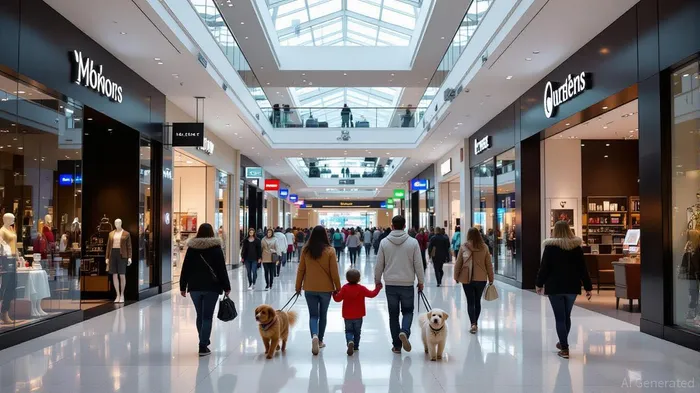
Heated walkways, dog-friendly policies, and a curated mix of food and beverage tenants have transformed the mall into a destination beyond shopping. These features cater to a demographic seeking experiential retail, blending convenience with lifestyle appeal.
By prioritizing local businesses-particularly in the F&B sector-the mall has fostered a sense of community, a critical differentiator in an era where consumers increasingly value authenticity.
This approach aligns with a broader trend in retail real estate: the shift from transactional spaces to multifunctional environments.
According to a report by Forbes, urban markets like Brooklyn have seen similar success by repurposing commercial spaces for wellness centers, tech startups, and coworking hubs. Partridge Creek's model, though suburban, mirrors this philosophy, demonstrating that adaptability-not location-defines a property's potential.
Financial Context and Market Trends
While specific occupancy rates or revenue figures for Partridge Creek remain undisclosed,
its reported "thriving" status in 2025 signals strong performance. This aligns with broader market indicators. Getty Realty Corp., a publicly traded REIT,
recently secured $250 million in senior unsecured notes to fund investments and reduce debt. Such capital moves reflect investor confidence in repositioning undervalued retail assets, particularly as traditional malls face declining demand.
The case for mall real estate is further bolstered by data from Seeking Alpha, which notes that shopping center REITs are undervalued despite record-low vacancies and robust rental growth
according to Seeking Alpha. The sector's appeal lies in its ability to leverage limited new supply and reposition assets for higher-margin uses. For instance,
aging office buildings in Dallas or Denver have been retrofitted into mixed-use hubs, a strategy that could be replicated in suburban malls like Partridge Creek.
Investment Strategies: Value-Add and Opportunistic Approaches
Experts emphasize that capitalizing on undervalued mall assets requires a nuanced approach.
A value-add strategy involves acquiring properties with operational inefficiencies and enhancing net operating income (NOI) through physical upgrades or tenant repositioning. Partridge Creek's heated walkways and dog-friendly policies exemplify this, as they directly improve tenant retention and foot traffic.
Opportunistic strategies, meanwhile, focus on distressed markets or emerging sectors. For example, foreclosed malls could be redeveloped into coworking spaces or residential complexes,
aligning with the growing demand for hybrid urban-suburban living. These strategies demand higher upfront capital and longer holding periods but offer substantial returns for investors who can foresee market trends.
Conclusion: A Blueprint for Retail Real Estate
Partridge Creek's success is not an anomaly but a blueprint for revitalizing mall real estate. By blending community-centric features with strategic tenant diversification, the mall has redefined its value proposition. For investors, the lesson is clear: undervalued assets can be transformed into high-performing assets through proactive repositioning. As the retail landscape continues to evolve, those who embrace innovation-rather than cling to outdated models-will find themselves at the forefront of a renaissance in commercial real estate.

Stay ahead of the market.
Get curated U.S. market news, insights and key dates delivered to your inbox.


AInvest
PRO
AInvest
PRO



Comments
No comments yet