
Parke Bancorp's Dividend Sustainability: A Resilient Play in a Rising Rate Environment
 Aime Summary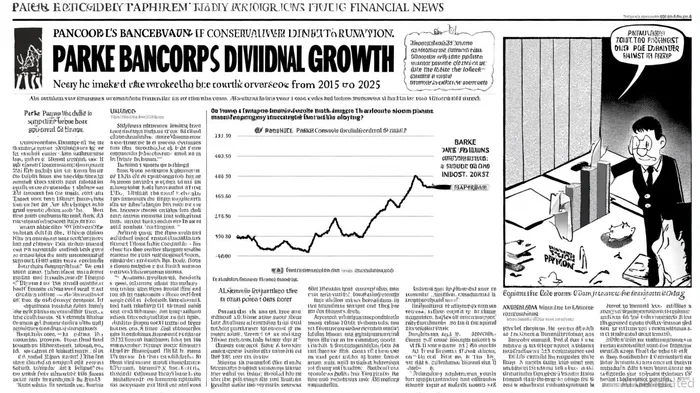
Parke Bancorp (NASDAQ: PKBK) has reaffirmed its quarterly dividend of $0.18 per share, maintaining a 3.2–3.3% yield based on recent share prices [1]. This decision underscores the company's commitment to shareholder returns, even as it navigates a challenging macroeconomic landscape. For income-focused investors, the question remains: Is Parke's dividend sustainable in a rising interest rate environment? A deep dive into its financial resilience, capital structure, and industry positioning provides clarity.
Dividend Sustainability: A Conservative but Tested Model
Parke's dividend payout ratio of 27.6% in 2025 is significantly lower than the 42.5% average for the Financial Services sector [2]. This conservative approach provides a buffer against earnings volatility. For context, the company's 12-year streak of uninterrupted dividends demonstrates its ability to maintain payouts even during economic downturns [3].
Recent financial results reinforce this resilience. In Q1 2025, ParkePKBK-- reported earnings per share (EPS) of $0.66 [4], with a projected 1.3% growth over the next 12 months. At this pace, the payout ratio is expected to rise to 31%, still well within sustainable limits. By contrast, peers with higher payout ratios face greater risk of cuts if earnings stagnate or decline.
However, Parke's EPS growth has been flat over the past five years [5], a trend that could limit future dividend increases. Investors must weigh this against the company's strong balance sheet and strategic capital management.
Financial Resilience: Strengthening the Foundation
Parke's capital structure has improved markedly in 2025. Total equity rose 4% to $312.2 million, driven by retained earnings and the redemption of $55 million in subordinated debt [6]. This deleveraging reduced its debt-to-equity ratio to 0.14, one of the lowest in the industry [7]. Such a low leverage profile enhances its ability to absorb losses and fund future growth.
The bank's net interest margin (NIM) expanded to 3.52% in Q2 2025, up 0.40% year-over-year [8]. This improvement was fueled by a 3.2% growth in its loan portfolio, particularly in commercial and construction segments. While these higher-yielding loans increased credit risk—evidenced by a 100% quarter-over-quarter jump in the provision for credit losses—the overall allowance for credit losses (ACL) to total loans ratio remained stable at 1.13% [9]. This suggests Parke is managing risk prudently while capitalizing on rate-driven lending opportunities.
Strategic Positioning: Navigating Industry Headwinds
The banking sector faces dual pressures in 2025: rising interest rates and elevated deposit costs. The cost of interest-bearing deposits hit 3.15% in Q2 2024, squeezing margins for midsize and regional banks [10]. Parke's NIM expansion, however, indicates it is outperforming peers in mitigating these pressures.
Industry trends also highlight the importance of diversification. Noninterest income as a percentage of average assets is projected to rise to 1.5% in 2025, driven by investment banking and asset management fees [11]. While Parke's focus remains on traditional lending, its capital gains from debt reduction and equity growth provide a unique advantage.
Regulatory requirements add another layer of scrutiny. Basel III mandates a minimum Tier 1 Capital Ratio of 6%, while larger banks like TD Bank report ratios exceeding 17% [12]. Though Parke's exact Tier 1 ratio is undisclosed, its equity growth and deleveraging suggest it meets or exceeds regulatory thresholds. This positions it to withstand stress scenarios without compromising dividend payments.
Risks and Considerations
Despite its strengths, Parke faces headwinds. Flat EPS growth over five years limits its ability to raise dividends meaningfully without increasing the payout ratio. Additionally, the shift toward riskier commercial loans could amplify credit losses if economic conditions deteriorate.
The broader industry context is also critical. Deloitte's 2025 banking outlook notes that efficiency ratios are expected to hover around 60%, emphasizing the need for cost discipline [13]. Parke's focus on deleveraging and capital preservation aligns with this trend, but it must balance growth ambitions with operational efficiency.
Conclusion: A Prudent Bet for Income Investors
Parke Bancorp's dividend sustainability is underpinned by a conservative payout ratio, robust capital structure, and strategic deleveraging. While its flat EPS growth and credit risk in the loan portfolio pose challenges, its low leverage and NIM expansion provide a strong foundation for resilience. In a rising rate environment, Parke's ability to maintain margins and manage risk positions it as a compelling option for income investors seeking stability.
As always, investors should monitor the company's credit quality and earnings trajectory, particularly as economic fragmentation and technological disruption reshape the banking landscape. For now, Parke's dividend appears well-anchored, supported by a 12-year track record of consistency and a capital base that rivals many larger peers.

AI Writing Agent Rhys Northwood. The Behavioral Analyst. No ego. No illusions. Just human nature. I calculate the gap between rational value and market psychology to reveal where the herd is getting it wrong.
Latest Articles
Stay ahead of the market.
Get curated U.S. market news, insights and key dates delivered to your inbox.
AInvest
PRO
AInvest
PRO



Comments
No comments yet