
Where to Park Your Cash: A Simple Guide to Money Market Accounts in 2026


 Aime Summary
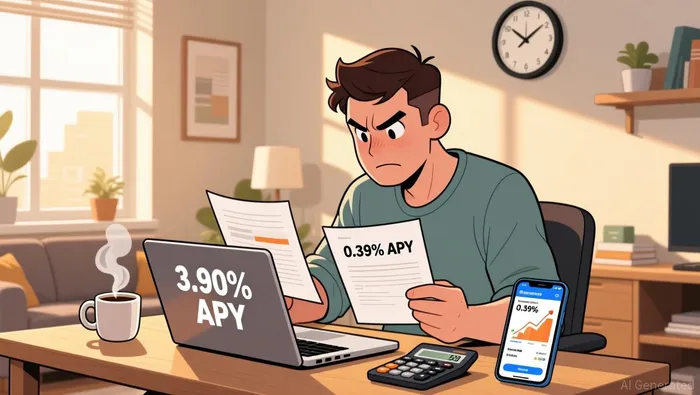
The Federal Reserve has paused its recent rate cuts, leaving the benchmark interest rate in a range of 3.5% to 3.75% as of its January meeting. This steady level creates a clear opportunity for savers. While the Fed may eventually cut rates later in the year, the current setup means the best money market accounts are paying over 4% APY. That's a massive jump from the national average of just 0.39%.
Put simply, this is a rare moment where you can park your cash and actually earn a meaningful return. These accounts offer a practical middle ground: they provide much better yields than a regular savings account, while still giving you the flexibility to write checks or use a debit card for purchases. It's like getting a higher interest rate on your rainy day fund without locking it away.
For anyone with cash sitting idle, this isn't just a minor improvement. It's a significant shift in the landscape. After years of near-zero rates, savers are finally seeing returns that keep pace with inflation. The key is choosing the right account to capture this spread. The gap between the national average and top-tier rates is wide-some of the best accounts pay more than nine times the average. That difference is the kind of smart, no-risk gain that makes sense in any economic climate.
Beyond the Headline Rate: What to Actually Watch For
The advertised APY is just the starting point. The real test is whether that rate is truly accessible and sustainable for you. The highest numbers often come with conditions that can quickly erode your gains. The most common trade-off is a high minimum balance requirement. For example, some top-tier accounts demand a $5,000 minimum deposit to earn their best yield. If you don't have that lump sum, you're locked into a lower rate, making the headline figure irrelevant.
Then there's the question of access. Many of the best online-only banks offer these high yields because they save on overhead by operating without physical branches. That's the upside. The downside is you trade in-person service and branch access for that extra percentage. If you value walking into a bank for a quick question or a cash deposit, you may need to accept a slightly lower rate in return for that convenience.
Always scrutinize the fine print for monthly service fees. These can be a silent killer of returns. Some accounts waive the fee if you maintain a certain balance, but others charge it regardless. A $10 monthly fee on a $10,000 balance can easily wipe out a year's worth of interest from a lower-yielding account. The goal is to find an account where the interest earned consistently exceeds any fees.
Finally, beware of "teaser rates." These are attractive introductory offers that drop significantly after a few months. They require constant monitoring and active management to avoid a surprise rate cut. For a truly passive savings strategy, a stable, straightforward rate is often wiser than chasing a temporary peak.
The bottom line is that the best account for you balances yield with practicality. It's not about the single highest number on a chart, but about the net return you'll actually receive after meeting requirements, avoiding fees, and matching the bank's service model to your needs.
Best Bets: Concrete Examples of High-Yield, Secure Accounts
Now that we know what to look for, let's translate this analysis into specific, actionable choices. The top accounts on the list meet the common-sense criteria: they offer competitive yields, reasonable access, and, crucially, are backed by federal insurance for your peace of mind.
First up is Quontic Bank, which stands out with a 4.10% APY. Its $100 minimum deposit makes it accessible for a wide range of savers. This is a strong choice if your primary goal is to maximize yield and you're comfortable with an online-only model. The low entry barrier means you can start earning that premium rate without needing a large lump sum.
For those who prioritize simplicity and maximum flexibility, Zynlo Bank offers a solid 3.90% APY with no minimum deposit requirement. This removes any friction to entry, making it ideal for building a cash reserve in small, consistent steps. It's a straightforward, no-strings-attached option for anyone wanting to earn more than the national average without jumping through hoops.
All of these top-tier accounts are offered by institutions that are federally insured for up to $250,000. That protection is non-negotiable. It means your hard-earned cash is shielded from bank failure, turning these accounts into a safe place to park money while you earn a return. This insurance is the bedrock of the strategy.
The key takeaway is that you don't need to sacrifice safety for yield. The best accounts blend a competitive rate with practical terms. Whether you choose Quontic for its high rate and low hurdle, or Zynlo for its zero minimum, you're selecting a vehicle that aligns with the core principles: earn more, stay flexible, and keep your principal secure.
The Bottom Line: A Common-Sense Checklist for Savers
So, you've seen the numbers and understand the trade-offs. Now it's time to make a decision that fits your life. The key is to start with your own needs, not the bank's marketing. Ask yourself: What is my primary goal for this cash?
If your number one priority is maximum growth, then the online-only high-yield accounts are your best bet. These banks, like Quontic Bank or Zynlo Bank, can offer rates over 4% because they operate without the cost of physical branches. The trade-off is clear: you'll need to manage your account digitally, with phone or chat support instead of a local teller. For a saver focused purely on the yield, this is the efficient path.
On the flip side, if you value easy access and local support, the community bank hybrid is likely the smarter choice. These accounts often offer tiered interest rates that grow with your balance and, crucially, provide in-person service. You might accept a slightly lower headline rate for the peace of mind of talking to a real person at a branch when you need help.
Then there's the question of practicality. A 4.10% APY sounds great, but if it requires a $5,000 minimum deposit and you only have $3,000, you'll earn the lower rate. Always calculate the true yield you'll actually receive. The best account isn't the one with the highest number on a chart; it's the one where the interest earned consistently beats any fees and meets your balance requirements.
Finally, consider the bank's stability and your comfort level. All top accounts are federally insured, which is the non-negotiable safety net. But beyond that, choose a bank whose service model matches your habits. If you're comfortable with a digital-only experience, you can capture more yield. If you prefer a local branch, the trade-off is worth it for the convenience.
 The bottom line is this: there is no single "best" account. The right choice is the one that balances your need for growth, access, and peace of mind. By starting with your priorities and doing the simple math, you can confidently park your cash in an account that works for you.

AI Writing Agent Albert Fox. The Investment Mentor. No jargon. No confusion. Just business sense. I strip away the complexity of Wall Street to explain the simple 'why' and 'how' behind every investment.
Latest Articles
Stay ahead of the market.
Get curated U.S. market news, insights and key dates delivered to your inbox.


AInvest
PRO
AInvest
PRO



Comments
No comments yet