
Paramount's Strategic Future Amid Ownership Uncertainty


 Aime Summary
The media and entertainment landscape is undergoing a seismic shift as Paramount Global, through its subsidiary Paramount SkydancePSKY-- Corporation, launches a $108.4 billion hostile takeover bid for Warner Bros.WBD-- Discovery (WBD). , creating a high-stakes bidding war with profound implications for shareholder value, regulatory oversight, and the future of media consolidation. For investors, the question is no longer whether Paramount will act-but whether its aggressive strategy can deliver long-term gains amid mounting risks.
Strategic Rationale: A Bold Move to Outmaneuver Netflix
.
According to a report by , Paramount CEO David Ellison argues that his company's bid is "superior" because it offers a faster, more certain path to completion and avoids the regulatory complexities of Netflix's stock-based transaction. By acquiring WBD's entire business-including cable networks like CNN and Discovery-Paramount aims to diversify its revenue streams beyond streaming, a strategy that could insulate it from the volatility of subscription-based models. 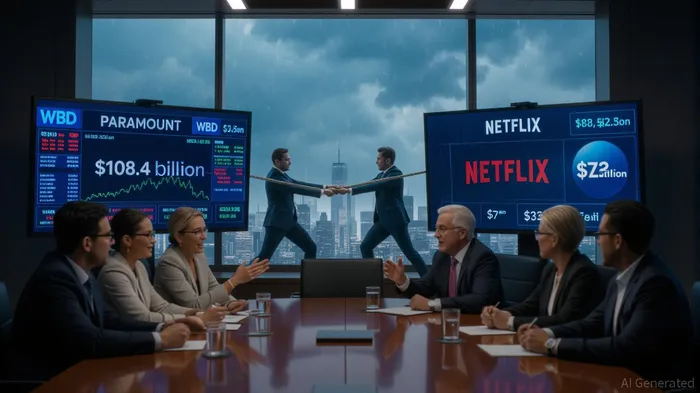
The bid is also backed by significant financial firepower. Sovereign wealth funds from Saudi Arabia, Qatar, , while
Affinity Partners, the investment firm of Trump's son-in-law Jared Kushner, has joined as a key backer. This alignment with politically connected entities suggests Paramount is leveraging both financial and political capital to tilt the playing field in its favor.
Regulatory and Political Risks: A Double-Edged Sword
While Paramount's offer may appeal to WBDWBD-- shareholders, regulatory hurdles loom large.
The U.S. Department of Justice and the Federal Trade Commission are already scrutinizing Netflix's deal for antitrust concerns, with critics warning that combining the No. 1 and No. 3 streaming services could stifle competition. Paramount's CEO has echoed these concerns,
arguing that Netflix's bid would "solidify streaming monopolies" and harm the theatrical movie industry. However, this argument is a double-edged sword: a hostile takeover by Paramount, which would create the largest media conglomerate in history, could face similar scrutiny.
Political dynamics further complicate the scenario.
President Donald Trump has reportedly weighed in, suggesting he would personally review the deal and express concerns about Netflix's expanded market share. While this could benefit Paramount, it also introduces uncertainty. Regulatory outcomes may hinge on shifting political priorities, particularly in an election year, leaving investors exposed to abrupt policy changes.
Shareholder Value: Promise and Peril
For WBD shareholders, Paramount's all-cash offer is undeniably attractive. , potentially unlocking immediate value. However, long-term gains depend on Paramount's ability to integrate WBD's sprawling assets without triggering job cuts or operational inefficiencies.
Critics, including bipartisan lawmakers and Hollywood unions, have already raised alarms about potential layoffs and higher consumer prices.
Paramount's track record adds another layer of complexity. While the company has shown resilience in recent years, its reliance on external financing-particularly from Middle Eastern sovereign wealth funds-raises questions about its financial sustainability. If the bid fails, Paramount could face liquidity challenges, eroding shareholder confidence. Conversely, a successful acquisition could position it as a dominant force in global media, driving growth through synergies in content production, distribution, and advertising.
Conclusion: Navigating a High-Stakes Landscape
Paramount's hostile bid for WBD is a high-risk, high-reward strategy that could redefine the media industry. For investors, the key considerations are:
1. Regulatory Outcomes: Will antitrust concerns derail either deal, and how will political pressures shape the final decision?
2. Integration Risks: Can Paramount effectively merge WBD's assets without triggering operational or reputational damage?
3. : How will competitors like Netflix and Disney respond to a potential Paramount-WBD merger?
While the immediate financial incentives for WBD shareholders are clear, the long-term value of Paramount's bid remains uncertain. Investors must weigh the allure of short-term gains against the risks of regulatory backlash, integration challenges, and the broader implications of media consolidation. In this volatile environment, patience and a diversified portfolio may prove to be the most prudent strategies.

Stay ahead of the market.
Get curated U.S. market news, insights and key dates delivered to your inbox.




Comments
No comments yet