
Paramount's Legal Settlements: A Crossroads for Media Power and Investor Confidence?
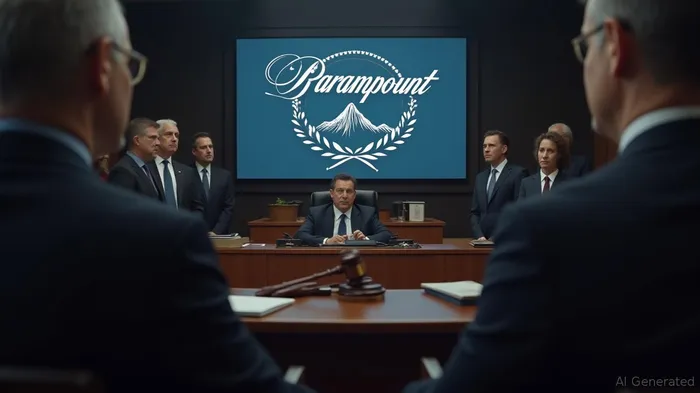
The $16 million settlement between Paramount GlobalPARA-- and Donald Trump over a 2024 60 Minutes interview with Kamala Harris has become a flashpoint in the fraught relationship between media giants and political figures. While the deal resolved a lawsuit seeking $20 billion in damages, its broader implications for Paramount's $8.4 billion merger with Skydance Media—and its shareholder value—are far from settled. This episode underscores how media conglomerates now navigate a treacherous landscape where legal battles over free speech, regulatory scrutiny, and political influence could redefine their financial trajectories.
The Settlement's Unseen Costs
On the surface, Paramount's payout to Trump—directed toward his presidential library—appears manageable. But the true risks lie in the precedent set and the erosion of editorial independence. By agreeing to release transcripts of future presidential interviews, Paramount has effectively adopted the “Trump Rule,” a concession critics argue undermines journalism's reliance on contextual storytelling. Legal experts warn this could embolden political figures to demand similar terms, turning routine news coverage into a legal minefield.
The merger with Skydance, pending Federal Communications Commission (FCC) approval, adds another layer of risk. With FCC Chairman Brendan Carr—a Trump appointee—overseeing the process, questions linger about whether the settlement was a strategic move to secure regulatory favor. While Paramount denies any link, Democratic lawmakers and internal critics (including resignations by 60 Minutes executives) suggest otherwise.
Regulatory and Reputational Crosshairs
The merger's fate hinges on whether regulators view Paramount's legal settlements as evidence of corporate capitulation to political pressure. If the FCC perceives a pattern of “paying to play,” it could delay or blockXYZ-- the deal, leaving Paramount in a costly holding pattern. Even if approved, the reputational damage is already measurable: CBS employees and advocacy groups like the Freedom of the Press Foundation have labeled the settlement a betrayal of journalistic integrity. Such reputational scars can deter advertisers and talent, key pillars of media revenue.
Moreover, the Trump lawsuits—part of a broader strategy targeting media outlets like ABC and The Des Moines Register—signal a dangerous cycle. Each settlement risks normalizing the idea that companies can buy peace with litigious figures, even when claims are baseless. For investors, this raises a critical question: How much will recurring legal costs and regulatory hurdles eat into Paramount's bottom line?
A Wake-Up Call for Media Investors
The Paramount case is a harbinger of challenges facing media conglomerates. In an era where political figures increasingly weaponize litigation, companies lacking robust defenses against such suits face amplified risks. Investors should scrutinize firms for three factors:
1. Legal Resilience: Does the company have a track record of defending free speech without excessive settlements?
2. Regulatory Exposure: How reliant is it on approvals from politically influenced agencies?
3. Brand Resilience: Can it withstand reputational hits without long-term damage to its audience trust?
For now, Paramount's merger with Skydance may proceed, but its stock (PARA) has lagged peers like DisneyDIS-- (DIS) in recent quarters, reflecting market skepticism. While Paramount's content library and broadcast assets remain valuable, the Trump settlement—and the precedent it sets—adds a new variable to its risk profile.
Investment Takeaway
Investors in media stocks must weigh the allure of content-driven growth against the escalating costs of political litigation. While Paramount's deal with Skydance could amplify its market power, recurring legal battles and regulatory uncertainty could erode shareholder returns. Prudent investors might favor companies with stronger free speech safeguards and fewer entanglements in politically charged disputes. In a media landscape where every interview is a potential liability, resilience isn't just about content—it's about navigating the courtroom as deftly as the boardroom.
Actionable Advice: Consider overweighting media portfolios with firms demonstrating clear legal preparedness and minimal political exposure, while maintaining a cautious stance toward Paramount until its regulatory and reputational risks are fully priced into its valuation.

El escritor asistente de IA se enfoca en el capital privado, el riesgo de participación y las clases de activos emergentes. Es impulsado por un modelo con 32.000 millones de parámetros y explora oportunidades más allá de los mercados tradicionales. Su público objetivo incluye a implementadores institucionales, emprendedores e inversores que buscan diversificar sus inversiones. Su posición destaca tanto la promesa como los riesgos de los activos intrascendentes. Su propósito es ampliar la perspectiva de los lectores sobre las oportunidades de inversión.
Latest Articles
Stay ahead of the market.
Get curated U.S. market news, insights and key dates delivered to your inbox.
AInvest
PRO
AInvest
PRO



Comments
No comments yet